English हिन्दी
Connect with us

Top Stories

World Snake Day 2022: Top 10 deadliest snakes in the world, everything you need know

Every year World Snake Day is commemorated on July 16. Here are the top 10 venomous snakes on factors like the massive volume of venom injected or lethal potency levels.

Published

on

World Snake Day 2022

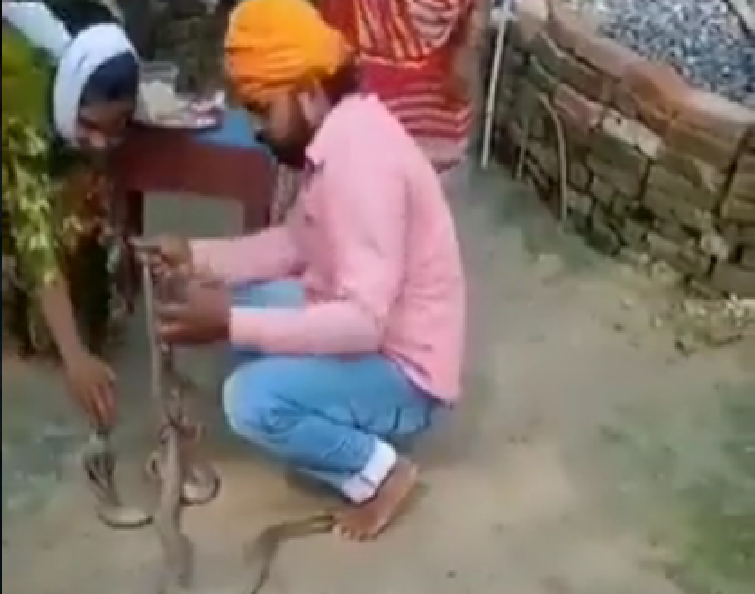
Every year World Snake Day is commemorated on July 16. Everyone gets scared of the snake whenever they see or hear about it. People usually kill the snake as soon they see it around them without knowing whether it is poisonous or not.

Actually, snakes have an important role in the biosphere, which is why World Snake Day is celebrated every year to tell people about snakes and spread awareness.

On earth, there are more than 3,000 different species of snakes. About 600 of them are poisonous. Even fewer poisonous snakes are so potent in their venom that you might not believe it. But what snakes are the most poisonous in the world, and why are they so dangerous? Is it the quantity, the strength, or both of the venoms?

The median lethal dose, or LD50, is a toxicological test that scientists use to determine how poisonous a snake is. The more deadly the snake, the lower the number. We can identify which snakes are the most poisonous in the world by using this scale.

Read Also: NIRF Rankings 2022: Check top ten Universities in India

On the basis of this scale, here are the top 10 venomous snakes, ranking them based on factors like the massive volume of venom injected or their very lethal potency levels. Let’s get started!

Deadliest Snake in the World

RankingName of the Snake
1Inland Taipan
2Coastal Taipan
3Forest Cobra
4Dubois’s Sea Snake
5Eastern Brown Snake
6Black Mamba
7Russell’s Viper
8Boomslang
9King Cobra
10Fer-De-Lance, or Terciopelo

Bigg Boss 16: THIS contestant to be the part of Salman Khan’s reality show

Delhi wall collapse: 5 dead, 2 others critical, 10 rescued after wall collapses at godown in Alipur

India News

Gujarat High Court says Hindu marriage requires rituals, registration alone not enough

The Gujarat High Court has ruled that registration alone cannot validate a Hindu marriage unless essential customary ceremonies such as saptapadi are performed, while setting aside a family court order in a marriage dispute.

Published

on

The Gujarat High Court has ruled that registering a marriage alone does not make a Hindu marriage legally valid if the essential customary rites and ceremonies prescribed under Hindu law have not been performed. The court observed that rituals such as saptapadi form the foundation of a valid Hindu marriage and cannot be replaced merely by documentation or registration.

The observation came while deciding an appeal filed by a UK-based man who challenged a family court’s refusal to declare an alleged marriage as void.

Court stresses importance of customary ceremonies

In its order dated June 23, a division bench comprising Justices Ilesh Vora and R.T. Vachhani said Hindu marriage is regarded as a sacrament (samskara) and must be solemnised through the customary rites and ceremonies recognised under the Hindu Marriage Act.

The bench noted that saptapadi—the ritual in which the bride and groom take seven steps together before the sacred fire—is one of the essential ceremonies that gives a Hindu marriage its spiritual, social and legal character.

According to the court, although marriage customs may vary across regions and communities, these ceremonies hold significant religious and cultural value and are believed to spiritually transform the individuals entering the marital union.

Appeal arose from marriage dispute

The appellant, Kaushal Sonar, who resides in the United Kingdom, approached the High Court after a family court dismissed his petition seeking to declare the alleged marriage null and void.

He claimed he became aware of the alleged marriage only after the woman visited his parents and produced a marriage certificate stating that she was his legally wedded wife.

The appellant maintained that no marriage ceremony had ever taken place between them, no Hindu rituals were performed, and the two had never lived together as husband and wife. He further alleged that his signatures on the marriage-related documents had been obtained fraudulently without his free consent.

Family court order set aside

The High Court observed that the woman had admitted before the family court that no marriage rites or ceremonies were performed and that the parties never shared a marital relationship.

In view of this admission, the High Court held that the family court had erred in rejecting the appellant’s plea.

Referring to Section 7 of the Hindu Marriage Act, the bench said a Hindu marriage must be solemnised in accordance with customary rites and ceremonies. Since no such ceremonies had taken place in the present case, the essential legal requirement for a valid Hindu marriage was absent.

Marriage is a sacred institution, says court

The court also made broader observations on the significance of marriage under Hindu law, stating that a wife is regarded as an equal partner and ardhangini while retaining her own independent identity.

It emphasised that marriage is not merely an occasion for celebrations, entertainment or commercial arrangements but a solemn institution that establishes a lifelong, dignified and consensual relationship between two individuals for building a family.

The bench urged young men and women to carefully understand the sanctity and responsibilities associated with marriage before entering into it.

According to the court, customary marriage ceremonies, despite regional and cultural differences, play an important role in giving Hindu marriage its recognised legal, social and spiritual status.

Continue Reading

Latest world news

Trump says Congress can pass law after US Supreme Court upholds birthright citizenship

Donald Trump has urged Congress to introduce legislation to end birthright citizenship after the US Supreme Court struck down his executive order, reaffirming constitutional protections under the Fourteenth Amendment.

Published

on

donald-trump

US President Donald Trump has said he will support congressional efforts to introduce legislation aimed at ending birthright citizenship after the US Supreme Court rejected his administration’s executive order seeking to restrict the constitutional right.

Responding to the ruling on social media, Trump described the court’s decision as “too bad” for the United States but argued that Congress could still address the issue through legislation. He urged lawmakers to begin work immediately, saying they would have his “complete and total support” in pursuing changes to birthright citizenship.

Supreme Court rejects executive order

In a 6-3 ruling delivered on the final day of its term, the US Supreme Court struck down Trump’s executive order that sought to deny automatic citizenship to children born in the United States whose parents were either in the country illegally or were temporary residents. The order had previously been blocked by lower courts.

Chief Justice John Roberts, writing for the majority, said children born in the United States to parents who are unlawfully or temporarily present remain citizens at birth under the Citizenship Clause of the Fourteenth Amendment. The ruling reaffirmed the long-standing constitutional interpretation that birthright citizenship applies to nearly everyone born on US soil.

The court also made clear that the Constitution protects birthright citizenship, indicating that an executive order cannot override those constitutional guarantees.

Justice Department reiterates immigration enforcement

Following the judgment, the US Justice Department said it would continue efforts to combat illegal birth tourism and enforce immigration laws. The department stated that individuals attempting to exploit the immigration system to obtain automatic citizenship for their children would face legal action.

Trump’s birthright citizenship order, signed on the first day of his second presidential term, formed a key part of his administration’s broader immigration agenda. The Supreme Court’s decision marks a significant legal setback for that policy.

Continue Reading

Latest world news

US Supreme Court upholds state bans on transgender athletes in women’s sports

The US Supreme Court has upheld laws in Idaho and West Virginia barring transgender girls and women from competing in female school sports, a decision likely to affect similar laws across the country.

Published

on

The United States Supreme Court on Tuesday upheld laws in Idaho and West Virginia that prohibit transgender girls and women from participating in female school sports teams, marking a major legal victory for supporters of sex-based sports categories in the country.

In a closely watched decision, the court ruled by a 6-3 majority in favour of the state laws, overturning lower court rulings that had previously sided with transgender student-athletes challenging the restrictions. The judgment is expected to influence similar laws already enacted in more than two dozen US states.

The cases before the court involved Idaho’s Fairness in Women’s Sports Act and West Virginia’s Save Women’s Sports Act. Both laws require students to compete in sports teams based on their biological sex rather than gender identity. Transgender athletes Lindsay Hecox from Idaho and Becky Pepper-Jackson from West Virginia had argued that the measures violated constitutional equal protection guarantees and anti-discrimination provisions under Title IX.

Writing for the majority, the court concluded that states can maintain separate sports categories based on biological sex and that such policies do not violate federal law. The ruling is expected to strengthen similar restrictions already in place across several Republican-led states.

The decision comes amid an ongoing national debate in the United States over transgender rights, fairness in women’s sports and the interpretation of federal anti-discrimination laws. The issue has become a major political and cultural flashpoint in recent years, with several states introducing legislation governing transgender participation in school and college athletics.

The Supreme Court’s verdict is also seen as part of a broader trend of rulings by the conservative-majority court on transgender rights issues, including previous decisions concerning gender-affirming care and military service policies.

Continue Reading

Trending

© Copyright 2022 APNLIVE.com