English हिन्दी
Connect with us

India News

Centre to introduce Waqf Amendment Bill in Lok Sabha, faces Opposition resistance

One of the main proposals in the draft Bill is the substitution of the term ‘Waqf’ with the terminology ‘Unified Waqf Management, Empowerment, Efficiency, and Development’ in the parent 1995 Act.

Published

on

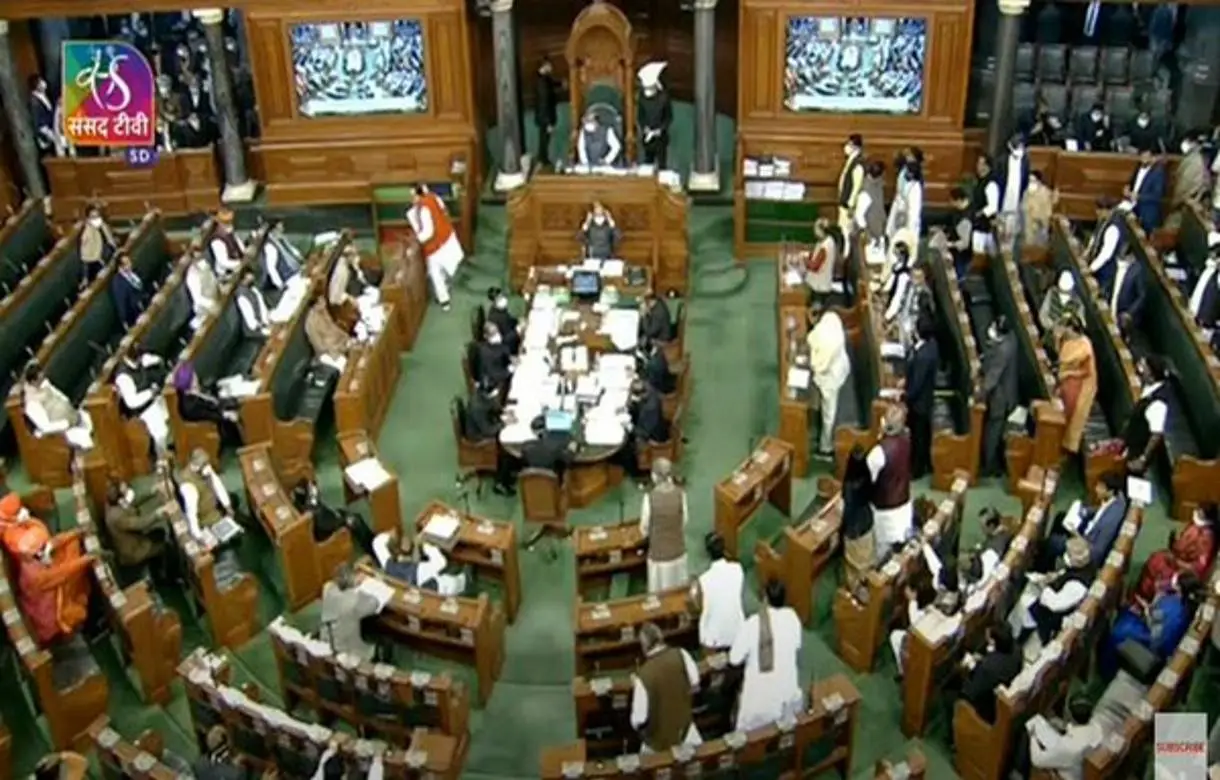
The Central government is prepared to introduce the Waqf Amendment Bill, 2024, in the Lok Sabha on August 8 to further amend the Waqf Act of 1995, which faced resistance from the Opposition parties. The new Bill has some major alterations, one of which is assigning a role to the ‘district collector’ when disputes related to the Waqf Act are to be solved.

One of the main proposals in the draft Bill is the substitution of the term ‘Waqf’ with the terminology ‘Unified Waqf Management, Empowerment, Efficiency, and Development’ in the parent 1995 Act.
Two major amendments are proposed in the Bill: the first makes provisions for the district collector to be appointed as the arbiter in cases of disputes regarding whether any property is Waqf property or government land. This has been effected by introducing clause 3C in the 1995 Act.

Under 3C (1), “Any property belonging to, or seized by, the Government which, before or after the commencement of this Act, has been, or is notified or declared, as a waqf property under this Act shall not be treated as a waqf property.”

According to Article 3C (2), “If any question arises whether any land is Government land, such question shall be referred to the district collector who shall decide the same after making an inquiry, and send a report to the State Government.”. But until the collector sends this report, the property shall not be deemed to be Waqf property.

The constituting of such decisions used to be solely decided by the Waqf tribunal before, whose decision was stated as final under Section 6 of the old Act. This is exactly what the new Bill aims to omit, that is, the words “shall be final”, so that the government may interfere in deciding Waqf property status.

Second, the Bill seeks to abolish the concept of “Waqf by use.” In most cases, under Islamic law, Waqf properties were dedicated orally until documentation became customary. For example, a masjid may be adjudged Waqf if it was used continuously for such purposes without any formal waqfnama. Thus, by abolishing the provisions under “Waqf by use,” the Bill renders the status of Waqf properties uncertain without valid documentation.

The Bill also amends Section 36 which deals with the registration of new Waqf properties, stipulating that no Waqf shall be created except with a formal Waqf deed. It also provides for the applicant to send the applications for registration of Waqf property to the district collector for verification of the authenticity of the application. Where the collector’s report shows that the property is disputed or government land, the Waqf shall not be registered until the dispute is decided by a competent court.

Another important amendment is that it is no longer mandatory that the chief executive officer of a Waqf Board should be a Muslim, a requirement that was there in the original Act.

The introduction of the Bill evoked a sharp response from opposition parties and Muslim organisations. Clear and unequivocal was the stand taken by the AIMPLB: any interference with the Waqf properties and the legal status and powers of the Waqf Boards would not be tolerated. They urged the National Democratic Alliance allies and opposition parties to reject the Bill and scuttle its passage in Parliament.

The opposition parties have declared they will oppose the Bill, while government sources say it is needed to bring transparency to the management of Waqf properties.

The former Vice-Chancellor of Aligarh Muslim University, Tariq Mansoor, called for a dispassionate analysis of the proposed reforms. He mentioned that there is a dire need for social justice and gender equity in Waqf Boards, and technology should be used to manage Waqf properties in a better way. It should learn from best practices in Islamic nations where Waqf organizations are generally found involved in charitable activities.

India News

Ajit Pawar dies in plane crash near Baramati airport

Maharashtra deputy CM Ajit Pawar dies in plane crash near Baramati; four others also killed.

Published

on

Ajit Pawar

Maharashtra deputy chief minister and NCP leader Ajit Pawar died in a tragic plane crash near Baramati on Tuesday morning. Reports indicate that four others, possibly including the aircraft crew and Pawar’s security personnel, were also killed in the accident.

The small aircraft took off from Mumbai around 8 am and crashed near Baramati airport while attempting to land approximately an hour later. Pawar was scheduled to attend four significant public meetings as part of his campaign ahead of the local body polls.

Visuals from the scene showed smoke and fire, with the wreckage of the plane scattered near the runway. Emergency services rushed the injured to nearby hospitals, although initial reports confirm multiple fatalities. Details regarding the cause of the crash are still awaited.

The incident has sent shockwaves across the state, as Ajit Pawar was a prominent political figure and key campaigner for the upcoming elections.

Continue Reading

India News

BJP president Nitin Nabin holds strategy meet in West Bengal ahead of assembly polls

BJP chief Nitin Nabin held a strategy meeting with West Bengal leaders in Durgapur as the party intensified preparations for the 2026 assembly elections.

Published

on

Nitin Nabin AND PM Modi

Party leadership discusses political situation, organisational strengthening and outreach plans as preparations for the 2026 assembly elections gather pace

Bharatiya Janata Party national president Nitin Nabin on Tuesday held a high-level strategy meeting with senior leaders of the West Bengal unit in Durgapur, signalling the party’s intensified push ahead of the state assembly elections.

The meeting focused on reviewing the current political situation in West Bengal, strengthening the party organisation and chalking out future strategies to expand the BJP’s presence across the state.

Senior leaders present at the discussions included Leader of the Opposition Suvendu Adhikari, former state president Dilip Ghosh, Dr Sukanta Majumdar and Rahul Sinha.

Following the meeting, Dr Sukanta Majumdar and Rahul Sinha told media persons that the BJP would step up public outreach programmes and reinforce its grassroots organisational structure in the coming weeks. They expressed confidence that the party is moving steadily towards forming the government in West Bengal this year.

Nabin’s visit marks his first trip to the state since assuming charge as the BJP’s national president. His two-day tour includes a review of election preparations, organisational meetings and participation in public programmes aimed at energising party workers.

On Wednesday, Nabin is scheduled to offer prayers at the Bhiringi Kali Mandir in the morning before addressing the BJP Karyakarta Sammelan of the Bardhaman division at the Chitralaya Mela Maidan in Durgapur. He will later address the Asansol district BJP Karyakarta Sammelan in Raniganj.

As part of its election preparations for the 2026 assembly polls, the BJP has also finalised a list of Prabasi leaders from several states to strengthen its campaign across different regions of West Bengal, including Nabadwip, Kolkata and the Howrah–Hooghly–Midnapore belt.

The list comprises senior leaders, legislators, former ministers, organisational office-bearers and youth leaders deputed from states such as Chhattisgarh, Odisha, Jharkhand, Delhi, Uttar Pradesh, Rajasthan, Himachal Pradesh, Bihar and Tripura. These leaders will work in coordination with the West Bengal unit to oversee organisational activities, election readiness and grassroots mobilisation in their assigned districts.

Meanwhile, Union Home Minister and senior BJP leader Amit Shah is scheduled to visit West Bengal on January 30 and 31. During his two-day tour, Shah is expected to hold key organisational and political meetings to review preparations and boost party morale ahead of the upcoming electoral challenges.

Continue Reading

India News

Maharashtra Deputy CM Ajit Pawar’s chartered plane crash-lands in Baramati

Several people were injured after a plane used by Maharashtra Deputy Chief Minister Ajit Pawar crash-landed during an emergency landing attempt at Baramati airport. Officials are yet to confirm if Pawar was on board.

Published

on

Ajit Pawar plane crash

A plane reportedly used by Nationalist Congress Party (NCP) chief and Maharashtra Deputy Chief Minister Ajit Pawar crash-landed during an emergency landing attempt at Baramati airport on Tuesday, leaving multiple people injured.

According to initial reports, the aircraft encountered trouble while attempting to land, following which it crashed on the airport premises. Visuals from the site showed mangled remains of the aircraft, with fire seen at the crash location and emergency services rushing to the spot.

Ambulances were seen transporting the injured to nearby hospitals for treatment. The exact number of people hurt and the extent of their injuries are yet to be officially confirmed.

It is not clear whether Ajit Pawar was on board the aircraft at the time of the incident. Reports indicate that the deputy chief minister was scheduled to travel to Baramati later in the day to attend four public meetings.

Authorities have not yet disclosed what prompted the emergency landing attempt. More details are awaited as officials assess the situation and begin preliminary inquiries.

Continue Reading

Trending

© Copyright 2022 APNLIVE.com