English हिन्दी
Connect with us

India News

Padma Awards 2025: Full list of Padma Vibhushan, Padma Bhushan, Padma Shri awardees

The awards recognize outstanding achievements across all fields, with a focus on public service. The recipients are selected by a committee appointed by the Prime Minister.

Published

on

The central government announced the recipients of the prestigious Padma Awards on Saturday. These awards, conferred annually on the eve of Republic Day, represent India’s highest civilian honours. They are presented in three categories: Padma Vibhushan (for exceptional and distinguished service), Padma Bhushan (for distinguished service of a higher order), and Padma Shri (for distinguished service).

The awards recognize outstanding achievements across all fields, with a focus on public service. The recipients are selected by a committee appointed by the Prime Minister.
This year, a total of 199 awards were presented: 7 Padma Vibhushan, 19 Padma Bhushan, and 113 Padma Shri. The President of India bestows these awards at a formal ceremony in Rashtrapati Bhawan, typically held in March or April.

List of Padma Award Winners 2024:

Padma Vibhushan:

  • Duvvur Nageshwar Reddy
  • Justice (Retd.) Jagdish Singh Khehar
  • Kumudini Rajnikant Lakhia
  • Lakshminarayana Subramaniam
  • MT Vasudevan Nair (Posthumous)
  • Osamu Suzuki (Posthumous)
  • Sharda Sinha (Posthumous)

Padma Bhushan:

  • A Surya Prakash
  • Anant Nag
  • Bibek Debroy (Posthumous)
  • Jatin Goswami
  • Jose Chacko Periappuram
  • Kailash Nath Dikshit
  • Manohar Joshi (Posthumous)
  • Nalli Kuppuswami Chetti
  • Nandamuri Balakrishna
  • PR Sreejesh
  • Pankaj Patel
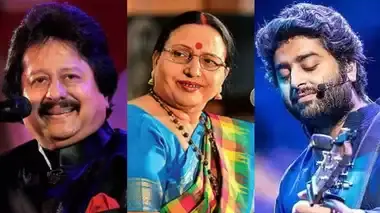
  • Pankaj Udhas (Posthumous)
  • Rambahadur Rai
  • Sadhvi Ritambhara
  • S Ajith Kumar
  • Shekhar Kapur
  • Shobana Chandrakumar
  • Sushil Kumar Modi (Posthumous)
  • Vinod Dham

Padma Shri:

  • Advaita Charan Gadanayak
  • Achyut Ramchandra Palav
  • Ajay V Bhatt
  • Anil Kumar Boro
  • Arijit Singh
  • Arundhati Bhattacharya
  • Arunoday Saha
  • Arvind Sharma
  • Ashok Kumar Mahapatra
  • Ashok Laxman Saraf
  • Ashutosh Sharma
  • Ashwini Bhide Deshpande
  • Baijnath Maharaj
  • Barry Godfray John
  • Begam Batool
  • Bharat Gupt
  • Bheru Singh Chouhan
  • Bhim Singh Bhavesh
  • Bhimawa Doddabalappa Shiilekyathara
  • Budhendra Kumar Jain
  • C S Vaidyanathan
  • Chaitram Deochand Pawar
  • Chandrakant Sheth (Posthumous)
  • Chandrakant Sompura
  • Chetan E Chitnis
  • David R Syiemlieh
  • Durga Charan Ranbir
  • Farooq Ahmad Mir
  • Ganeshwar Shastri Dravid
  • Gita Upadhyay
  • Gokul Chandra Das
  • Guruvayur Dorai
  • Harchandan Singh Bhatty
  • Hariman Sharma
  • Harjinder Singh Srinagar Wale
  • Harvinder Singh
  • Hassan Raghu
  • Hemant Kumar
  • Hriday Narayan Dixit
  • Hugh and Colleen Gantzer (Posthumous)
  • Inivalappil Mani Vijayan
  • Jagadish Joshila
  • Jaspinder Narula
  • Jonas Masetti
  • Joynacharan Bathari
  • Jumde Yomgam Gamlin
  • K. Damodaran
  • K L Krishna
  • K Omanakutty Amma
  • Kishore Kunal (Posthumous)
  • L Hangthing
  • Lakshmipathy Ramasubbaiyer
  • Lalit Kumar Mangotra
  • Lama Lobzang (Posthumous)
  • Libia Lobo Sardesai
  • M D Srinivas
  • Madugula Nagaphani Sarma
  • Mahabir Nayak
  • Mamata Shankar
  • Manda Krishna Madiga
  • Maruti Bhujangrao Chitampalli
  • Miriyala Apparao (Posthumous)
  • Nagendra Nath Roy
  • Narayan (Bhulai Bhai) (Posthumous)
  • Naren Gurung
  • Neerja Bhatla
  • Nirmala Devi
  • Nitin Nohria
  • Onkar Singh Pahwa
  • P Datchanamoorthy
  • Pandi Ram Mandavi
  • Parmar Lavjibhai Nagjibhai
  • Pawan Goenka
  • Prashanth Prakash
  • Pratibha Satpathy
  • Purisai Kannappa Sambandan
  • R Ashwin
  • R G Chandramogan
  • Radha Bahin Bhatt
  • Radhakrishnan Devasenapathy
  • Ramdarash Mishra
  • Ranendra Bhanu Majumdar
  • Ratan Kumar Parimoo
  • Reba Kanta Mahanta
  • Renthlei Lalrawna
  • Ricky Gyan Kej
  • Sajjan Bhajanka
  • Sally Holkar
  • Sant Ram Deswal
  • Satyapal Singh
  • Seeni Viswanathan
  • Sethuraman Panchanathan
  • Sheikha Shaikha Ali Al-Jaber Al-Sabah
  • Sheen Kaaf Nizam (Shiv Kishan Bissa)
  • Shyam Bihari Agrawal
  • Soniya Nityanand
  • Stephen Knapp
  • Subhash Khetulal Sharma
  • Suresh Harilal Soni
  • Surinder Kumar Vasal
  • Swami Pradiptananda (Kartik Maharaj)
  • Syed Ainu Hasan
  • Tejendra Narayan Majumdar
  • Thiyam Suryamukhi Devi
  • Tushar Durgeshbhai Shukla
  • Vadiraj Raghavendracharya Panchamukhi
  • Vasudeo Kamath
  • Velu Assaan
  • Venkappa Ambaji Sugatekar
  • Vijay Nityanand Surishwar Ji Maharaj
  • Vijayalakshmi Deshamane
  • Vilas Dangre
  • Vinayak Lohani

Note that “(Posthumous)” indicates the award was given posthumously.

India News

Delhi Police offers 11-person limit for CJP’s Connaught Place protest

Delhi Police has offered to facilitate a group of 11 people at Central Park in Connaught Place for the Cockroach Janata Party’s October 16 protest, while warning that violations of prohibitory orders could invite legal action.

Published

on

CJP protest to continue

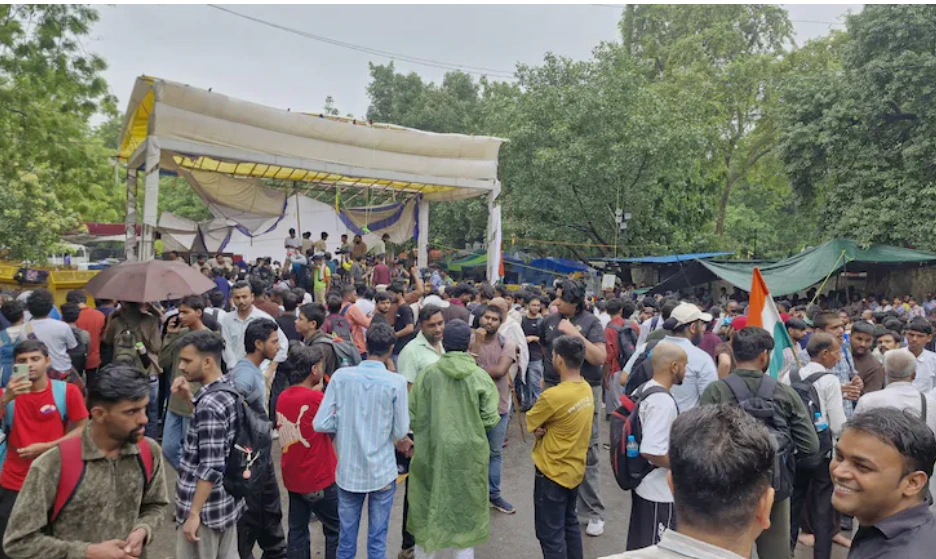
Delhi Police has proposed allowing a group of 11 people to carry the national flag and sing the national anthem at Central Park in Connaught Place on October 16, ahead of a protest called by the Cockroach Janata Party (CJP) over alleged electoral fraud.

The police said it could facilitate the group at a suitable place in the park, while appealing to the public not to join the proposed gathering in large numbers. The offer comes amid prohibitory orders in Connaught Place and adjoining areas under Section 163 of the Bharatiya Nagarik Suraksha Sanhita (BNSS).

CJP founder Abhijeet Dipke has called on people to assemble at Central Park at 5 pm on Friday with the national flag. The proposed demonstration, named “Lehra Do Tiranga”, follows the detention of CJP members Saurav Das and Ashutosh Ranka during an earlier protest.

Why Delhi Police proposed limiting the gathering

In its statement, Delhi Police cited the prevailing security and law-and-order situation in the area. It also referred to information from the New Delhi Municipal Council (NDMC) that Central Park would remain closed on October 16 and 17 for administrative reasons.

Deputy Commissioner of Police Neha Yadav said the NDMC had informed the police about the closure and had asked that no gathering be allowed near the park.

The police also cited representations from trader and market associations in Connaught Place and surrounding areas. According to the police, the associations had raised concerns about unlawful assemblies and their impact on businesses, particularly during the festive season.

Police warned that violations of Section 163 BNSS would invite appropriate legal action. It also stressed that the national flag must be displayed and carried, and the national anthem sung, in the prescribed manner with due respect and dignity.

Delhi High Court declines to stop CJP protest

The proposed gathering reached the Delhi High Court after a vendor sought intervention over concerns about disruption to businesses and public movement in Connaught Place.

On Thursday, the court declined to restrain the CJP from holding the protest. It recorded the police’s assurance that all possible measures under the law would be taken to regulate the gathering and maintain peace.

The petition was filed by a vendor at Palika Bazar in Connaught Place, who raised concerns about the potential impact of the demonstration on traders and others working in the area.

Additional Solicitor General Chetan Sharma, appearing for the authorities, told the court that steps had already been taken to regulate the proposed protest.

CJP’s protest call follows detention of party members

Dipke’s October 16 protest call follows earlier demonstrations over alleged electoral fraud. CJP members Saurav Das and Ashutosh Ranka are in jail on trespass charges after raising the national flag at Jantar Mantar earlier this week, according to the report.

The party has been protesting over alleged electoral fraud and has raised questions about the Election Commission.

Dipke has urged people to gather at Central Park with the national flag, arguing that raising the Tricolour should not be treated as a crime.

The police’s proposal to facilitate a group of 11 people came as the authorities sought to prevent a larger gathering at the site. The CJP’s response to the police’s offer was still awaited in the report published on October 15.

Continue Reading

India News

Actor Imran Khan asked to leave India after CJP protest

Actor Imran Khan has been asked to leave India by October 28, days after participating in a protest called by the Cockroach Janta Party (CJP) in Mumbai.
Published

on

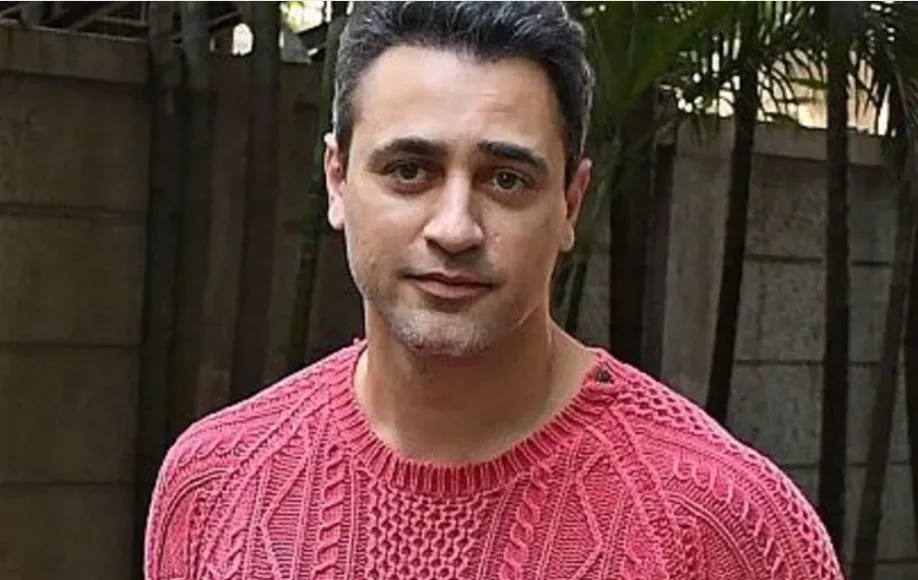
Actor Imran Khan, nephew of Bollywood star Aamir Khan, has been asked to leave India by the Mumbai Police, days after participating in a protest organised by the Cockroach Janta Party (CJP) in Mumbai.

According to the notice, the actor has been given until October 28 to leave the country. The development follows his participation in the demonstration, which brought the actor into the spotlight over his involvement in a political protest.

Imran Khan is believed to hold US citizenship and an Overseas Citizen of India (OCI) card rather than full Indian citizenship, according to the report.

What led to the notice against Imran Khan?

The notice came days after Imran Khan joined a protest called by the CJP in Mumbai. The group, described as a satirical political organisation, had called for the demonstration.

The actor’s participation was followed by action from the authorities, with the Mumbai Police directing him to leave India by the specified deadline.

The notice does not, by itself, mean that the actor has already left the country or has been deported. October 28 is the deadline mentioned for his departure.

Imran Khan and his citizenship status

Imran Khan is known for his work in Hindi films, including Jaane Tu… Ya Jaane Na and Delhi Belly. He is also the nephew of actor Aamir Khan.

The report states that Imran Khan is believed to be a US citizen and hold an OCI card. OCI status does not confer Indian citizenship, although it provides eligible foreign citizens of Indian origin with specified privileges under Indian law.

The notice directing the actor to leave India follows his participation in the Mumbai protest. The reported development has brought attention to the intersection of immigration rules and the participation of foreign nationals in political demonstrations.

Continue Reading

India News

Election Commission orders voter roll revision in 17 states, UTs

The Election Commission has ordered a Special Summary Revision of electoral rolls in 17 states and Union Territories. Draft rolls are scheduled for November 12, with final rolls due on January 4, 2027.
Published

on

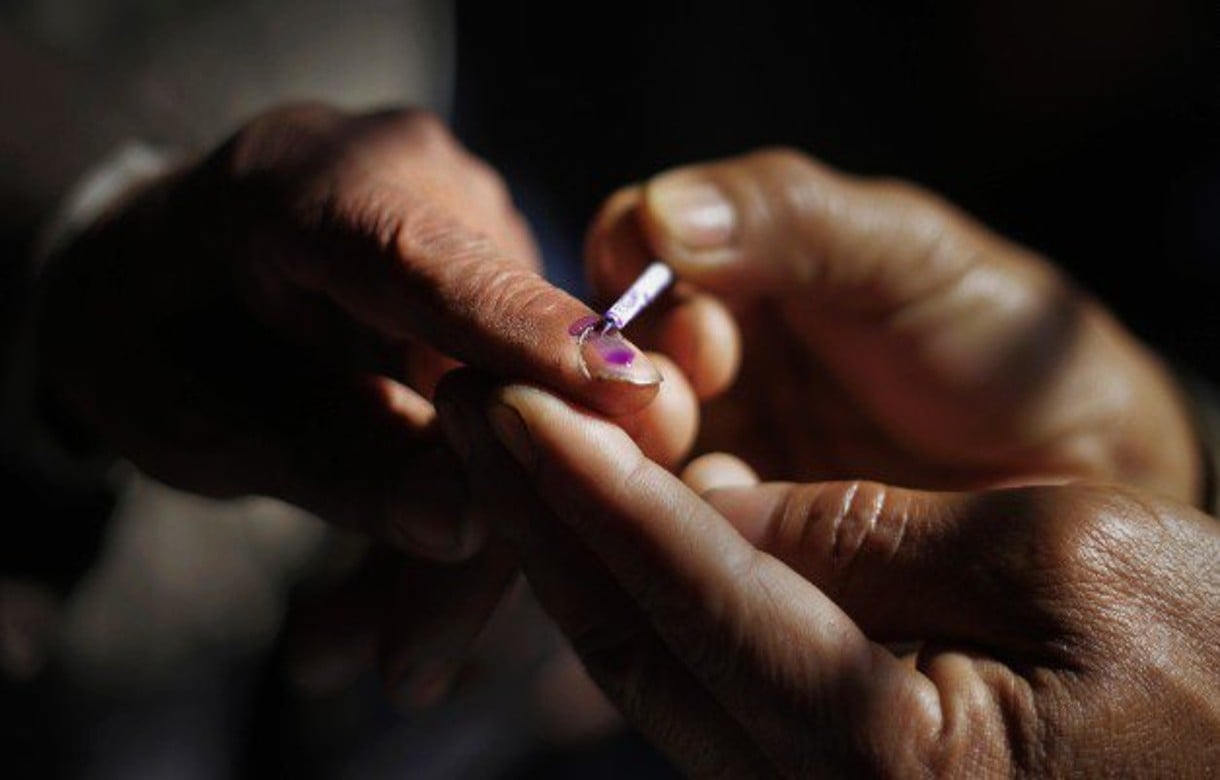
The Election Commission of India (ECI) has ordered a Special Summary Revision (SSR) of electoral rolls in 17 states and Union Territories, with the exercise aimed at facilitating voter registration and including eligible electors who may have been left out during the Special Intensive Revision (SIR).

The order was issued on Thursday, October 15, amid continuing political controversy over the SIR process and concerns raised by opposition parties regarding the exclusion of names from electoral rolls.

Under the announced schedule, January 1, 2027, will be the qualifying date for the revision. The draft electoral rolls are scheduled to be published on November 12, while the final rolls are due on January 4, 2027. Uttar Pradesh and Punjab, two states included in the exercise, are scheduled to go to the polls by February 2027.

Which states and Union Territories are covered?

The Special Summary Revision will cover the following 17 states and Union Territories:

  • Andaman and Nicobar Islands
  • Assam
  • Bihar
  • Chhattisgarh
  • Goa
  • Gujarat
  • Kerala
  • Lakshadweep
  • Madhya Pradesh
  • Manipur
  • Puducherry
  • Punjab
  • Rajasthan
  • Tamil Nadu
  • Uttar Pradesh
  • Uttarakhand
  • West Bengal

The Election Commission’s order follows earlier instructions issued to state election officials on September 29 to undertake a special drive to enrol eligible voters who had been left out, along with young and first-time electors.

Why has the Election Commission ordered the revision?

The announcement comes amid protests and political disagreements over the Special Intensive Revision of electoral rolls. Opposition parties have raised concerns about names being excluded during the exercise.

Another point of contention has been an additional declaration required from applicants submitting Form 6 for voter enrolment while the SIR was underway. The declaration required applicants to map their parents to the last SIR, which was conducted around 20 years ago.

The Election Commission had clarified on October 7 that the additional declaration applied only in states and Union Territories where the SIR was being conducted. It said the regular forms prescribed under the Registration of Electors Rules, 1960, would apply outside the SIR period.

The latest SSR order refers to applications for inclusion through Form 6 but does not mention the additional declaration.

What happens in states not covered by the current schedule?

The Election Commission has said that the schedule for the Special Summary Revision will be announced later in states and Union Territories where the SIR is ongoing or has recently been completed.

These include Andhra Pradesh, Arunachal Pradesh, Chandigarh, Dadra and Nagar Haveli, Daman and Diu, Haryana, Jharkhand, Karnataka, Maharashtra, Meghalaya, Mizoram, Nagaland, the National Capital Territory of Delhi, Odisha, Sikkim, Tripura and Telangana.

For Himachal Pradesh, Jammu and Kashmir, and Ladakh, where the SIR has not yet started, the schedule for electoral roll revision will be announced in due course, taking local weather conditions into account.

The Election Commission’s latest order sets out a separate timeline for the 17 states and Union Territories covered by the current SSR exercise, while leaving the schedules for the other regions to be announced later.

Continue Reading

Trending

© Copyright 2022 APNLIVE.com