English हिन्दी
Connect with us

India News

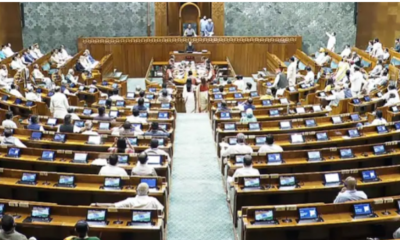
Lok Sabha passes Waqf Amendment Bill

Singh called the bill “illegitimate,” alleging it was designed to incite violence ahead of assembly elections in Bihar and West Bengal, purely to create controversy.

Published

on

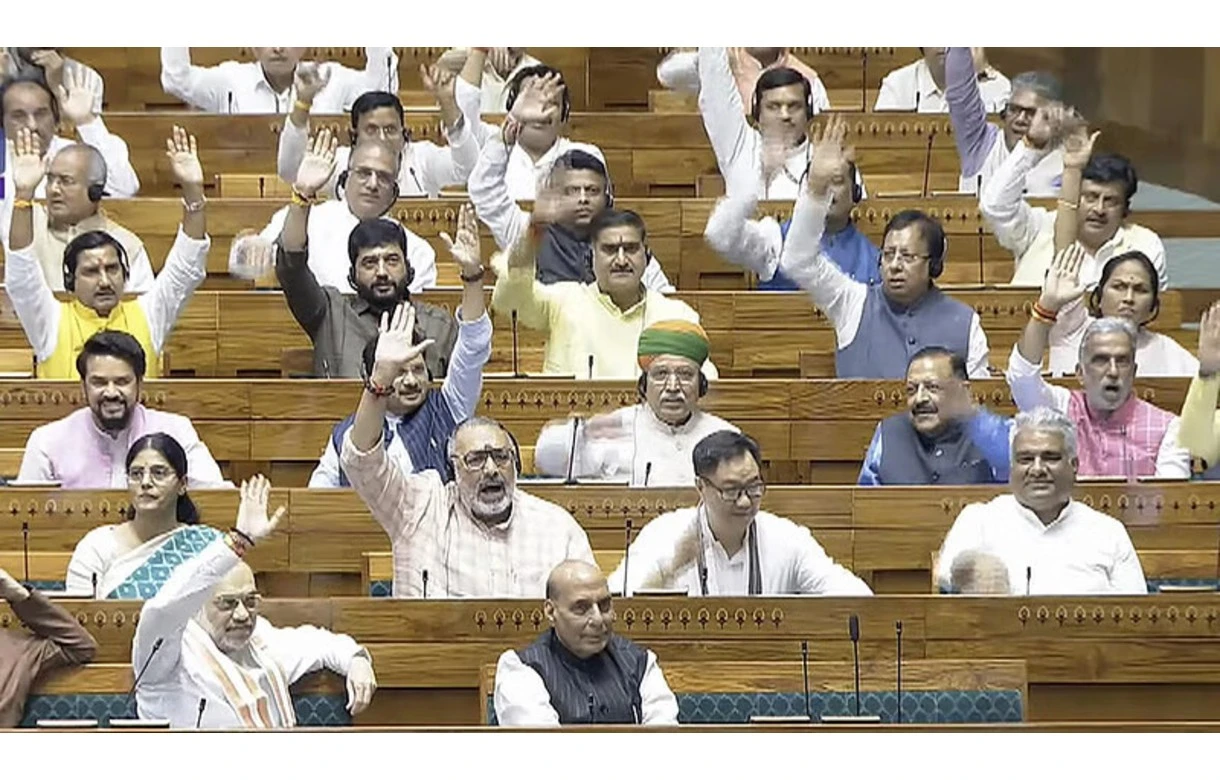
After more than 12 hours of debate, the Lok Sabha on Wednesday passed the Waqf (Amendment) Bill, 2025, by 288 votes in favour and 232 against.

The bill, introduced earlier in the day by Union Minority Affairs Minister Kiren Rijiju, aims to enhance the management of Waqf properties, leverage technology for transparency, and resolve administrative complexities, as recommended by a Joint Parliamentary Committee (JPC).

Rijiju hailed the JPC’s consultation process as the most extensive in India’s parliamentary history, noting that it received over 97.27 lakh petitions and memorandums through physical and online channels. “Each submission was carefully reviewed before finalizing the report,” he said, underscoring the thoroughness of the exercise.

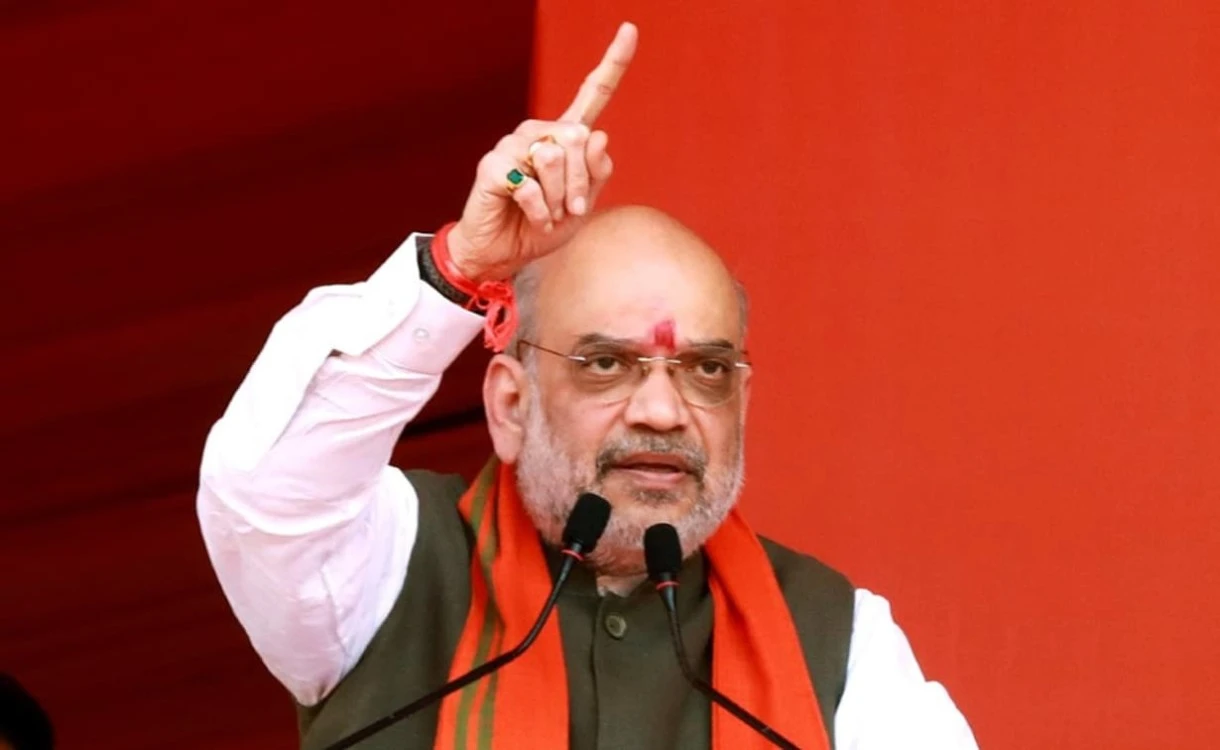
However, the Bill’s passage was far from smooth. Union Home Minister Amit Shah robustly defended the legislation, accusing the Opposition of spreading “fear-mongering for vote-bank politics” by claiming it interferes with Muslims’ religious affairs and property rights.

“No land can be declared Waqf property by mere declaration. Lands belonging to the Archaeological Survey of India, governments, tribal communities, and private citizens will be safeguarded by this law. All Muslim communities—Shia, Pasmanda, Ahmadiya, Bohras—can register trusts without going through the Waqf route,” Shah clarified during the debate.

He dismissed Opposition allegations that laws like the Citizenship Amendment Act (CAA), the abrogation of Article 370, the Triple Talaq ban, and the Ram Mandir construction had stripped Muslims of citizenship, challenging critics to provide evidence. “Look at Jammu and Kashmir—Omar Abdullah is ruling as Chief Minister,” he pointed out, countering the narrative.

Shah also invoked RJD chief Lalu Yadav’s 2013 remarks, where Yadav had called for a strong law to curb thefts in the name of Waqf properties. “You couldn’t fulfill his wish, but Narendra Modi has. This bill will apply retrospectively,” Shah declared, asserting that the Modi government was pursuing a “politics of progress.” He confidently predicted, “Modi has been elected for three terms, and for the next three terms, it will be a BJP government.”

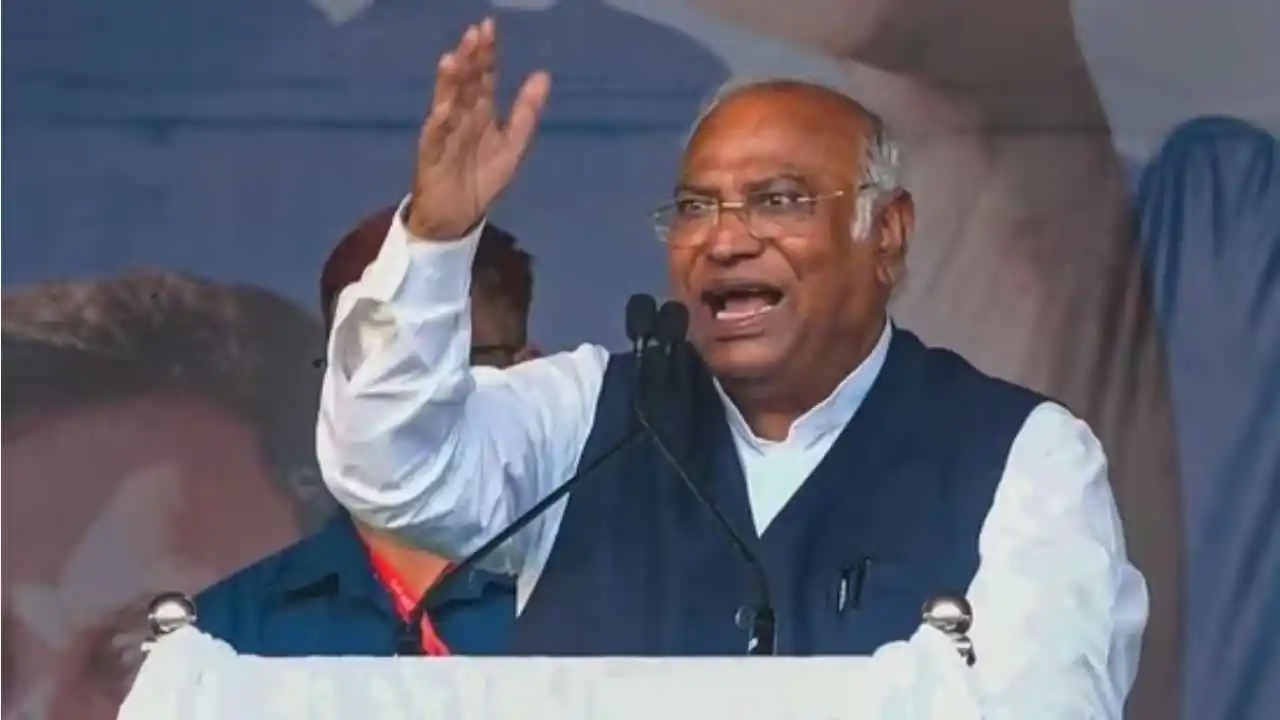
Speaking in the Lower House, Congress MP Gaurav Gogoi, the Deputy Leader of Opposition in the Lok Sabha, accused the government of using the Bill to “weaken the Constitution, defame minorities, divide Indian society, and disenfranchise marginalized groups.”

He challenged Rijiju’s claim that the UPA government had transferred 123 properties to the Delhi Waqf Board before the 2014 elections, labeling it “a complete lie” and demanding proof. “Rijiju misled the House with political accusations,” Gogoi charged, also criticizing Speaker Om Birla for not intervening.

Rijiju retorted by asking Gogoi to specify which part of his statement was inaccurate. “Don’t make blanket accusations; point to the exact issue,” he urged. Gogoi doubled down, reiterating his objection to Rijiju’s 2013 references.

Congress MP KC Venugopal took a broader swipe, accusing the Centre of an “agenda to destroy minorities.” Without naming Prime Minister Narendra Modi, he warned, “Today you target Muslims, tomorrow Christians, and the day after, Sikhs. You are dividing the country for political gain in the name of religion, even as you project yourself as a world leader abroad. The world is watching.”

Samajwadi Party leader Akhilesh Yadav accused the BJP of introducing the Bill to distract from its past failures, questioning their commitment to women’s empowerment by asking how many female candidates they would field in the upcoming Uttar Pradesh elections. He cautioned that the bill threatened India’s secular fabric.

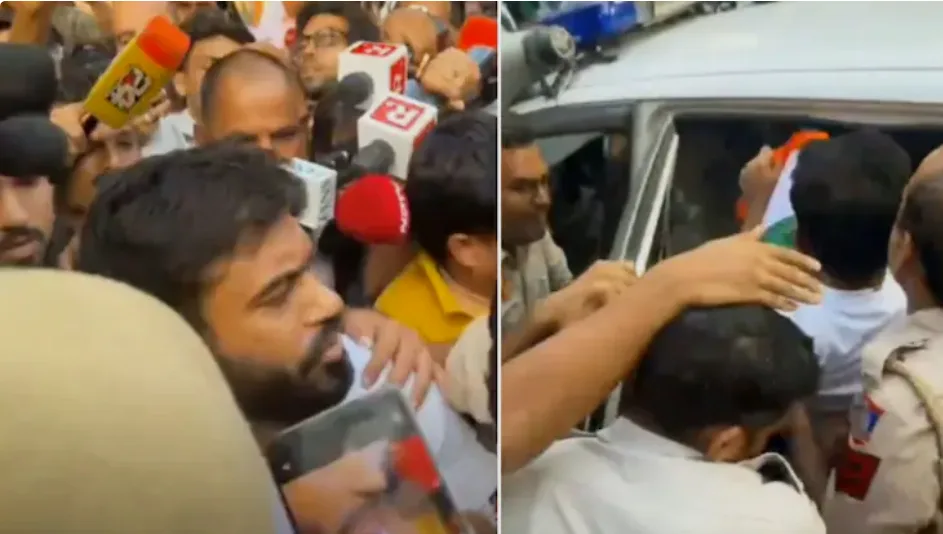
Speaking to reporters, Aam Aadmi Party leader Sanjay Singh and MLA Amanatullah Khan also voiced strong objections. Khan questioned Shah’s claims about the prime locations of 130 Waqf properties, hinting at a BJP plot to seize them, citing past encroachments on Muslim graveyards and buildings. Singh called the bill “illegitimate,” alleging it was designed to incite violence ahead of assembly elections in Bihar and West Bengal, purely to create controversy.
India News

Armed Jaish terrorist held by BSF during infiltration attempt in Jammu and Kashmir

A Jaish-e-Mohammed terrorist armed with an AK rifle was arrested by the BSF in Jammu and Kashmir’s Akhnoor sector while attempting to infiltrate across the border.

Published

on

Terrorist arrested

A Jaish-e-Mohammed terrorist carrying an AK rifle was arrested by the Border Security Force in Jammu and Kashmir’s Akhnoor sector while attempting to infiltrate from across the border, according to official sources.

The arrested individual has been identified as Abdul Khalik, a resident of the Budhal area in Rajouri district. Security officials said Khalik was working as an overground worker for a terror network active in the Poonch and Rajouri regions.

Terrorist crossed over to Pakistan for training

Preliminary investigations revealed that Khalik had gone missing from his native area a few years ago and had crossed into Pakistan, where he allegedly received arms training. He was intercepted by alert BSF personnel near the International Border during an infiltration attempt and was subsequently taken into custody.

After his arrest, Khalik was handed over to the local police for further questioning and legal action.

Security agencies on alert along border areas

Officials view the incident as part of a renewed push to revive terror activities in Jammu and Kashmir by sending back local operatives familiar with the region’s terrain. Security agencies have also stepped up vigilance following inputs that multiple launch pads across the border have been reactivated after a prolonged lull.

Authorities said enhanced surveillance and counter-infiltration measures are in place across vulnerable sectors in the Jammu region to prevent further attempts.

Continue Reading

India News

MNREGA may be renamed Pujya Bapu Gramin Rozgar Yojana, proposal sent to Cabinet

The Centre has proposed renaming MNREGA as Pujya Bapu Gramin Rozgar Yojana and increasing guaranteed employment to 125 days, with the proposal now before the Cabinet.

Published

on

The Central government has moved a proposal to rename the Mahatma Gandhi National Rural Employment Guarantee Scheme (MNREGA), one of the country’s largest social security programmes, with the matter now placed before the Union Cabinet for approval. As per the proposal, the scheme could be rebranded as Pujya Bapu Gramin Rozgar Yojana

Preparations are underway to roll out the restructured programme, which is expected to increase the guaranteed employment days for rural households to 125 days per year, up from the current provision of at least 100 days.

Higher allocation and expanded employment guarantee

According to the information shared, the government is working on allocating more than Rs 1.5 lakh crore for the revamped rural employment scheme. The proposed changes are aimed at strengthening income support for poor families living in rural areas.

MNREGA, enacted as a labour law and social security measure, provides unskilled manual work to eligible rural households and legally guarantees the right to employment. At present, around 154 million people are employed under the programme, with women accounting for nearly one-third of the beneficiaries.

Background of the scheme

The employment guarantee programme was launched during the Manmohan Singh-led government and was initially known as the National Rural Employment Guarantee Act. In 2009, it was renamed after Mahatma Gandhi.

A key feature of the scheme is its decentralised structure, with the Panchayati Raj institutions responsible for ensuring 50 per cent of the work. Another crucial provision mandates that if employment is not provided within 15 days of application, beneficiaries are entitled to an unemployment allowance.

The proposal to rename the flagship scheme and expand its scope is currently awaiting Cabinet consideration, after which a formal decision is expected.

Continue Reading

India News

Delhi Metro starts construction of new Golden Line linking Lajpat Nagar and Saket

Delhi Metro has commenced construction of the Lajpat Nagar–Saket G Block Golden Line under Phase-IV, aiming to improve connectivity across South Delhi.

Published

on

Delhi Metro

The Delhi Metro Rail Corporation has formally begun construction work on the Lajpat Nagar–Saket G Block corridor, also referred to as the Golden Line under Phase-IV of the metro expansion. The start of civil work marks a key step in extending metro connectivity in South Delhi.

The ceremonial groundbreaking and first test pile were carried out near Pushpa Bhawan in the Saket area, in the presence of senior DMRC officials. The construction is being executed by Rail Vikas Nigam Limited, which has been assigned the responsibility for this corridor.

Eight elevated stations planned on the corridor

The Lajpat Nagar–Saket G Block stretch will be a fully elevated line with eight stations along the route. These stations will be located at Lajpat Nagar, Andrews Ganj, GK-1, Chirag Delhi, Pushpa Bhawan, Saket District Centre, Pushp Vihar and Saket G Block.

According to officials, the corridor is expected to ease daily travel for residents of densely populated neighbourhoods such as Greater Kailash-1, Saket and Pushp Vihar. Improved access to schools, offices and commercial areas is also among the anticipated benefits once operations begin.

Integration with existing metro lines

The Golden Line will connect with three existing metro corridors, enhancing network integration in South Delhi. Lajpat Nagar will emerge as a triple-interchange station with links to the Violet Line and the Pink Line, while Chirag Delhi will provide interchange access to the Magenta Line.

Trains on the new corridor will have a capacity of about 900 passengers per trip, with each coach designed to carry nearly 300 commuters. Projections indicate that daily ridership on the line could exceed 1.2 lakh passengers by 2041 as train frequency increases and surrounding areas continue to grow.

Continue Reading

Trending

© Copyright 2022 APNLIVE.com