English हिन्दी
Connect with us

India News

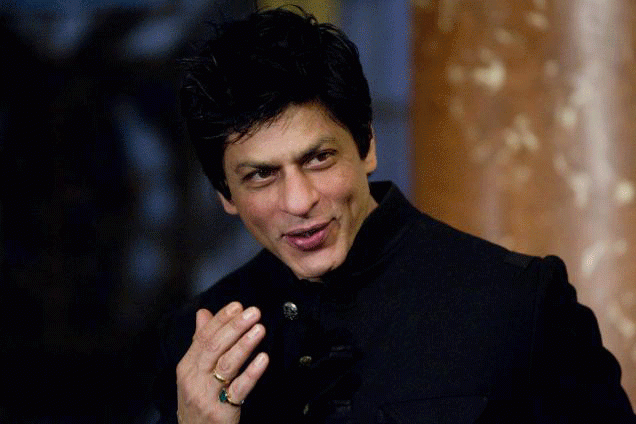
BJP leader targets Shah Rukh Khan over KKR signing of Bangladeshi cricketer

A BJP leader’s remarks against Shah Rukh Khan over KKR signing Bangladeshi cricketer Mustafizur Rahman have triggered sharp political reactions.

Published

on

Shahrukh Khan

A Bharatiya Janata Party (BJP) leader from Uttar Pradesh has sparked controversy after launching a personal attack on actor Shah Rukh Khan over the Kolkata Knight Riders’ (KKR) decision to buy Bangladeshi fast bowler Mustafizur Rahman at the Indian Premier League (IPL) auction.

Sangeet Som, a former member of the Uttar Pradesh Legislative Assembly, referred to Khan as a “traitor” during a public gathering in Meerut, objecting to the inclusion of a Bangladeshi player at a time when reports of atrocities against Hindus and other minorities in Bangladesh have emerged.

Som claimed that while violence against Hindus was taking place in Bangladesh, KKR’s owner had gone ahead and signed a Bangladeshi cricketer. He further alleged that Rahman, who was bought for Rs 9.2 crore during the IPL Players’ Auction held on December 16, would face opposition if he arrived in India to participate in the tournament, which is expected to begin in March.

The BJP leader also accused Shah Rukh Khan of benefiting from the country and then betraying it through such decisions. His remarks drew sharp reactions across the political spectrum.

Spiritual leader Devkinandan Thakur also criticised the KKR management for signing the Bangladeshi player and urged the franchise not to include Rahman in the playing squad. He alleged that the sentiments of Hindus were ignored despite reports of violence in Bangladesh.

Opposition leaders condemned Som’s comments and accused the BJP of targeting the actor unfairly. Leader of the Opposition in the Uttar Pradesh Assembly Mata Prasad Pandey criticised the remarks, while a Congress leader alleged that Shah Rukh Khan was being targeted because of his religious identity.

BJP ally and Uttar Pradesh minister Om Prakash Rajbhar distanced himself from Som’s statements, saying the former MLA often makes such remarks to remain in public attention.

The political row comes at a time when relations between India and Bangladesh have shown signs of strain. Tensions escalated last month after a Hindu man, Dipu Chandra Das, was lynched by a mob in Mymensingh over alleged blasphemy, with his body later set on fire.

India News

Delhi records very poor air quality as Mumbai sees rain on New Year

Delhi began 2026 under a blanket of smog and intense cold with very poor air quality, while Mumbai witnessed unusual early morning rainfall on the first day of the year.

Published

on

Delhi's air quality

India’s two biggest metropolitan cities ushered in 2026 with sharply contrasting weather patterns. While the national capital remained engulfed in thick smog and severe cold, Mumbai woke up to unexpected rainfall on the first morning of the New Year.

Early visuals from central Delhi, including areas around India Gate and Kartavya Path, showed reduced visibility as pollution levels stayed alarmingly high. Official data indicated that Delhi’s air quality remained in the “very poor” category on Thursday morning.

At 8 am, Delhi recorded an Air Quality Index (AQI) of 371, placing it firmly within the very poor bracket. Several neighbouring cities also reported similar conditions, underlining the widespread impact of pollution across the National Capital Region.

Delhi among most polluted cities

Delhi emerged as the most polluted city in the country on Thursday morning. Noida followed with an AQI reading of 364, while Ghaziabad recorded 338. Greater Noida stood close behind with an AQI of 336. All these cities fell under the very poor air quality category.

Coldest December day in six years

Alongside hazardous pollution levels, Delhi also witnessed an intense cold spell while bidding farewell to 2025. The city recorded its coldest December day in six years on Wednesday, with the maximum temperature dropping sharply to 14.2 degrees Celsius.

Meteorological data showed that the last time Delhi recorded a lower maximum temperature on December 31 was in 2019, when it fell to 9.4 degrees Celsius. The temperature on Wednesday was around 6.2 degrees below normal, marking the lowest maximum recorded this winter season so far.

The minimum temperature settled at 6.4 degrees Celsius, slightly below the seasonal average. December 20 and 21 also saw notably low maximum temperatures earlier in the month.

Weather officials indicated that colder conditions could intensify from January 3 onwards, as cold northerly winds from the Himalayan region are expected to move towards the capital, potentially leading to a further drop in minimum temperatures.

Mumbai wakes up to rain on first day of 2026

In contrast to Delhi’s smog and cold, Mumbai experienced rainfall on the morning of January 1. Several parts of the city, particularly areas in the island city, witnessed showers instead of the usual New Year sunshine.

The rain began shortly before 6 am, with some localities recording heavier showers while others saw light drizzle. The intensity of rainfall reduced gradually after 6.15 am, bringing brief relief but surprising residents on the first day of the year.

Continue Reading

India News

Trinamool accuses Election Commission of weaponising electoral rolls ahead of Bengal polls

Trinamool Congress has accused the election commission of weaponising electoral rolls during a voter re-verification drive in Bengal, a charge rejected by the poll panel.

Published

on

Mamata Banerjee

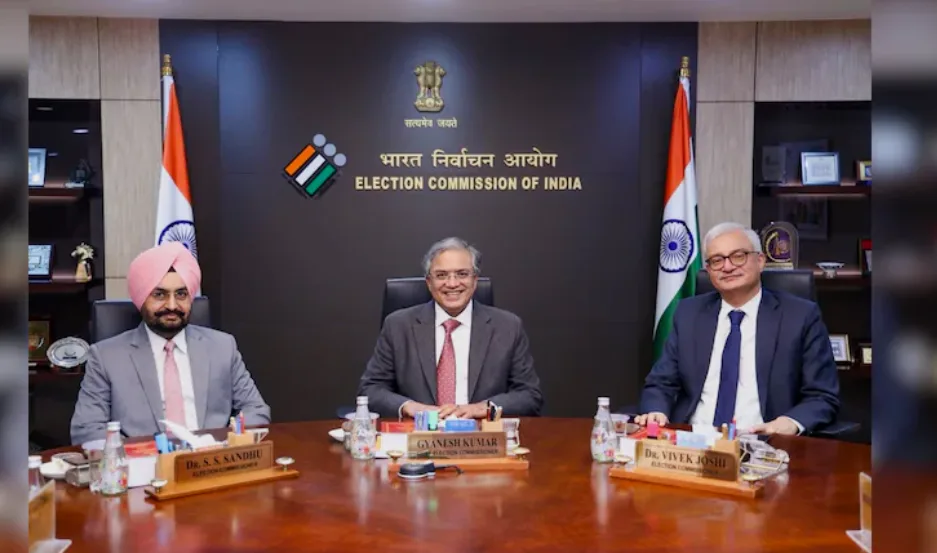
A delegation of the Trinamool Congress met Chief Election Commissioner Gyanesh Kumar in Delhi on Tuesday, alleging large-scale manipulation of electoral rolls during the ongoing voter re-verification exercise in West Bengal, months before the Assembly election.

The 10-member delegation was led by party leader Abhishek Banerjee and included Rajya Sabha chief whip Md Nadimul Haque, MPs Derek O’Brien, Kalyan Banerjee, Mamata Thakur, Saket Gokhale and Ritabrata Banerjee, along with senior leaders Pradip Mazumdar, Chandrima Bhattacharya and Manas Bhunia.

Allegations over voter re-verification

After submitting a detailed representation, Banerjee said the focus on electronic voting machines had diverted attention from what he described as the real threat to free and fair elections. According to him, irregularities were occurring at the level of electoral rolls rather than during polling.

The party alleged that the voter re-verification drive was being used to selectively delete, reclassify or flag voters through what it termed opaque, software-driven mechanisms. In its submission, Trinamool flagged the introduction of new and unexplained categories such as “suspicious voters” and “logical discrepancies”, claiming these classifications did not exist in earlier Special Intensive Revision exercises.

Demanding transparency, Banerjee said the election commission should make public the complete list of voters marked under “logical discrepancies”. He alleged that electoral rolls were being “weaponised” to influence election outcomes and said he conveyed this concern directly to the chief election commissioner during the meeting.

Claims of tense meeting

Describing the interaction as tense, Banerjee alleged that the delegation’s concerns were dismissed and that the chief election commissioner interrupted the discussion. He further accused the central government of undermining constitutional institutions and challenged the poll panel to make public the proceedings of the meeting, including CCTV footage.

Banerjee also sought to widen the issue beyond West Bengal, claiming that opposition parties in other states had failed to identify similar problems in time. He called for greater coordination among opposition parties to detect alleged irregularities in voter lists.

Election commission’s response

The election commission rejected the Trinamool’s allegations and issued a set of counter-directions following the meeting. It said the West Bengal government should immediately release the enhanced honorarium approved by the commission for Booth Level Officers.

The commission also informed the delegation that additional polling stations would be set up in high-rise buildings, gated communities and slum areas to improve voter access. It cautioned political parties to ensure that their ground-level representatives do not threaten or intimidate election officials, including Booth Level Officers, Electoral Registration Officers, Assistant EROs and observers.

Warning of strict action, the poll panel said any attempt to interfere with the election process or intimidate electoral staff would invite strong punitive measures, reiterating its commitment to maintaining the integrity of elections.

Continue Reading

India News

Madhya Pradesh minister acknowledges lapses as contaminated water in Indore claims seven lives

Eight people have died in Indore’s Bhagirathpura after allegedly drinking contaminated water, prompting suspensions and a government probe.

Published

on

Eight dead after sewage contaminates drinking water supply in Indore

Madhya Pradesh minister Kailash Vijayvargiya on Wednesday admitted that mistakes were committed by officials in connection with the contaminated drinking water incident in Indore that has so far claimed seven lives. He asserted that those found responsible would not be spared, regardless of their position.

The deaths were reported from Indore’s Bhagirathpura area, where a major outbreak of vomiting and diarrhoea over the past week has affected more than 1,100 people, according to officials. Of these, 111 patients required hospitalisation.

Mayor Pushyamitra Bhargava confirmed that seven people have died after falling ill due to contaminated water supply in the area. Bhagirathpura falls under the Indore-1 assembly constituency, represented by Vijayvargiya, who also holds the urban development and housing portfolio.

‘Mistake has been committed,’ says minister

Responding to questions from reporters, Vijayvargiya said the focus should currently be on patient recovery rather than assigning blame. He acknowledged lapses but maintained that accountability would follow.

“I feel that a mistake has been committed, but it is better if we first ensure that all patients recover and create a positive environment rather than discuss this now,” he said, adding that officials at any level would face action if found guilty.

On the exact number of deaths linked directly to contaminated water, the minister said figures would be clarified after a medical and administrative inquiry, noting that some deaths were natural while others were related to the incident.

Medical response and government support

Authorities said the number of fresh cases has declined, although hospital admissions are still ongoing. Four ambulances and dedicated medical teams have been deployed in Bhagirathpura to manage the situation.

Separate wards have been established for affected patients at the government-run Maharaja Yashwantrao Hospital and the private Shri Aurobindo Institute of Medical Sciences. Private hospitals in the locality have also been directed to treat patients, with the state government bearing the full cost of medical care.

Pipeline leakage traced as possible cause

Municipal Corporation Commissioner Dilip Kumar Yadav said a leakage was found in the main water supply pipeline in Bhagirathpura. The affected section reportedly passed beneath a toilet structure, raising the possibility of sewage contamination entering the drinking water supply.

Following instructions from Chief Minister Mohan Yadav, immediate action has been taken against municipal officials. A zonal officer and an assistant engineer have been suspended, while the services of an in-charge sub-engineer have been terminated.

A three-member inquiry committee headed by an Indian Administrative Service officer has been constituted to investigate the incident and determine responsibility.

Continue Reading

Trending

© Copyright 2022 APNLIVE.com

Left Menu Icon