English हिन्दी
Connect with us

India News

Siachen to now open for tourists: Rajnath Singh

Published

on

Rajnath Singh

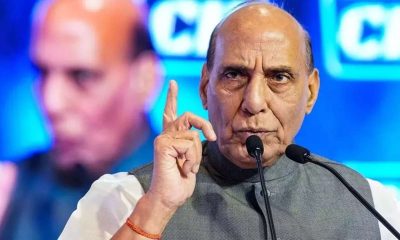
[vc_row][vc_column][vc_column_text]PM Modi-led NDA government on Monday (21 Oct) announced that the Siachen glacier, the world’s highest battlefield, is now open to tourists. Now tourists can feel the beauty of the glacier. Defence Minister Rajnath Singh said the government has decided to open the entire area from Siachen base camp to Kumar Post for tourism purposes.

The step has been taken to boost tourism in Ladakh and to give people a chance to appreciate the tough work done by Army jawans and engineers in extreme weather and inhospitable terrains, he said.

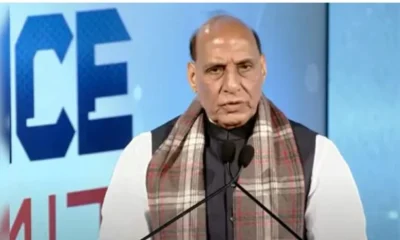
Singh was addressing a function in eastern Ladakh to inaugurate Colonel Chewang Rinchin Bridge on Shyok River, located about 45 km from the county’s border with China.

“The Ladakh MP in his address, mentioned about opening this area to tourism. And, I am happy to share that the government has decided to open a route from Siachen Base Camp to Kumar Post for tourists,” the minister said.

“This step will make them appreciate the efforts put in by jawans, engineers and other workers,” he said. Singh later tweeted, “The Siachen area is now open for tourists and Tourism. From Siachen Base to Kumar Post, the entire area has been opened for Tourism purposes”.[/vc_column_text][/vc_column][/vc_row][vc_row][vc_column][vc_raw_html]JTNDYmxvY2txdW90ZSUyMGNsYXNzJTNEJTIydHdpdHRlci10d2VldCUyMiUzRSUzQ3AlMjBsYW5nJTNEJTIyZW4lMjIlMjBkaXIlM0QlMjJsdHIlMjIlM0VMYWRha2glMjBoYXMlMjB0cmVtZW5kb3VzJTIwcG90ZW50aWFsJTIwaW4lMjBUb3VyaXNtLiUyMEJldHRlciUyMGNvbm5lY3Rpdml0eSUyMGluJTIwTGFkYWtoJTIwd291bGQlMjBjZXJ0YWlubHklMjBicmluZyUyMHRvdXJpc3RzJTIwaW4lMjBsYXJnZSUyMG51bWJlcnMuJTIwJTNDYnIlM0UlM0NiciUzRVRoZSUyMFNpYWNoZW4lMjBhcmVhJTIwaXMlMjBub3clMjBvcGVuJTIwZm9yJTIwdG91cmlzdHMlMjBhbmQlMjBUb3VyaXNtLiUyMEZyb20lMjBTaWFjaGVuJTIwQmFzZSUyMENhbXAlMjB0byUyMEt1bWFyJTIwUG9zdCUyQyUyMHRoZSUyMGVudGlyZSUyMGFyZWElMjBoYXMlMjBiZWVuJTIwb3BlbmVkJTIwZm9yJTIwVG91cmlzbSUyMHB1cnBvc2VzLiUzQyUyRnAlM0UlMjZtZGFzaCUzQiUyMFJham5hdGglMjBTaW5naCUyMCUyOCU0MHJham5hdGhzaW5naCUyOSUyMCUzQ2ElMjBocmVmJTNEJTIyaHR0cHMlM0ElMkYlMkZ0d2l0dGVyLmNvbSUyRnJham5hdGhzaW5naCUyRnN0YXR1cyUyRjExODYyMjgwMjcxNzgzNTY3MzYlM0ZyZWZfc3JjJTNEdHdzcmMlMjU1RXRmdyUyMiUzRU9jdG9iZXIlMjAyMSUyQyUyMDIwMTklM0MlMkZhJTNFJTNDJTJGYmxvY2txdW90ZSUzRSUyMCUzQ3NjcmlwdCUyMGFzeW5jJTIwc3JjJTNEJTIyaHR0cHMlM0ElMkYlMkZwbGF0Zm9ybS50d2l0dGVyLmNvbSUyRndpZGdldHMuanMlMjIlMjBjaGFyc2V0JTNEJTIydXRmLTglMjIlM0UlM0MlMkZzY3JpcHQlM0UlMjA=[/vc_raw_html][/vc_column][/vc_row][vc_row][vc_column][vc_column_text]The Siachen Glacier at the height of around 20,000 ft in the Karakoram Range is known as the highest militarised zone in the world where the soldiers have to battle frostbite and high winds. Avalanches and landslides are common at the glacier during the winters and temperatures can drop to as low as minus 60 degrees Celsius

At the bridge inauguration, Singh said only steel and concrete have not gone into its making, but “sweat and valour” of the engineers and workers of the Border Roads Organisation (BRO) too.

They have toiled hard and people should know their stories, Singh said. The 1400-ft long bridge is the highest altitude permanent bridge that will connect Durbuk and Daulat Beg Oldi and reduce travel time by about half.

The Indian Army had moved a proposal for opening up Siachen to tourists with a focus to showcase the working conditions of troops serving in the sector, and the government gave its nod, according to sources.


According to official figures, the Army lost 163 personnel at the world’s highest battlefield during the last 10 years. India and Pakistan started deploying troops at the strategically key glacier in 1984 and mountaineering expeditions were allowed till then.

The Glacier came under the strategic control of India in 1984 following ‘Operation Meghdoot’. Former northern command chief Lieutenant General (retd) BS Jaswal, however, feels that environmental issues will be a matter of concern.

“Tourism and other activities will see a surge in waste dumping. This will hasten glacier retreat. Due to the presence of the Army, a lot of non-biodegradable waste is already present there and every day, about 1,000 kg is being added,” Lieutenant General Jaswal said.

He said that while opportunities will open up the doors for revenue generation for locals as also the government, keeping the security in view, and red lines will have to be drawn to restrict areas for visits.

This being a very sensitive area, security issues, especially concerning foreigners, will have to be factored in, he added. At the same time, the former army commander said, it will also motivate the youngsters to join the Army.

(With Inputs from media reports)[/vc_column_text][/vc_column][/vc_row]

India News

Union budget 2026 to be presented on Sunday with special trading session

The Union Budget 2026 will be presented on a Sunday for the first time in over two decades, with NSE and BSE announcing special trading sessions for the day.

Published

on

Nirmala Sitharaman

For the first time in more than two decades, the Union Budget will be presented on a Sunday. Finance Minister Nirmala Sitharaman is scheduled to table the Union Budget for 2026 in the Lok Sabha on February 1 at 11 am, even as the day is usually observed as a holiday for government offices and financial markets.

February 1 falls on a Sunday this year, raising questions about market operations and investor response. To ensure uninterrupted trading and immediate market reaction to budget announcements, stock exchanges have announced special arrangements for the day.

Markets to remain open on budget day

Both the National Stock Exchange and the Bombay Stock Exchange have confirmed that markets will remain open on February 1. The NSE has announced a special trading session, with the pre-open market scheduled from 9 am to 9:08 am, followed by normal trading hours from 9:15 am to 3:30 pm.

The BSE has also declared the day a special trading day, with regular market hours applicable. Trading is expected to continue across equity, derivatives, and futures and options segments.

What the Sunday budget means for investors

A weekend budget presentation is seen as offering certain advantages for market participants. With trading active on the same day, investors will be able to respond to policy announcements immediately rather than waiting for the next working day.

The Sunday timing also gives investors, analysts, and financial institutions additional time to go through detailed proposals, including tax changes, fiscal deficit targets, and sector-wise allocations. The extended window for analysis may help reduce sharp, headline-driven reactions and encourage more informed decision-making.

With fewer competing developments on a non-working day, budget announcements are also expected to receive more focused attention from markets and stakeholders.

Parliamentary schedule and key milestones

The Economic Survey is expected to be tabled on January 29, ahead of the budget presentation. The Budget Session of Parliament began on January 28 with the President’s address to a joint sitting of the Lok Sabha and Rajya Sabha.

The upcoming budget will mark Nirmala Sitharaman’s ninth consecutive Union Budget. It will also be India’s 80th budget since Independence. Since 2017, Union Budgets have been presented at 11 am on February 1, following a timing change introduced during the tenure of former finance minister Arun Jaitley.

Continue Reading

India News

Union Budget 2026: Why Budget announcements matter for stock market direction

With markets open on Budget day, Union Budget 2026 is set to influence stock movements as investors track growth measures, taxation changes and the fiscal deficit.

Published

on

Stock market

The Union Budget remains one of the most closely watched events in India’s financial calendar, with stock markets often reacting sharply to policy signals. This year, trading will continue on Budget day — February 1 — despite it falling on a Sunday, allowing investors to respond immediately to announcements.

Finance Minister Nirmala Sitharaman will present her ninth consecutive Union Budget, an event that is expected to set the tone for market sentiment in the near term.

Growth-focused policies and investor sentiment

Equity markets generally respond positively when the Budget outlines steps aimed at supporting economic growth. Measures such as infrastructure spending, business-friendly reforms or incentives for key industries tend to improve investor confidence.

When such policies signal long-term expansion, markets often factor in stronger earnings prospects, leading to upward movement in stock prices.

Consumer spending and sectoral gains

Budget proposals that increase disposable income can also influence market behaviour. Tax relief measures, direct support schemes or efforts to manage inflation may leave households with more spending power.

Higher consumer spending typically benefits sectors such as retail, automobiles and fast-moving consumer goods, with increased demand often reflected in company valuations.

Tax changes and market participation

Tax-related announcements play a crucial role in shaping investment decisions. Lower taxes for individuals or businesses can support consumption and profitability, encouraging further investment activity.

At the same time, changes to capital gains or dividend taxation directly affect investor behaviour. Favourable tax treatment can lead to higher participation in equity markets, while tighter taxation may weigh on sentiment.

Fiscal deficit remains a key indicator

Markets also keep a close watch on the fiscal deficit — the difference between government spending and revenue. A higher deficit can raise concerns around increased borrowing, inflationary pressure and interest rates, all of which may affect corporate performance.

Conversely, a controlled deficit is often seen as a sign of fiscal discipline, helping strengthen confidence among investors.

Continue Reading

India News

Why India’s Union Budget is now presented on February 1

India shifted the Union Budget date from late February to February 1 in 2017 to give ministries and taxpayers more time before the new financial year begins.

Published

on

Nirmala Sitharaman

The Union Budget is among the most closely followed annual exercises in India, setting out the government’s revenue plans and spending priorities for the coming financial year. While it is now presented every year on February 1, this was not always the norm.

For decades, India followed a British-era tradition of presenting the Union Budget on the last working day of February. This meant that once Parliament approved the proposals, ministries, businesses and taxpayers had very little time to prepare before the new financial year began on April 1.

In many cases, by the time the Budget proposals were implemented, the financial year had already started. This resulted in delays in rolling out government schemes, policy changes and tax measures.

Why the date was advanced

The practice changed in 2017, when then finance minister Arun Jaitley presented the Union Budget on February 1 for the first time. The idea was to provide adequate time for ministries and departments to finalise spending plans and ensure smoother execution from the beginning of the financial year.

Since then, the February 1 presentation has continued, allowing stakeholders across sectors more time to adjust to new tax rules and policy decisions before April.

Budget timing also saw a shift

The Union Budget has seen changes not only in date but also in timing. Until 1999, the Budget was traditionally presented at 5 pm, another colonial-era legacy.

That year, then finance minister Yashwant Sinha moved the presentation to 11 am. The shift was aimed at improving media coverage and enabling wider public engagement with Budget announcements on the same day.

Legal challenge and Supreme Court view

The decision to advance the Budget date also faced legal scrutiny. A petition was filed in the Supreme Court arguing that an earlier Budget presentation could give the Centre an opportunity to announce voter-friendly measures ahead of state elections.

The Supreme Court dismissed the plea, observing that the Union Budget concerns the entire country and is not linked to individual state elections. The bench held that the frequency of state polls could not obstruct the functioning of the central government.

Continue Reading

Trending

© Copyright 2022 APNLIVE.com