English हिन्दी
Connect with us

India News

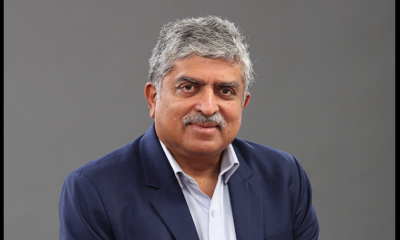
Infosys chief Nandan Nilekani highlights global turbulence from tariffs, AI and energy transition

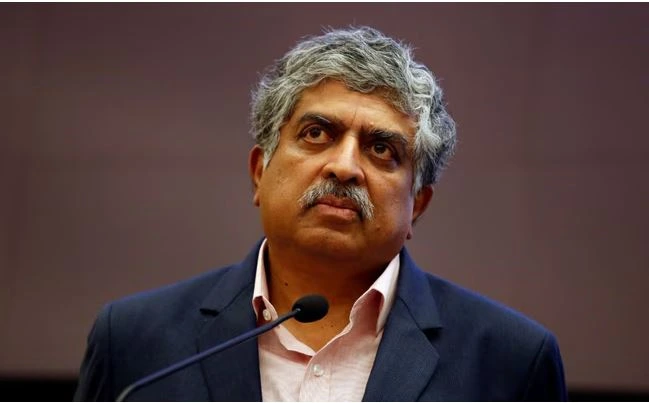
Nandan Nilekani, at Infosys’ 44th AGM, emphasized that AI, global trade fragmentation, and energy transition are creating unprecedented challenges for global businesses.

Published

on

Infosys chairman

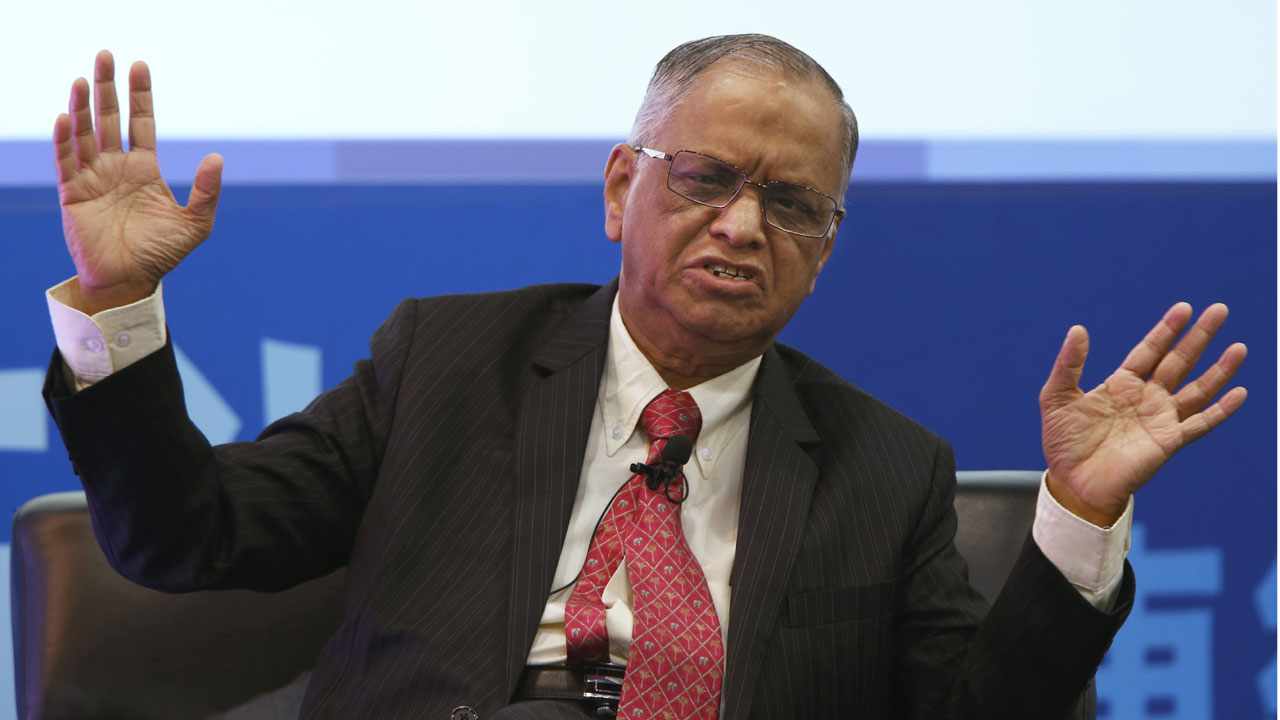
At Infosys’ 44th Annual General Meeting (AGM), chairman Nandan Nilekani drew attention to the growing wave of global disruptions driven by trade conflicts, artificial intelligence (AI), and the energy transition. He referred to the convergence of these trends as a “perfect storm,” which is rapidly reshaping the global economic and technological landscape.

Speaking on the impact of the tariff war, Nilekani noted that businesses are increasingly attempting to de-risk their supply chains. “The tariffs are pushing the businesses to de-risk sourcing,” he said, stressing that supply-chain diversification is now a strategic necessity. As traditional global market structures give way to fragmented regional alliances, companies are being forced to make critical choices on how and where to operate.

AI brings opportunity with uncertainty

Addressing the rapid adoption of AI, Nilekani acknowledged both its promise and challenges. He stated that artificial intelligence is already driving deep operational and cultural shifts across businesses, including Infosys itself. “Legacy system modernisation and data architecture overhaul to ensure all the firm’s data is consumable by AI are becoming increasingly unavoidable,” he explained.

Infosys is making significant internal shifts to embrace this new paradigm, with more than 2.75 lakh employees already trained in AI. The company is also investing heavily in building AI capabilities, through both innovation hubs (“AI foundries”) and scalability efforts (“AI factories”).

Energy transition adds another layer of disruption

Beyond trade and technology, Nilekani highlighted the uncertainty posed by the ongoing global energy transition. As the world shifts from fossil fuels to cleaner alternatives such as solar, wind, battery storage, nuclear and hydrogen energy, businesses must navigate a changing energy landscape.

“The world is shifting from a single global market to fragmented blocks,” he emphasized, underlining how companies must now adapt to both business and technological disruptions before stepping into a future filled with unknowns.

India News

Centre caps airfares to curb surge amid IndiGo crisis

To protect passengers from soaring fares amid IndiGo’s operational crisis, the Centre has introduced temporary airfare caps and ordered expedited refunds for cancelled flights.

Published

on

As operational disruptions at IndiGo entered their fifth day, the Civil Aviation Ministry moved to prevent steep ticket price hikes by imposing fare caps across affected routes. The decision comes as hundreds of flights were cancelled, leaving passengers stranded at airports nationwide.

Ministry steps in to prevent “opportunistic pricing”

The ministry said it had taken note of unusually high fares being charged by some airlines during the ongoing travel disruption. Invoking regulatory powers, it ordered all carriers to follow newly prescribed fare caps until flight schedules stabilise.

According to the statement, the move aims to prevent any exploitation of travellers—especially senior citizens, students and those undertaking urgent medical travel—during the crisis. Airlines and online travel platforms will continue to be monitored through real-time fare data.

IndiGo told to clear refunds by Sunday evening

In a separate direction, the ministry asked IndiGo to ensure all refunds for cancelled or disrupted flights are processed by 8 pm on December 7. It also instructed airlines not to impose rescheduling fees for passengers whose plans were affected.

Hundreds of cancellations as pilot shortage triggers meltdown

IndiGo, which operates around 2,300 daily flights with a fleet of over 400 aircraft, has seen widespread cancellations due to a planning-related pilot shortage. Operational delays are expected to continue for several more days.

Scenes of severe inconvenience have unfolded at airports, with passengers reporting long waits, disrupted travel plans, and a lack of clarity from the airline.

IndiGo issues apology, promises gradual restoration

The airline apologised publicly, saying it understood the difficulties faced by passengers. IndiGo assured that refunds for cancelled flights would be processed automatically and added that full normalisation of domestic operations is likely between December 10 and 15, though recovery may take time due to the scale of disruption.

Minister claims crisis nearing resolution

Civil Aviation Minister Ram Mohan Naidu said the situation is “on the verge of getting resolved”. He noted that major metro airports such as Delhi, Mumbai and Chennai had cleared most backlogs, and that IndiGo would resume operations with limited capacity before gradually increasing flights.

Continue Reading

India News

Centre plans major crackdown on IndiGo amid mass cancellations

Published

on

The Centre is preparing strong action against IndiGo after widespread disruption triggered by the airline’s handling of new pilot rest rules, according to sources. With thousands of passengers stranded and over 500 flights cancelled on consecutive days, the government is now likely to seek the removal of CEO Pieter Elbers, alongside other stringent measures.

Government weighs removal of IndiGo CEO

Sources indicate that the airline may be asked to remove its chief executive following what officials view as poor management of revised duty and rest regulations for pilots. The developments led to severe operational breakdown across airports and sparked public outrage.

Heavy penalties and flight curbs under consideration

According to officials, an unprecedented crackdown is being prepared. This includes the possibility of a hefty financial penalty on the carrier, which commands nearly two-thirds of India’s domestic aviation market.

Authorities are also evaluating whether the number of flights permitted to IndiGo should be temporarily reduced, marking what could become the toughest action taken against any airline in recent years.

IndiGo representatives were summoned by the aviation ministry on Friday evening as the government sought explanations for the crisis and measures to restore order.

Continue Reading

India News

Lok Sabha clears bill to levy cess on pan masala and similar goods for health, security funding

The Lok Sabha has passed a bill to impose a cess on pan masala manufacturing units, aiming to create a dedicated revenue source for public health and national security initiatives.

Published

on

Nirmala Sitharaman

The Lok Sabha has approved the Health Security se National Security Cess Bill, 2025, paving the way for a new cess on pan masala manufacturing units. The legislation aims to generate dedicated funds for strengthening national security and improving public health, both areas identified as critical national priorities.

Bill aims to create predictable funding stream

Finance Minister Nirmala Sitharaman, responding to the debate before the bill was passed by voice vote, said that the cess will be shared with states because public health falls under the state list.

The new cess will be applied over and above the GST, based on production capacity and machinery used in units manufacturing pan masala and similar goods. The minister clarified that this cess will not affect GST revenue, and that pan masala already attracts the maximum GST slab of 40 per cent.

According to the bill text, the objective is to build a “dedicated and predictable resource stream” to support expenditure related to health and national security.

Sitharaman also mentioned that cess collection as a percentage of gross total revenue currently stands at 6.1 per cent, lower than the 7 per cent average between 2010 and 2014.

Continue Reading

Trending

© Copyright 2022 APNLIVE.com