English हिन्दी
Connect with us

India News

Now, curbs on Karnataka co-operative bank. Another PMC-like crisis unfolding?

The Karnataka bank situation reminds of the Punjab and Maharashtra Co-operative (PMC) bank crisis of 2019, when it was revealed that the PMC bank defaulted on loans to the tune of Rs. 6,500 crore.

Published

on

Karnataka Co-operative bank

The Reserve Bank of India (RBI) has imposed curbs on a co-operative bank in Karnataka, restricting the withdrawal limit to Rs 35,000. The central bank also restrained Sri Gururaghavendra Sahakara Bank Niyamitha (SGRSBN) bank in Bengaluru from granting or renewing loans, accepting deposits or making investments for a period of six months.

The notification came on January 10.

However, the bank’s license is not cancelled and it will continue to do business with restrictions.

Worried depositors rushed to the bank to hold talks with the management. A meeting is scheduled for January 19, in view of the issue.

The situation was unexpected, considering the fact that SGRSBN bank received the best NPA management award in 2018 from the National Federation of Urban Cooperative Banks and Credit Societies Limited (NAFCUB).

The bank’s chairman K Ramakrishna has assured that the depositors’ money is “cent percent safe” with the bank. He blamed the 62 loans that locked up Rs 300 crore of deposit for the present situation.

BJP’s south Bengaluru MP Tejasvi Surya said that the customers need not panic, and that the finance minister has been informed about the matter.

Surya in his statement said that FM Nirmala Sitharaman has assured him that “the government will do everything in its capacity to protect the interests of the depositors and the long term interests of the bank. The statement added that Surya spoke to Sitharaman three times on January 13 and got reassurance from the minister that the interests of investors will be safeguarded.

The scenario reminds of the Punjab and Maharashtra Co-operative (PMC) bank crisis of 2019, when it was revealed that the PMC bank defaulted on loans to the tune of Rs. 6,500 crore.
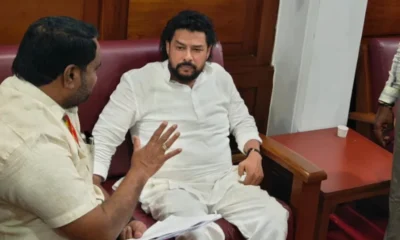
On September 24, 2019, the RBI restrained the bank from doing any business for six months, while also capping the withdrawal limit to Rs 1,000, and later to 25,000.

It has to be noted that in 2013, an International Labour Orgranisation (ILO) report said that co-operative banks performed better than its competitors during the 2007-08 financial crisis.

Issue of dual regulation

Some experts attribute the current problems with the co-operative banks to dual regulation. These banks are regulated under both banking and co-operative legislation, by the RBI and the Registrar of Co-operative Societies (RCS) respectively.

The RCS takes care of administrative issues and controls the management elections.

Therefore, although the said banks came under the regulation of the RBI partially, when it came to bank management, the respective state governments had higher control.

Bringing co-operative banks under one regulatory mechanism might be a solution to the crisis, some believe.

India News

Supreme Court stays defamation case against Rahul Gandhi over PM Modi remarks

The Supreme Court has temporarily halted trial court proceedings in the criminal defamation case against Rahul Gandhi over his alleged remarks concerning Prime Minister Narendra Modi. The court has issued notices seeking responses within four weeks.

Published

on

Rahul Gandhi

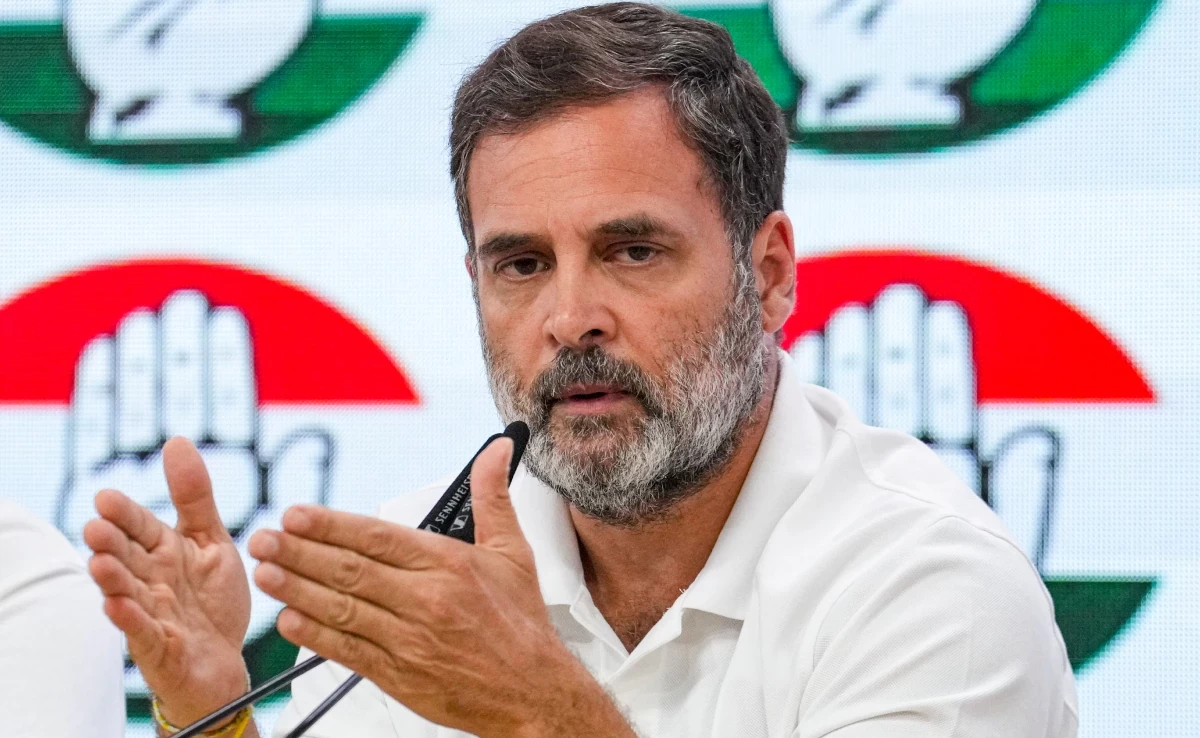
The Supreme Court has stayed further proceedings before the trial court in a criminal defamation case against Congress leader Rahul Gandhi over his alleged remarks concerning Prime Minister Narendra Modi.

A bench comprising Justices Vikram Nath and Aparesh Kumar Singh issued notices to the Maharashtra government and the complainant, seeking their responses within four weeks. The order provides interim relief to Gandhi while the Supreme Court considers his challenge to an earlier Bombay High Court decision.

The case concerns remarks allegedly made by Gandhi in 2018. A magistrate’s order dated August 28, 2019, initiated proceedings against him in the criminal defamation case. The Supreme Court’s latest order temporarily pauses the trial court proceedings; it does not amount to a final ruling on the allegations.

Why Rahul Gandhi approached the Supreme Court

Gandhi challenged the Bombay High Court’s September 8 order, which declined to quash the summons issued against him in the criminal defamation case.

The complaint was filed by Maharashtra-based BJP member Mahesh Shrishrimal before a magistrate court in Girgaum, Mumbai. The complaint concerns remarks Gandhi allegedly made about Prime Minister Narendra Modi during a public address in Rajasthan on September 20, 2018.

The complainant alleged that Gandhi’s remarks were defamatory and affected the reputation of the Prime Minister and BJP members. These remain allegations and have not been established by a final court judgment. These are allegations in the complaint, rather than findings established by a final court judgment.

Gandhi had sought to have the criminal proceedings quashed, challenging the maintainability of the complaint and the complainant’s standing to bring the case.

What the Bombay High Court had ruled

On September 8, the Bombay High Court rejected Gandhi’s plea to quash the criminal defamation proceedings.

The Bombay High Court rejected Gandhi’s plea to quash the proceedings, holding that the complaint could not be dismissed at that stage merely on the ground that the complainant was a BJP member. It observed that whether the alleged remarks were directed solely at the Prime Minister or could also affect members of the party would require examination during the trial.

The High Court’s decision allowed the proceedings to remain in place, although it had earlier provided temporary protection to Gandhi to enable him to approach the Supreme Court.

What happens next

The Supreme Court has now stayed further proceedings before the trial court and sought responses from the Maharashtra government and Mahesh Shrishrimal within four weeks.

The Supreme Court has sought responses within four weeks. The next hearing date should be included only if it has been confirmed by the court or the reference report. The interim stay pauses the trial court process while the Supreme Court considers Gandhi’s challenge to the High Court’s order.

The latest development does not determine whether the alleged remarks amount to criminal defamation. That issue remains subject to the legal proceedings.

Continue Reading

India News

CJP claims Saurav Das, Ashutosh Ranka detained at Jantar Mantar

The Cockroach Janta Party (CJP) claimed that leaders Saurav Das and Ashutosh Ranka were detained by Delhi Police during a protest at Jantar Mantar against Chief Election Commissioner Gyanesh Kumar.
Published

on

Saurabh Das Ashutosh Ranka

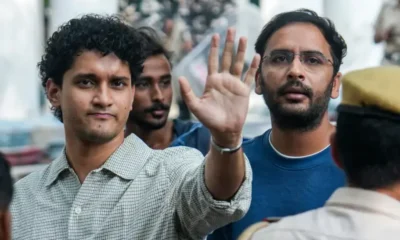
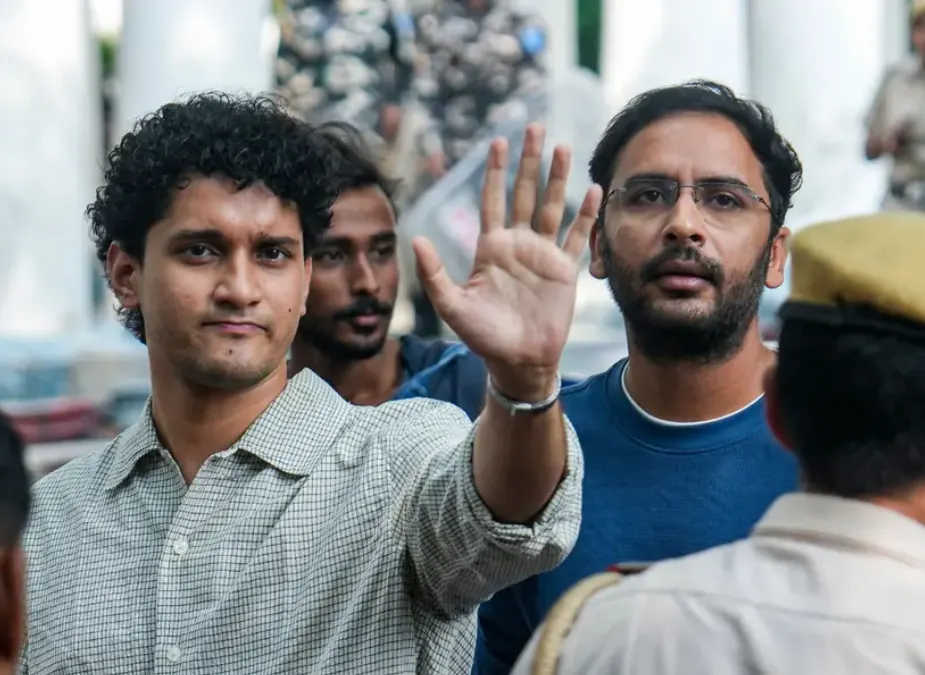
The Cockroach Janta Party (CJP) claimed on Tuesday, October 13, that its leaders Saurav Das and Ashutosh Ranka had been detained during a protest in Delhi against Chief Election Commissioner Gyanesh Kumar. The party said its members had reached the protest site carrying the national flag.

The CJP has been organising protests against alleged irregularities in the Special Intensive Revision (SIR) of electoral rolls. The party has demanded accountability from the Election Commission and the resignation of the Chief Election Commissioner.

CJP founder Abhijeet Dipke said that Saurav Das, Ashutosh Ranka and other party members had been detained, according to the party’s account.

Dipke criticised the restrictions on protests, saying that resistance could not be stopped by changing the status of a designated protest venue.

Why the CJP is protesting

The CJP has been protesting against Chief Election Commissioner Gyanesh Kumar over alleged irregularities in the voter-roll revision exercise. The party has raised concerns about the deletion and alleged manipulation of voters’ names. These claims remain allegations and should not be treated as independently established findings.

Earlier detention of CJP leaders

The latest reported detentions follow an earlier incident involving CJP founder Abhijeet Dipke and leaders Saurav Das and Ashutosh Ranka. The three were detained at Delhi’s Indira Gandhi International Airport on October 10 ahead of the planned Jantar Mantar demonstration.

According to related reporting, the three CJP leaders were released on October 11 following proceedings before an executive magistrate after furnishing a surety bond for maintaining peace and good behaviour for one year.

The CJP’s claims come amid its protests against Chief Election Commissioner Gyanesh Kumar over alleged irregularities in the voter-roll revision exercise.

Continue Reading

India News

Rahul Gandhi leads INDIA bloc march to Supreme Court over voter list row

Rahul Gandhi led the INDIA bloc’s protest march towards the Supreme Court in New Delhi as opposition parties intensified their campaign over the voter list revision process and alleged electoral irregularities.

Published

on

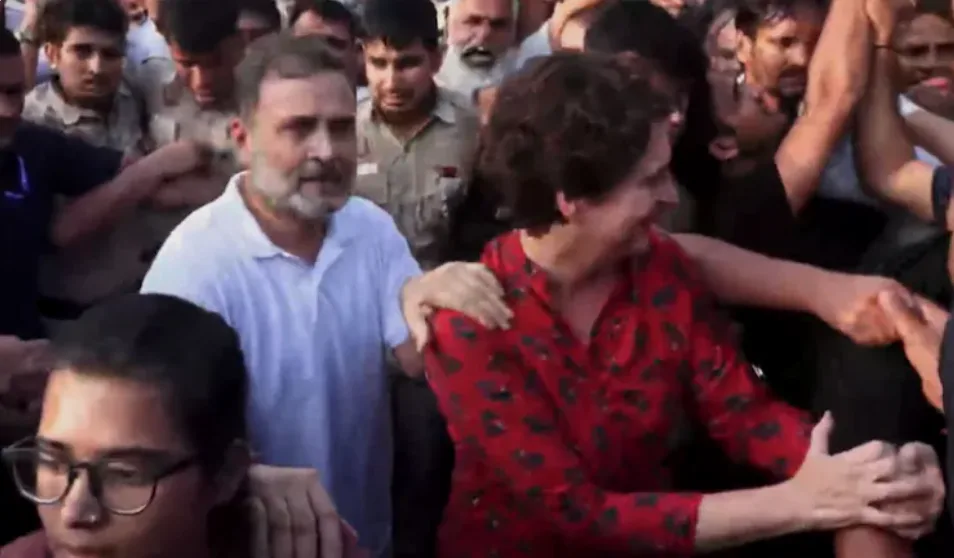
Congress leader Rahul Gandhi led an INDIA bloc protest march towards the Supreme Court in New Delhi on Monday, October 12, as opposition parties stepped up their campaign over alleged irregularities in the revision of electoral rolls.

The demonstration was part of a wider opposition mobilisation demanding accountability from Chief Election Commissioner Gyanesh Kumar over the Special Intensive Revision (SIR) of voter lists. Opposition leaders have alleged irregularities in the revision of electoral rolls and have called for action against Chief Election Commissioner Gyanesh Kumar 

The opposition has accused the Election Commission of electoral irregularities in connection with the Special Intensive Revision (SIR) of electoral rolls. Rahul Gandhi has called for Chief Election Commissioner Gyanesh Kumar to resign 

INDIA bloc intensifies protest over voter lists

The march brought opposition parties together around their objections to the SIR process and their demand for Kumar’s resignation. Rahul Gandhi had called on political parties, students and civil society groups to participate in the demonstration.

The INDIA bloc has also raised broader concerns about electoral integrity and the treatment of voters whose names were removed from electoral rolls. The INDIA bloc has challenged alleged electoral irregularities in the SIR process and demanded accountability from Chief Election Commissioner Gyanesh Kumar. 

According to the report, the opposition’s legal team filed a petition against the poll panel chief over alleged ‘vote chori’ (vote theft). 

Chief Justice declines meeting request

Ahead of the march, Chief Justice of India Surya Kant declined a request to meet opposition leaders, according to reports citing sources familiar with the response.

The response did not prevent the opposition from proceeding with its planned march. The Supreme Court can consider legal challenges through its judicial process, rather than through an administrative meeting with a political delegation.

Security measures and metro restrictions in Delhi

Authorities tightened security in parts of central Delhi ahead of the demonstration. The Delhi Metro Rail Corporation announced that entry and exit at six stations would remain closed until 4 pm on October 12 for security reasons.

The affected stations were Patel Chowk, Janpath, Rajiv Chowk, Mandi House, Central Secretariat and Barakhamba Road. Interchange facilities remained available at the affected stations under the announced arrangement.

The restrictions came amid a series of protests in the capital over demands for Kumar’s resignation and allegations concerning the electoral roll revision process.

Dispute over the SIR process continues

The Special Intensive Revision has become a point of contention between opposition parties and the Election Commission, with opposition leaders alleging electoral irregularities in the revision of voter lists. 

The INDIA bloc’s campaign has focused on electoral irregularities and demands for accountability from the Election Commission’s leadership 

The dispute is now unfolding through both street protests and legal proceedings. The outcome will depend on the relevant judicial processes and any further decisions by the authorities concerned.

Continue Reading

Trending

© Copyright 2022 APNLIVE.com