English हिन्दी
Connect with us

India News

New India determined to crush enemies, transform Bihar, says PM Modi in Motihari

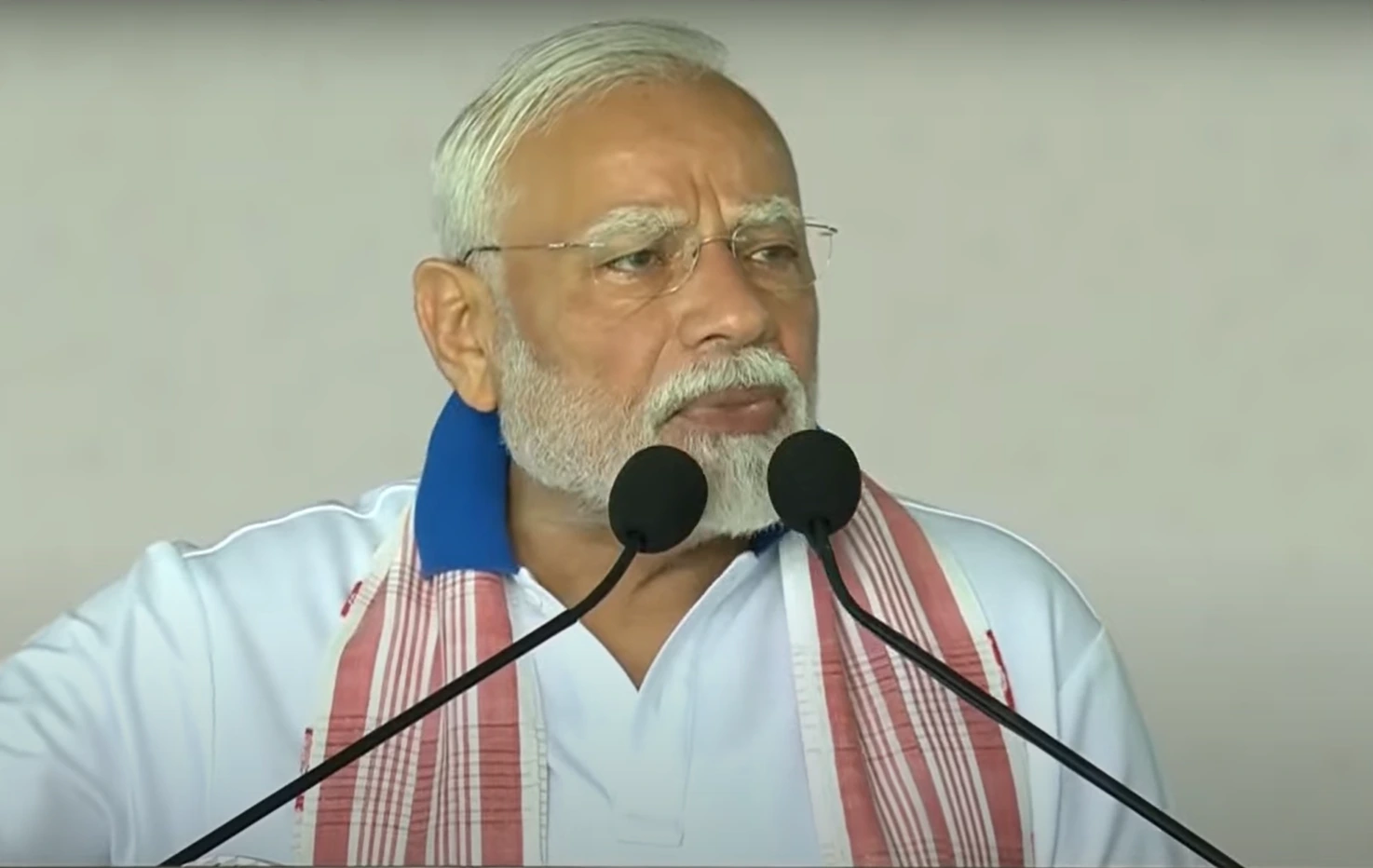
Prime Minister Narendra Modi, while launchingRs7,000 crore worth of development projects in Motihari, Bihar, reaffirmed his vision of a ‘New India’ that is assertive, development-oriented, and focused on empowering the eastern states.

Published

on

PM Modi

In a powerful address from Bihar’s Motihari, Prime Minister Narendra Modi reaffirmed the spirit of a “new India”—one that is uncompromising against its enemies and determined to ensure the comprehensive development of eastern states. PM Modi inaugurated, laid foundation stones, and dedicated to the nation various infrastructure and welfare projects cumulatively valued at over Rs 7,000 crore.

Operation Sindoor and the symbolism of Bihar

Calling back to Operation Sindoor, PM Modi hailed the soil of Bihar as the launchpad of decisive action, stating, “This is a new India—an India that mobilizes from land and sky to punish enemies.” He underlined the strategic and symbolic importance of Bihar, especially Motihari, in national missions of importance.

Vision for eastern India’s rise

Highlighting the global shift in development toward eastern nations, PM Modi asserted that the time has come for India’s eastern states—especially Bihar—to match the stature of metropolitan cities in the west. “Motihari must become as prominent as Mumbai,” he said, envisioning Gaya competing with Gurugram, Patna with Pune, and Jalpaiguri with Jaipur in terms of growth and opportunity.

Economic justice and central support

Accusing past governments of stalling Bihar’s progress and using politics of vendetta, Modi emphasized that during their 10-year rule, onlyRs2 lakh crore was allocated to Bihar. He claimed that under his tenure since 2014, the allocation has risen toRs9 lakh crore. “This is not just money; it is an investment in Bihar’s people and future,” he stressed.

Focus on housing, women empowerment, and direct welfare

PM Modi stated that nearly 60 lakh homes have been built in Bihar under PM Awas Yojana. In Motihari district alone, 3 lakh homes have been provided, with 12,000 keys distributed during the event. He also celebrated women’s empowerment through Jan Dhan Yojana, noting that over 3.5 crore women in Bihar now have bank accounts, removing financial dependency and fostering dignity.

Boost to youth employment and self-reliance

Introducing a new Central scheme for first-time private-sector employees, PM Modi announced a Rs 15,000 incentive starting August 1, with a Rs 1 lakh crore budget. He further said lakhs of youth have benefited from Mudra loans, including 60,000 beneficiaries in Champaran alone.

End of extremism and Naxalism in Bihar

Modi credited the decline in Maoist violence in districts like Gaya, Jamui, and Champaran to strong governance. “Now the youth in these regions are dreaming big,” he said, reiterating the government’s aim of freeing the country entirely from Naxalism.

Agricultural growth and global connectivity

Showcasing Bihar’s agri-rich identity, PM Modi spoke of makhana, bananas, litchis, Katarni rice, and Maghai paan. He mentioned the formation of a Makhana Board and initiatives like the PM-Dhan-Dhanya Krishi Yojana aimed at uplifting underperforming but high-potential districts. This scheme will benefit 1.75 crore farmers nationwide, with Bihar set to gain significantly.

Cultural and religious connectivity

Highlighting the Ram-Janaki Path and Sitamarhi-Ayodhya rail link, PM Modi emphasized how cultural projects would boost tourism and employment. Key sites in Champaran like Sattarghat and Chakia will now be better connected, reinforcing the region’s spiritual and economic fabric.

Commitment to backward communities

Modi said his government fulfilled the long-pending demand for constitutional status for the OBC Commission and launched Janman Yojana withRs25,000 crore for tribal upliftment. “We prioritize every backward region and class—not in words, but in policy and execution,” he concluded.

Governor Arif Mohammed Khan, Bihar CM Nitish Kumar, and Union Ministers like Jitan Ram Manjhi, Chirag Paswan, and Giriraj Singh were present during the event.

India News

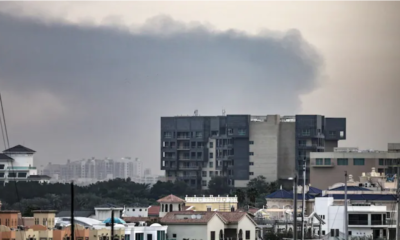
Delhi air quality plunges to severe as thick smog blankets the capital

Delhi’s air quality deteriorated sharply with AQI entering the ‘severe’ zone across several areas, prompting enforcement of GRAP stage-IV measures.

Published

on

Delhi's air quality

Delhi woke up to hazardous air conditions on Tuesday as dense smog covered large parts of the national capital, pushing the Air Quality Index (AQI) into the ‘severe’ category across several locations. Poor visibility and rising health concerns marked yet another spell of extreme pollution in the city.

Data from the Central Pollution Control Board (CPCB) showed the overall AQI in Delhi touching 413 in the morning, placing it firmly in the ‘severe’ bracket. Several areas across the National Capital Region (NCR) reported alarming pollution levels, indicating a widespread deterioration in air quality.

Pollution hotspots report hazardous readings

Some of Delhi’s major pollution hotspots recorded extremely high AQI levels. Anand Vihar topped the list with an AQI of 466, followed by Ashok Vihar at 444 and Chandni Chowk at 425. These areas remained in the ‘severe’ category, posing serious health risks, especially for children, the elderly and those with respiratory conditions.

Even central parts of the city were not spared. India Gate, Kartavya Path and the Rashtrapati Bhavan area were shrouded in toxic smog, with AQI levels around 384, categorised as ‘very poor’.

GRAP stage-IV measures enforced across Delhi-NCR

In response to the worsening situation, the Commission for Air Quality Management (CAQM) enforced all actions under GRAP Stage-IV across Delhi-NCR. As part of these emergency measures, truck-mounted water sprinklers were deployed to suppress dust and reduce particulate matter in the air.

As per AQI standards, readings between 401 and 500 fall under the ‘severe’ category, while levels above 300 are considered ‘very poor’, highlighting the seriousness of the current conditions.

Delhi government reviews pollution control steps

The Delhi government has reiterated its commitment to tackling rising pollution levels with strict enforcement measures. Chief Minister Rekha Gupta stated that a zero-tolerance policy will be followed against all sources contributing to air pollution in the capital.

A high-level review meeting was held at the Delhi Secretariat to assess existing measures and take further decisions. The meeting focused on enforcing Pollution Under Control (PUC) norms without any relaxation, exploring pooled and shared electric bus services across Delhi-NCR, issuing fresh guidelines for e-rickshaws, and rationalising Delhi Transport Corporation (DTC) bus routes.

Senior officials from the Environment and Transport Departments, the Delhi Pollution Control Committee (DPCC), Public Works Department (PWD) and Delhi Traffic Police, along with Environment Minister Manjinder Singh Sirsa, attended the meeting to finalise immediate and long-term steps to address the pollution crisis.

Continue Reading

India News

Rahul Gandhi alleges institutional bias, questions electoral system during Berlin address

Rahul Gandhi alleged that India’s institutions and electoral system have been weaponised to favour the BJP, remarks that sparked a strong political response.

Published

on

Rahul-Gandhi

Leader of the Opposition in the Lok Sabha, Rahul Gandhi, has said that India’s institutional framework is facing a serious challenge and has been used to favour the ruling BJP. Speaking during an interaction at the Hertie School in Berlin, Gandhi questioned the functioning of key institutions and the electoral machinery, remarks that triggered a sharp political response from the BJP.

Gandhi said the Congress believes there is a problem with the electoral system and alleged that several institutions have been captured. Referring to investigative agencies, he claimed that bodies such as the CBI and the ED have been used as political tools. According to him, cases filed by these agencies overwhelmingly target those opposing the BJP, while leaders from the ruling party face none.

He also pointed to what he described as a stark financial imbalance between the BJP and the opposition, claiming a funding ratio of 30:1. Gandhi said this disparity reflects how institutions are being used to consolidate political power.

Opposition strategy and INDIA alliance

The Congress leader said merely pointing out problems in elections is not enough and stressed the need for the opposition to build a system of resistance that can effectively counter the ruling party. He added that the challenge now goes beyond electoral contests and is about presenting an alternative vision for the country.

On the INDIA alliance, Gandhi said the unity among opposition parties is rooted in their rejection of the ideological position of the RSS. While acknowledging that tactical contests between alliance partners will continue, he said they remain united when it comes to opposing laws they disagree with and working together in Parliament.

BJP hits back at remarks abroad

Gandhi’s comments delivered overseas drew a strong reaction from the BJP. Party president and Union minister JP Nadda accused him of speaking against India while Parliament is in session and claimed that he was undermining the country’s image at a time when the Prime Minister is receiving global recognition.

BJP spokesperson Shehzad Poonawalla also criticised Gandhi, alleging that he routinely travels abroad to defame India. He accused the Congress leader of making misleading claims about the country’s institutions and economic activity while praising China.

Continue Reading

India News

DU VC Prof Yogesh Singh entrusted with additional charge of AICTE Chairman

Published

on

By

Prof. Yogesh Singh, Vice Chancellor of the University of Delhi, has been entrusted with the additional charge of the post of Chairman, AICTE till the appointment of a Chairman of AICTE or until further orders, whichever is earlier.

It is noteworthy that AICTE Chairman Prof. TG Sitharam was relieved of his duties after his term ended on December 20, 2025. According to a letter issued by the Ministry of Education, Government of India, on Monday, Prof. Yogesh Singh’s appointment is until the appointment of a regular AICTE Chairman or until further orders whichever is earlier.

Prof. Yogesh Singh is a renowned academician with excellent administrative capabilities, who has been the Vice-Chancellor of University of Delhi since October 2021. He has also served as the Chairperson of the National Council for Teacher Education. In August 2023, he was also given the additional charge of Director of the School of Planning and Architecture (SPA).

Prof. Yogesh Singh served as the Vice-Chancellor of Delhi Technological University from 2015 to 2021; Director of Netaji Subhas Institute of Technology, Delhi from 2014 to 2017, and before that, he was the Vice-Chancellor of Maharaja Sayajirao University, Baroda (Gujarat) from 2011 to 2014. He holds a Ph.D. in Computer Engineering from the National Institute of Technology, Kurukshetra. He has a distinguished track record in quality teaching, innovation, and research in the field of software engineering.

Continue Reading

Trending

© Copyright 2022 APNLIVE.com