English हिन्दी
Connect with us

India News

Rajnath Singh lashes out at Opposition as Lok Sabha debate on Vande Mataram grows heated

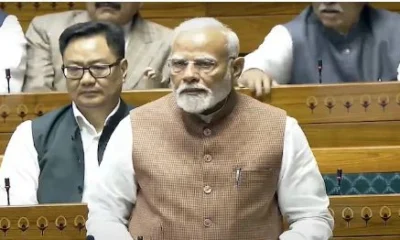
A heated exchange erupted in the Lok Sabha as Defence Minister Rajnath Singh sharply responded to Opposition interruptions during a debate on Vande Mataram, with PM Modi and Congress leaders presenting opposing narratives on the song’s history.

Published

on

Rajnath Singh

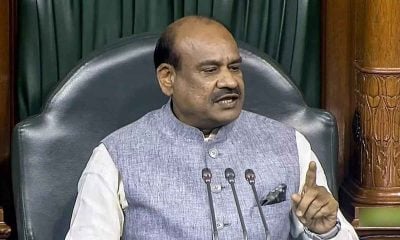
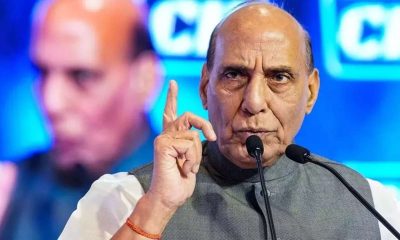
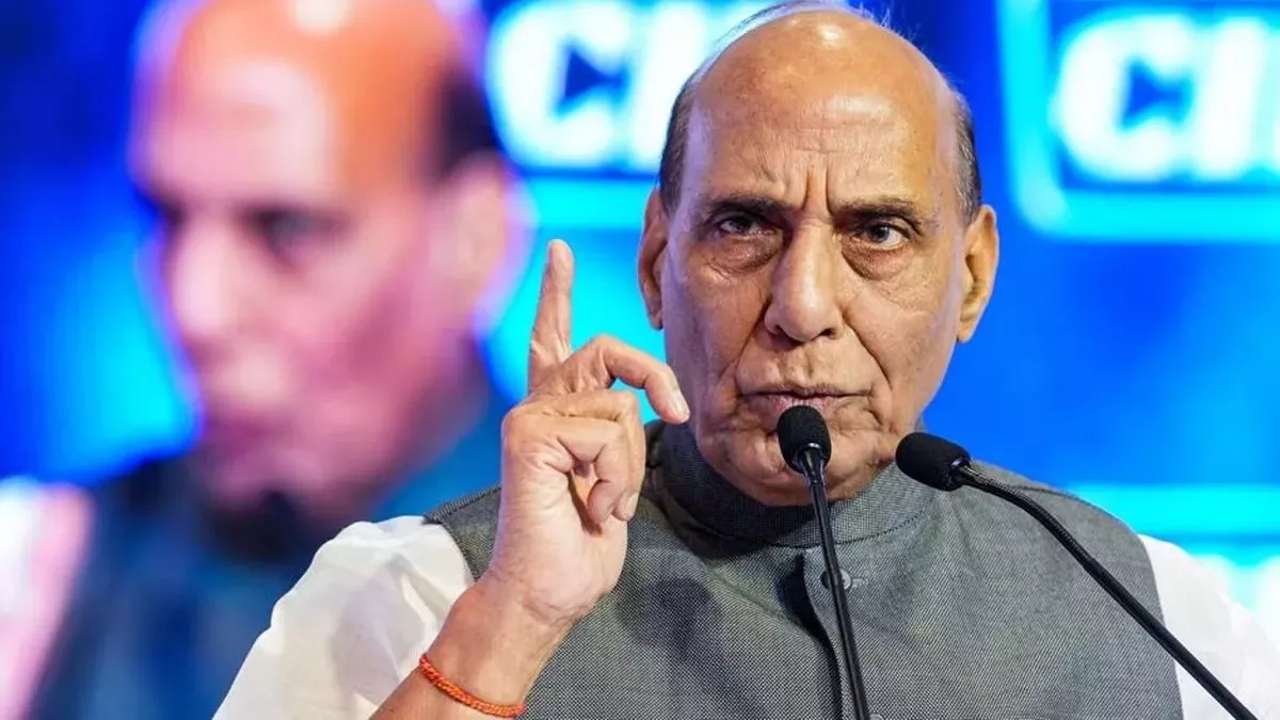
Defence Minister Rajnath Singh momentarily lost his cool in the Lok Sabha on Monday during a high-voltage debate on Vande Mataram, sharply rebuking Opposition members who interrupted his address.

Minister’s sharp retort amid interruptions

A video from the House shows Opposition MPs repeatedly asking the minister to sit down mid-speech. Visibly angered, Singh shot back, asking, “Kaun baithanewala hai? Kaun baithayega? Kya baat kar rahe ho… baith! Yeh himmat hogayi?” His outburst triggered loud reactions from Treasury benches, with several ruling party MPs also objecting to the interruption.

Lok Sabha Speaker Om Birla then intervened, signalling Opposition lawmakers to maintain order. Singh resumed his speech shortly after, continuing his remarks on Vande Mataram and the political controversies surrounding it.

Rajnath Singh attacks Congress over ‘Vande Mataram’ history

Speaking on the legacy of the national song, Singh accused the Congress of causing “fragmentation” of Vande Mataram due to what he termed “appeasement politics” dating back to the Nehru era.

He said justice had not been done to the national song, adding that the differential treatment between the national anthem and Vande Mataram needed reassessment. According to him, the original verses of the song and the book Anand Math had been unfairly misinterpreted and were never “anti-Islam,” but rather reflective of popular resistance against foreign rule.

PM Modi opens debate on 150 years of Vande Mataram

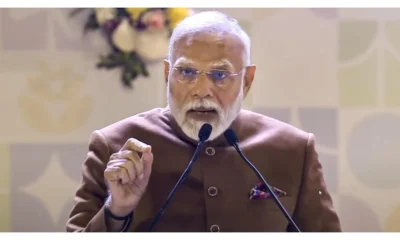
Prime Minister Narendra Modi initiated the Lok Sabha discussion earlier in the day, highlighting the iconic role of Vande Mataram in India’s freedom movement. He said the song was not merely a call for political independence but a “sacred war cry” against colonial oppression.

Modi criticised the Congress for its stance during the Emergency era when the song marked 100 years, claiming that democratic values were suppressed at the time. He said the current moment presented an opportunity to restore the “greatness” of Vande Mataram.

Opposition’s response

Congress leader Priyanka Gandhi Vadra countered the government, alleging that the ruling party was raising the issue with electoral motives ahead of the Bengal assembly polls. She accused the Prime Minister of selectively quoting Jawaharlal Nehru and said Parliament’s time should be devoted to issues concerning citizens’ welfare.

India News

Rajnath Singh says abnormality becoming new normal amid Iran–Israel war

Rajnath Singh says the Iran–Israel conflict shows how abnormal situations are becoming routine, warning of risks to global energy supply through the Strait of Hormuz.

Published

on

Rajnath Singh

India’s defence minister Rajnath Singh on Thursday expressed concern over the escalating conflict involving Iran, Israel and the United States, warning that the ongoing situation reflects how “abnormality is becoming the new normal” in global geopolitics.

Speaking at the maritime conclave Sagar Sankalp maritime conclave in Kolkata, Singh described the evolving security environment as increasingly complex and unpredictable.

“The current situation has become quite complex, and it seems it will become even more dynamic in the future. The way different countries are competing with each other on land, in the air, at sea, and now even in space is truly a matter of concern,” Singh said.

He added that the growing instability in global affairs shows how unusual situations are gradually becoming routine.

Concern over Strait of Hormuz and global energy supply

Singh highlighted the strategic importance of the Strait of Hormuz, calling it a crucial chokepoint that carries around one-fifth of the world’s oil supply.

According to reports, Iran has shut down the vital shipping route, allowing only Chinese vessels to pass through the region. The development has raised concerns about disruptions to global energy flows across the Persian Gulf.

“When there is disruption or interruption in this region, it directly impacts the supply of oil and gas. These uncertainties affect the global economy and trade,” Singh said.

He noted that oceans are no longer viewed only as channels of trade but are increasingly becoming arenas of strategic competition among nations.

Call for stronger maritime leadership

Against the backdrop of shifting geopolitical equations, Singh said India must strengthen its role as a maritime power and demonstrate leadership in ensuring stability in the region.

“In this era of changing global geopolitics, oceans have once again come to the centre of the world’s power balance. As a major maritime nation, it is India’s responsibility to provide leadership with confidence, capability and a clear vision,” he said.

The minister emphasised that achieving self-reliance remains critical for protecting supply chains and strengthening national defence capabilities. He said the government sees defence public sector undertakings as a key pillar in advancing this vision.

Escalation of Iran-Israel-US conflict

Tensions in the Middle East escalated after the United States and Israel carried out coordinated airstrikes across Iran on February 28 following stalled nuclear talks and allegations that Tehran had resumed nuclear activity.

The strikes, carried out under the name Operation Epic Fury, targeted several Iranian cities including the capital Tehran.

Iran’s Supreme Leader Ali Khamenei was reportedly killed during the strikes on his compound in Tehran. Members of his family were also among those killed, while his wife Mansoureh Khojasteh Bagherzadeh later died from injuries sustained in the attack.

Following the airstrikes, Iran launched retaliatory missile attacks across parts of the Gulf region, including Dubai, Abu Dhabi, Qatar, and Bahrain.

The conflict has now entered its seventh day, with Iran continuing to fire multiple rounds of missiles while vowing to avenge the killing of its Supreme Leader. Meanwhile, US President Donald Trump said it was “too late” for Iran to seek talks to avoid the conflict.

Continue Reading

India News

Andhra Pradesh may offer Rs 25,000 incentive for second child says Chandrababu Naidu

Andhra Pradesh Chief Minister Chandrababu Naidu said the state is considering a Rs 25,000 incentive for families having a second child as part of efforts to raise the fertility rate.

Published

on

Chandrababu Naidu

Andhra Pradesh Chief Minister N Chandrababu Naidu on Thursday said the state government is considering a financial incentive of Rs 25,000 for couples from the birth of their second child onwards in an effort to address the declining birth rate.

Speaking in the state Assembly, the chief minister said the proposal is part of a broader effort to increase the state’s Total Fertility Rate (TFR), which currently stands at 1.5. He noted that the government aims to raise it to 2.1, which is considered the replacement level needed to maintain population stability.

Naidu said the government is exploring what he described as a “novel method” to encourage families to have more children.

“We are looking at a novel method. We will give Rs 25,000 to parents having a second child or more at the time of delivery itself. This will be a big game-changer. If we can do it, it will be very useful,” he told the Assembly.

Population policy likely soon

Highlighting global demographic trends, the chief minister said several countries are facing difficulties due to ageing populations and declining birth rates. He stressed the importance of population management in planning long-term economic and social development.

According to Naidu, the state government is preparing a population management policy that is expected to be released by the end of March.

He said the policy could come into effect from April once finalised, and it will focus on addressing the state’s demographic challenges.

Continue Reading

India News

BJP sharpens Bengal strategy ahead of PM Modi’s March 14 rally in Kolkata

BJP is fine-tuning its West Bengal political strategy ahead of Prime Minister Narendra Modi’s March 14 rally in Kolkata, focusing on welfare promises, targeted campaigning and the voter roll controversy.

Published

on

Mamata Banerjee

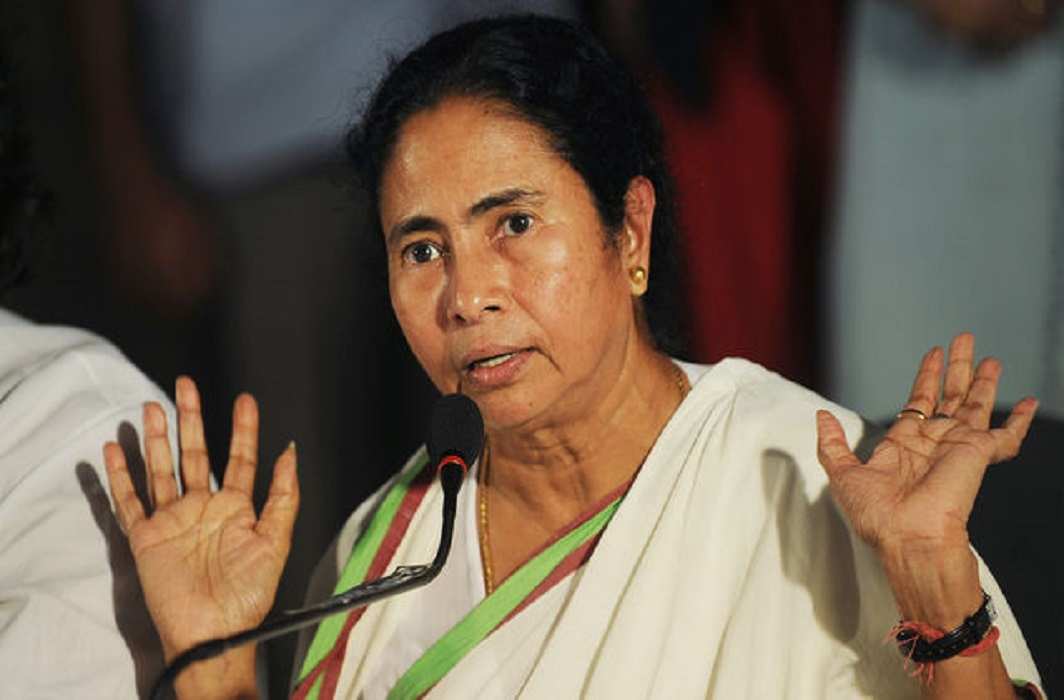
As Prime Minister Narendra Modi prepares to address a major rally at Kolkata’s Brigade Parade Ground on March 14, the Bharatiya Janata Party is refining its political strategy in West Bengal. The party aims to build on its earlier electoral gains while responding to new developments, including the controversy surrounding the revision of electoral rolls.

The rally is expected to mark the beginning of the next phase of the BJP’s political mobilisation in the state after the completion of nine Parivartan Yatras across different regions.

Welfare pitch and targeted campaign

According to party leaders, the BJP is planning a stronger welfare and development package in its manifesto to counter the cash support schemes run by the ruling All India Trinamool Congress government led by Chief Minister Mamata Banerjee.

A senior BJP leader said examples from states like Bihar and Maharashtra, where women have received financial assistance through welfare programmes, are being cited to highlight the party’s record of delivering on promises.

At the same time, the BJP is planning a more focused electoral strategy rather than aggressively contesting every seat. Party leaders believe a targeted approach centred on welfare, law and order, and economic opportunities could help consolidate support among Hindu voters in the state.

Learning from the 2021 election

The BJP’s rise in Bengal remains central to its current planning. The party grew significantly in the state during the last Assembly election, increasing its tally from three seats previously to 77 seats and becoming the main opposition to the TMC.

However, the 2024 general election saw a decline in the party’s performance, with the BJP winning 12 seats compared with 18 in 2019.

Senior leaders, including Union Home Minister Amit Shah, have been closely monitoring the campaign strategy along with party leaders responsible for the state such as Bhupender Yadav, Amit Malviya, Biplab Kumar Deb, and Sunil Bansal.

One lesson from the 2021 campaign, party leaders say, was the overdependence on leaders who had defected from the TMC ahead of the polls. According to them, electoral success in Bengal depends heavily on strong grassroots cadres.

Political mapping of the state

The BJP’s internal assessment divides the state into three broad political zones.

The northern belt includes districts such as Darjeeling, Alipurduar, Siliguri, Jalpaiguri, and Cooch Behar, extending towards Malda. The party has gradually built support here among tea garden workers and Rajbanshi voters.

The central belt, stretching from Purulia to Howrah and Hooghly, includes traditional BJP strongholds such as the Medinipur and Bardhaman regions.

The southern stretch, covering parts of North 24 Parganas and South 24 Parganas, remains more challenging. Here the BJP is focusing on consolidating support among communities such as Matua and Namasudra voters, including Hindu refugees who migrated from Bangladesh.

Several senior TMC leaders, including Mamata Banerjee and party national general secretary Abhishek Banerjee, represent constituencies in this region.

Minority vote and voter roll controversy

The Muslim vote continues to play a decisive role in Bengal’s electoral politics, particularly in districts like Murshidabad, Malda, and parts of North and South 24 Parganas, where the TMC has traditionally enjoyed strong support.

Meanwhile, a political dispute has emerged over the Special Intensive Revision of electoral rolls. The exercise aims to update and verify voter lists but has been criticised by the TMC, which claims it could lead to the removal of voters in minority-dominated areas.

Mamata Banerjee has accused the BJP of attempting to influence the electoral process through administrative means. The BJP has rejected the allegation, stating that the revision is a routine procedure conducted by the Election Commission of India to maintain accurate voter records.

Cultural messaging and urban voters

The BJP is also adjusting its messaging strategy in the state. Unlike the 2021 campaign, where religious processions were a prominent feature, the party is now placing greater emphasis on Bengali cultural symbols and regional identity.

In recent speeches in Bengal, Prime Minister Modi has begun with invocations such as “Jai Ma Kali,” signalling an effort to combine cultural appeal with broader political messaging.

Party leaders also note that the BJP saw a rise in vote share in several urban areas during the 2024 general election and hopes to expand that support in future contests.

Continue Reading

Trending

© Copyright 2022 APNLIVE.com