English हिन्दी
Connect with us

India News

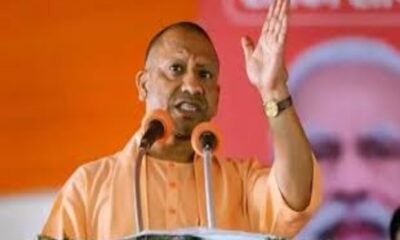
Mughal museum in Agra becomes Chhatrapati Shivaji Maharaj museum: CM Yogi says no space for slave mentality

“Agra’s under-construction museum will be known by the name of Chhatrapati Shivaji Maharaj. In your new Uttar Pradesh, there is no space for the symbols of “the mentality of slavery,” CM Adityanath tweeted in Hindi.

Published

on

Top News Live Updates: Uttar Pradesh CM Yogi Adityanath files nomination from Gorakhpur

Uttar Pradesh Chief Minister Yogi Adityanath on Monday decided to rename an upcoming under-construction Mughal Museum in Agra after Maratha warrior king Chhatrapati Shivaji Maharaj. He added in a statement that the Maratha ruler’s name will invoke the feeling of nationalism and self-esteem among the citizens. Chhatrapati Shivaji Maharaj had fought the Mughals in the 16th century and had posted a stiff challenge to the then Emperor Aurangzeb’s plans in the Deccan.

The decision was taken at a review meeting of development works of the Agra division, which was held on video link. On Twitter, the UP CM said in Hindi that in the new Uttar Pradesh, there will be no space for the symbols of the mentality of slavery and that Chhatrapati Shivaji Maharaj is our true hero. Former Maharashtra CM Devendra Fadnavis welcomed Adityanath’s decision to rename the Mughal Museum after Shivaji.

This is not the first time that the UP CM has resorted to renaming thing. In his three-year rule, he has renamed Allahabad, which is now known as Prayagraj, Faizabad district is now called Ayodhya and others. There have been demands also to rename the Taj Mahal itself to Tejo Mahalaya but the government has so far ignored the call.

The foundation stone for the Mughal Museum in Agra was laid in January 2016 by the then chief minister Akhilesh Yadav along with projects like the Agra Heritage Centre, Taj Orientation Centre among others. The museum is proposed to come up on 6 acres of land near the eastern gate of the Taj Mahal to apprise tourists about the Mughal era’s weaponry, culture.

Read Also: Migrant workers: Centre says no data on deaths during post-lockdown exodus

The opposition Congress has often attacked the Yogi Adityanath government saying it is toying with history by renaming things instead of focusing on governance and development. Uttar Pradesh has seen increasing crimes in the recent past with Lakshimpur Kheri logging as many as 3 rape and murders of minor girls. The Samajwadi Party has also asked Adityanath to act on such severe crimes.

Entertainment

Bharti Singh, Haarsh Limbachiyaa welcome second child after she’s rushed to hospital mid-shoot

Comedian Bharti Singh and her husband Haarsh Limbachiyaa welcomed their second child after she was rushed to hospital during a television shoot.

Published

on

Bharti

Popular comedian and television personality Bharti Singh and her husband, writer-host Haarsh Limbachiyaa, have welcomed their second child. The baby was born on Friday after Bharti was taken to the hospital following a sudden medical emergency earlier in the day, according to media reports.

Emergency during television shoot led to hospitalisation

As per available information, Bharti Singh was scheduled to shoot for the television show Laughter Chefs on Friday morning when her water broke unexpectedly. She was immediately rushed to a nearby hospital, where she later delivered her second child. No further details about the baby have been shared publicly so far.

The news of the delivery comes weeks after the couple announced Bharti’s second pregnancy on social media.

Pregnancy announcement and maternity shoot

Bharti Singh and Haarsh Limbachiyaa had revealed the pregnancy during a family vacation in Switzerland. A few weeks ago, Bharti also shared pictures from her maternity photoshoot, where she was seen wearing a blue silk gown with white floral patterns.

Sharing the photos online, Bharti wrote, “2nd Baby Limbachiya coming soon,” along with a baby emoji.

Family background

Bharti Singh and Haarsh Limbachiyaa became parents for the first time in 2022, when they welcomed their son, Lakshya.

The couple is among the most well-known faces on Indian television. Bharti is widely recognised for her comic timing and distinctive on-screen persona, while Haarsh has made his mark as a writer and host. Apart from their television work, the two also co-host a podcast together.

Continue Reading

India News

Renaming MGNREGA removes core spirit of rural employment law, says Shashi Tharoor

Published

on

Shashi Tharoor

Congress MP Shashi Tharoor has strongly criticised the renaming of the Mahatma Gandhi National Rural Employment Guarantee Act (MGNREGA), saying the move strips the rural employment programme of its core essence. His remarks came after Parliament cleared the Viksit Bharat Guarantee for Rozgar and Ajeevika Mission (Gramin) Bill, also referred to as the VB-G RAM G Bill.

Speaking to media, Tharoor said the decision to remove Mahatma Gandhi’s name from the scheme “takes out the heart” of the rural employment programme that has been in place for years. He noted that the identity and philosophy associated with Mahatma Gandhi were central to the original law.

Tharoor also objected to the way the new name was framed, arguing that it unnecessarily combined multiple languages. He pointed out that the Constitution envisages the use of one language in legislation, while the Bill’s title mixes English and Hindi terms such as “Guarantee”, “Rozgar” and “Ajeevika”, along with the conjunction “and”.

‘Disrespect to both names’

The Congress leader said that inserting the word “Ram” while dropping Mahatma Gandhi’s name amounted to disrespecting both. Referring to Mahatma Gandhi’s ideas, Tharoor said that for Gandhi, the concepts of Gram Swaraj and Ram Rajya were inseparable, and removing his name from a rural employment law went against that vision.

He added that the name of Lord Ram could be used in many contexts, but questioned the rationale behind excluding Mahatma Gandhi from a programme closely linked to his philosophy of village self-rule.

Protests over passage of the Bill

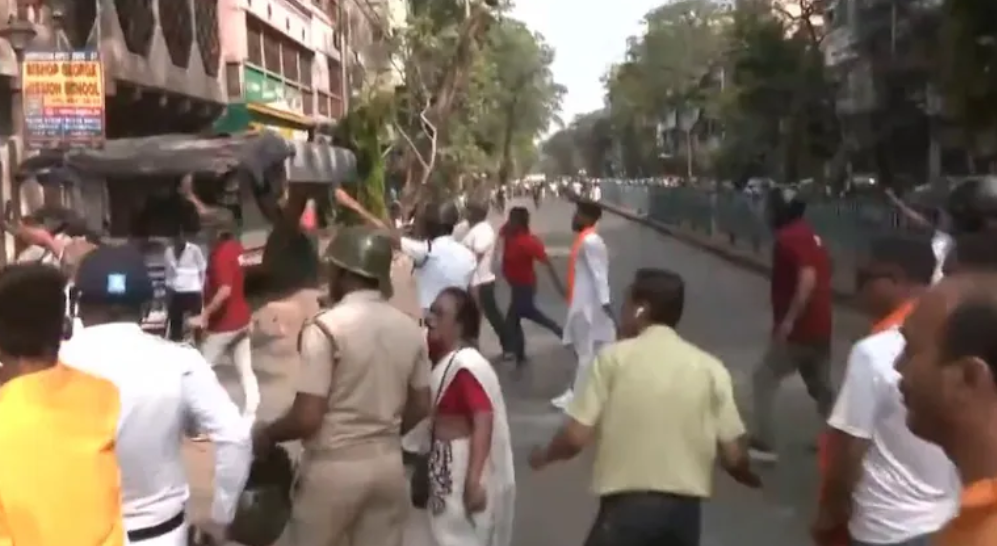
The VB-G RAM G Bill was passed by the Lok Sabha on December 18 and cleared by the Rajya Sabha in the early hours of December 19 amid protests from Opposition members. Several MPs opposed the manner in which the legislation was pushed through, with scenes of sloganeering and tearing of papers in the House.

Outside Parliament, members of the Trinamool Congress staged a sit-in protest near Samvidhan Sadan against the passage of the Bill. Congress also announced nationwide protests earlier this week, accusing the government of weakening rights-based welfare schemes.

Despite opposition criticism, the government has maintained that the new law will strengthen rural employment and livelihood security. The Bill raises the guaranteed employment from 100 days to 125 days per rural household and outlines a 60:40 cost-sharing formula between the Centre and states, with a higher central share for northeastern, Himalayan states and certain Union Territories.

Continue Reading

India News

Rahul Gandhi attacks G RAM G bill, says move against villages and states

Rahul Gandhi has criticised the G RAM G bill cleared by Parliament, alleging it dilutes the rights-based structure of MGNREGA and centralises control over rural employment.

Published

on

Rahul Gandhi

Leader of the Opposition Rahul Gandhi has launched a sharp attack on the Modi government after Parliament cleared the Viksit Bharat Guarantee for Employment and Livelihood Mission (Rural) Bill, commonly referred to as the ‘G RAM G’ bill. He described the proposed law as “anti-state” and “anti-village”, arguing that it weakens the core spirit of the Mahatma Gandhi National Rural Employment Guarantee Act (MGNREGA).

The new legislation, which is positioned as an updated version of MGNREGA, was passed amid protests by opposition parties and is expected to replace the existing scheme once it receives presidential assent.

‘Bulldozed without scrutiny’, says Rahul Gandhi

Rahul Gandhi criticised the manner in which the bill was cleared, saying it was pushed through Parliament without adequate debate or examination. He pointed out that the opposition’s demand to refer the bill to a standing committee was rejected.

According to him, any law that fundamentally alters the rural employment framework and affects crores of workers should undergo detailed scrutiny, expert consultation and public hearings before approval.

Claim of dilution of rights-based guarantee

Targeting the central government, the Congress leader said the proposed law dismantles the rights-based and demand-driven nature of MGNREGA and replaces it with a rationed system controlled from Delhi. He argued that this shift undermines the autonomy of states and villages.

Rahul Gandhi alleged that the intent behind the move is to centralise power and weaken labour, particularly impacting rural communities such as Dalits, OBCs and Adivasis.

Defence of MGNREGA’s impact

Highlighting the role of MGNREGA, Gandhi said the scheme provided rural workers with bargaining power, reduced distress migration and improved wages and working conditions, while also contributing to rural infrastructure development.

He also recalled the role of MGNREGA during the Covid period, stating that it prevented crores of people from slipping into hunger and debt. According to him, any rationing of a jobs programme first affects women, landless workers and the poorest communities.

Opposition to name change and provisions

The Congress has also objected to the renaming of the scheme, accusing the government of attempting to erase the legacy associated with Mahatma Gandhi. Opposition MPs staged a dharna within the Parliament complex, questioning provisions of the bill that they claim dilute the “soul and spirit” of the original law enacted in 2005.

Under MGNREGA, the government guaranteed 100 days of work in rural areas along with an unemployment allowance if work was not provided. The ‘G RAM G’ bill proposes to raise the guaranteed workdays to 125, while retaining other provisions. However, critics have flagged concerns over employment being linked to pre-approved plans.

The bill was cleared after a midnight voice vote in the Rajya Sabha, following its passage in the Lok Sabha amid protests and walkouts. It will become law once approved by the President.

Continue Reading

Trending

© Copyright 2022 APNLIVE.com