English हिन्दी
Connect with us

Latest Politics News

Bihar elections: Congress says no dispute in Mahagathbandhan over Tejashwi Yadav being CM face

Published

on

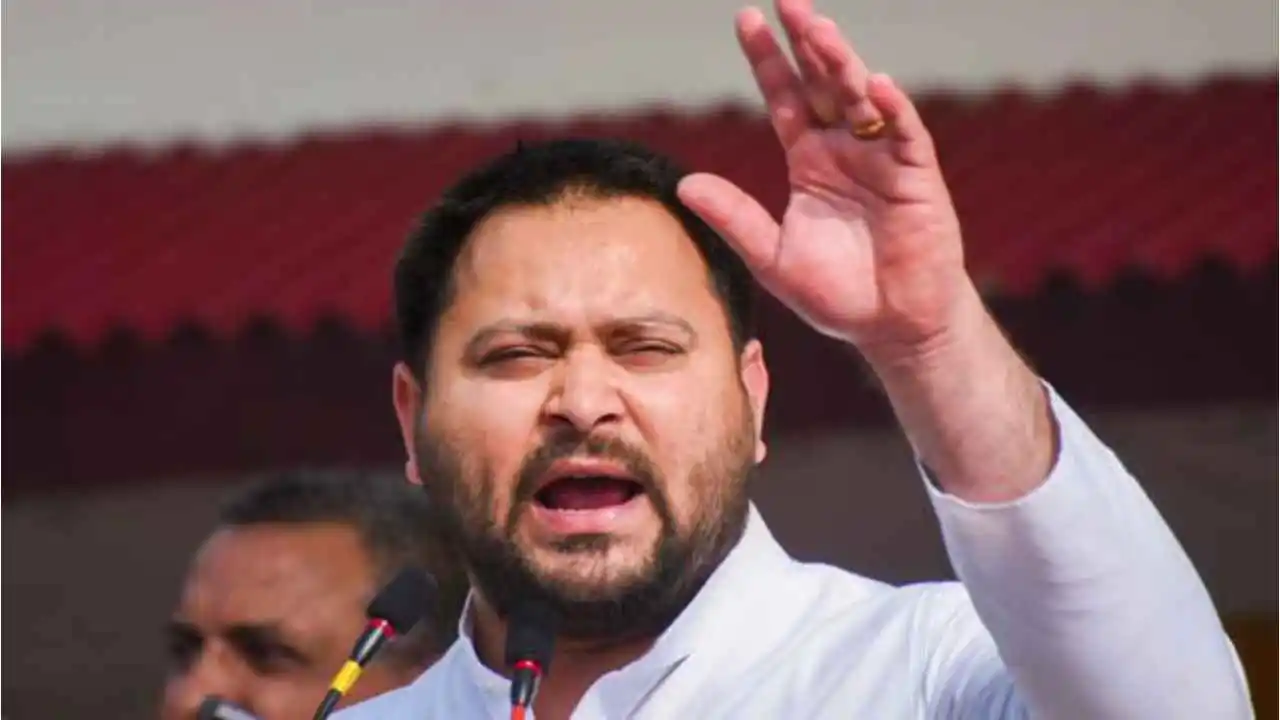
The Congress on Friday affirmed that if the Mahagathbandhan secures a majority in the upcoming Bihar Assembly elections, the chief minister will be from the Rashtriya Janata Dal (RJD), with Tejashwi Yadav as the undisputed face for the post.

Congress leader Kanhaiya Kumar emphasized that there was “no ambiguity or disagreement” within the alliance on this matter, dismissing speculations as a deliberate attempt by rivals to shift focus from pressing issues.

Speaking to reporters, Kumar accused the Bharatiya Janata Party (BJP) of conspiring to distract voters by raising questions about the Mahagathbandhan’s leadership.

“The BJP’s playbook is clear: they support a regional party, then gradually take over. They’re waiting for a chance to replace Chief Minister Nitish Kumar with their own leader,” he alleged, pointing to what he described as the BJP’s strategy to marginalize allies, as seen in other states.

Kumar highlighted a palpable “wind of change” in Bihar, stronger than in the 2020 Assembly polls, and noted that the BJP was avoiding using Operation Sindoor as an election issue, sensing public disapproval. “Biharis see it as a matter of national pride, not a political tool,” he said.

Rejecting the idea of senior or junior partners in the Mahagathbandhan, Kumar likened the alliance to a car where every component—clutch, brake, or mirror—is vital.

“The RJD, as the largest party with more MLAs, naturally leads the coalition and holds the Leader of the Opposition post. But every partner, including Mukesh Sahani’s Vikassheel Insaan Party, has a crucial role,” he said, stressing the collective strength of the alliance, which includes the Congress, RJD, Left parties, and others.

On seat-sharing for the 243-seat Assembly, Kumar said all Mahagathbandhan partners would contest as a unified front. “We’re not dividing seats as ‘ours’ or ‘theirs.’ Every party will fight all 243 seats together. Responsibilities vary, but every role matters—like salt in food, too little or too much ruins the dish,” he said, emphasizing unity over competition.

Addressing Tejashwi Yadav’s candidacy for chief minister, Kumar was unequivocal: “The public decides the chief minister, and the party with the most seats leads. The RJD will contest and win more seats, naturally staking its claim. There’s no confusion in our alliance.” In contrast, he pointed to uncertainty within the National Democratic Alliance (NDA) over Nitish Kumar’s role and seat distribution.

Kumar accused the BJP of diverting attention from critical issues like unemployment, migration, education, farmers’ struggles, exam irregularities, and inadequate health infrastructure. “This focus on the CM face is a deliberate ploy. Our campaign is about people’s concerns, not personalities,” he said.

He also addressed speculation about Nitish Kumar’s health, alleging that Union Home Minister Amit Shah excels at exploiting crises. “In Maharashtra, Shah sidelined Shiv Sena’s Eknath Shinde after using him. The BJP has long tried to dominate Bihar as it did in Uttar Pradesh, but they’ve failed to push Nitish aside,” Kumar claimed, describing the NDA as an opportunistic alliance poised to replace Kumar at the first opportunity.

Exuding confidence, Kumar predicted a clear majority for the Mahagathbandhan, driven by public frustration with a government he claimed was run dictatorially by bureaucrats. In the 2020 Bihar elections, the RJD contested 144 seats, winning 75, while the Congress fought 70 and secured 19, and the CPI (ML) Liberation won 12 of 19 seats.

With the polls expected around October-November, Kumar said the alliance was streamlining preparations, including forming a joint media group and manifesto committee to present a united front.

India News

PM Modi assures no discrimination in women’s quota, delimitation debate intensifies in Parliament

PM Narendra Modi has assured that women’s reservation will be implemented without discrimination, amid a heated debate over delimitation in Parliament.

Published

on

PM modi

Prime Minister Narendra Modi has assured that there will be no discrimination in the implementation of women’s reservation, as Parliament witnessed a sharp debate over the proposed linkage between the quota and delimitation exercise.

During the ongoing special session, the government reiterated its commitment to ensuring fair representation while addressing concerns raised by opposition parties regarding the timing and structure of the legislation.

The proposed framework aims to reserve 33 percent of seats for women in the Lok Sabha and state assemblies. However, its implementation is tied to a fresh delimitation exercise, which is expected after the next census.

Opposition questions timing and intent

Opposition leaders have raised concerns that linking the women’s quota to delimitation could delay its implementation. They argue that the process of redrawing constituencies may push the actual rollout further into the future.

The issue has triggered a broader political confrontation, with multiple parties questioning whether the move could alter representation across states.

Some critics have also alleged that the delimitation exercise could disproportionately benefit certain regions based on population, a charge the government has rejected.

Government reiterates commitment to fair implementation

Responding to these concerns, the Centre has maintained that the reforms are necessary to ensure accurate and updated representation based on population data.

Leaders from the ruling side have repeatedly emphasized that the process will be carried out transparently and without bias. The assurance that there will be “no discrimination” is aimed at addressing fears among states and opposition parties.

The debate marks a key moment in Parliament, with both sides engaging in intense exchanges over one of the most significant electoral reforms in recent years.

Continue Reading

India News

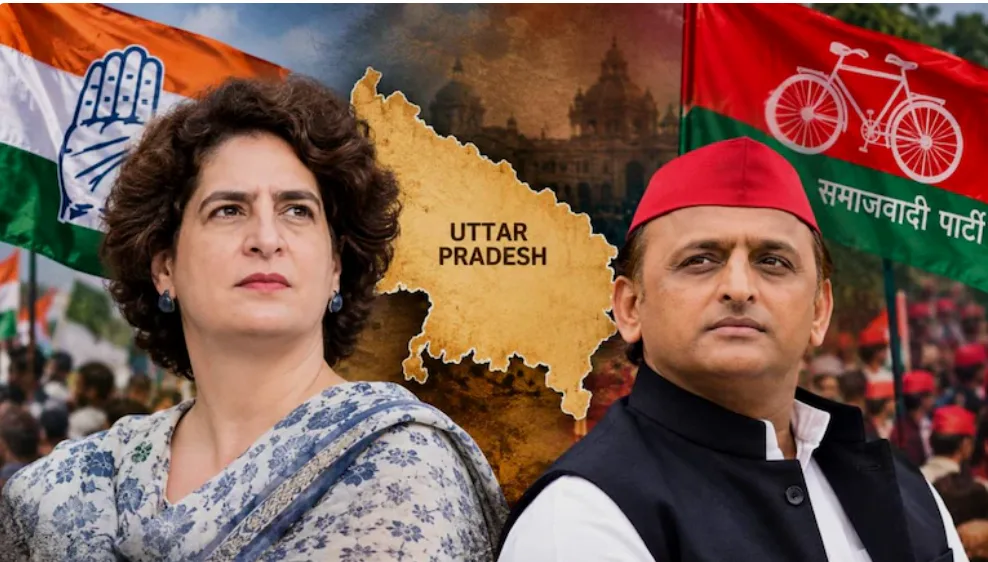
Give all tickets to Muslim women, Amit Shah says, attacking Akhilesh Yadav on sub-quota demand

A sharp exchange between Amit Shah and Akhilesh Yadav in Parliament over sub-quota for Muslim women highlights key divisions on women’s reservation implementation.

Published

on

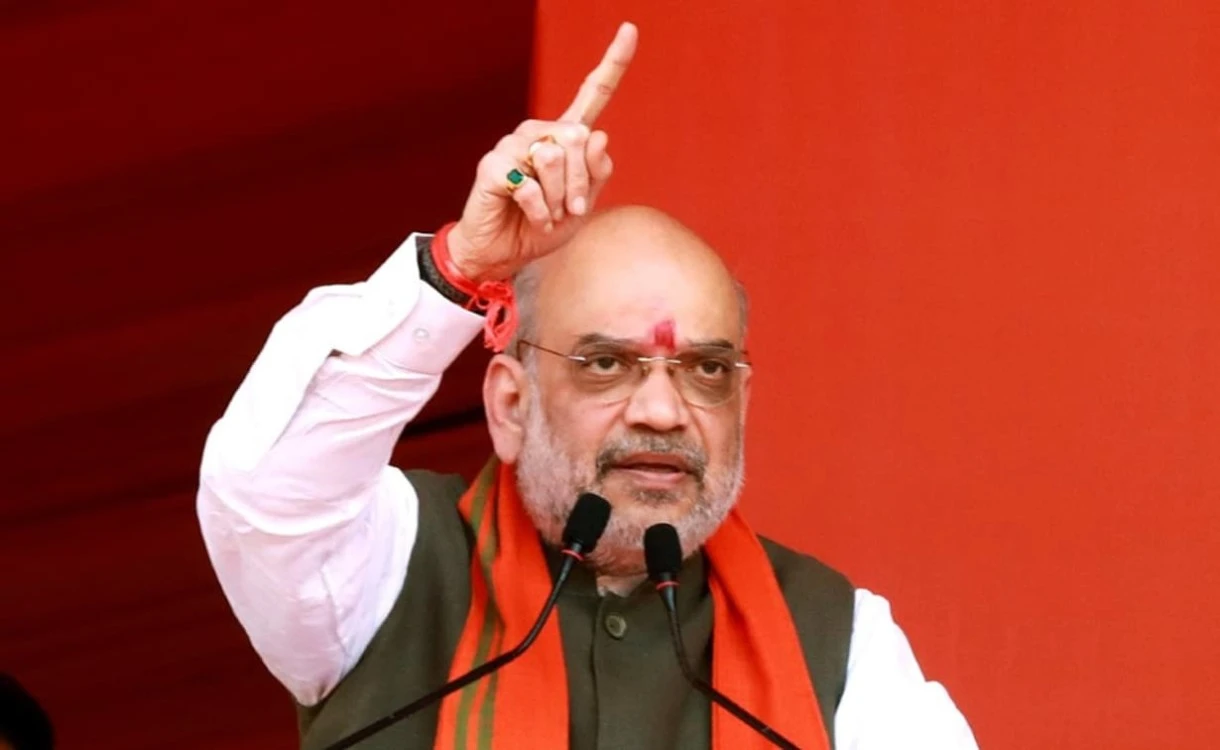
A heated exchange broke out in Parliament during discussions on the women’s reservation framework, with Union Home Minister Amit Shah and Samajwadi Party chief Akhilesh Yadav locking horns over the demand for a sub-quota for Muslim women.

The debate unfolded as the government pushed forward key legislative measures to implement 33% reservation for women in the Lok Sabha and state assemblies.

Akhilesh Yadav argued that the proposed reservation must ensure representation for women from marginalised communities, including Other Backward Classes (OBCs) and Muslim women. He said that without such provisions, large sections could remain excluded from political participation.

He also questioned the timing of the bill, alleging that the Centre was avoiding a caste census. According to him, a census would lead to renewed demands for caste-based reservations, which the government is reluctant to address.

Government rejects religion-based quota

Responding to the demand, Amit Shah made it clear that reservation based on religion is not permitted under the Constitution.

He stated that any proposal to provide quota to Muslims on religious grounds would be unconstitutional, firmly rejecting the idea of a separate sub-quota for Muslim women within the broader reservation framework.

The government has maintained that the existing framework already includes provisions for Scheduled Castes (SC) and Scheduled Tribes (ST) women within the overall reservation structure.

Wider political divide over implementation

The issue of sub-categorisation within the women’s quota has emerged as a major flashpoint, even as most opposition parties broadly support the idea of women’s reservation.

Samajwadi Party leaders reiterated that their support for the bill depends on inclusion of OBC and minority women, while the government continues to defend its constitutional position.

The debate is part of a broader discussion during the special Parliament session, where multiple bills linked to delimitation and implementation of the women’s quota are being taken up.

Continue Reading

India News

Raghav Chadha’s security withdrawn by Punjab amid AAP rift, Centre steps in with cover

Punjab withdraws Raghav Chadha’s security amid party tensions, Centre offers fresh protection.

Published

on

The Punjab government has withdrawn the Z+ category security cover provided to Raghav Chadha, amid an ongoing rift within the Aam Aadmi Party.

According to sources, the security personnel deployed by Punjab Police have been asked to report back, marking a significant development in the political dispute involving the Rajya Sabha MP.

The move comes shortly after Chadha was removed from his position as deputy leader of the party in the Rajya Sabha, signalling deepening differences between him and the party leadership.

Centre offers fresh security arrangement

Soon after the withdrawal, the Ministry of Home Affairs stepped in to provide security cover to Chadha.

Sources indicate that he will now receive Z-category security in Delhi and Punjab, while a Y-category cover may be provided in other parts of the country.

This shift ensures continued protection for the MP despite the withdrawal of state-provided security.

Fallout linked to political disagreement

The development is part of a broader fallout between Chadha and his party. He was recently replaced as deputy leader in the Rajya Sabha, with the party reportedly expressing dissatisfaction over his political approach and conduct in Parliament.

Chadha, however, has denied the allegations, calling them baseless and asserting that his focus has been on raising public issues rather than engaging in political confrontation.

Growing divide within party ranks

Once considered a close associate of Arvind Kejriwal and a prominent face of the party, Chadha’s recent removal from key roles and the withdrawal of his security underline a widening internal divide.

He is among the few leaders in the party who have recently found themselves at odds with the leadership, indicating shifting dynamics within the organisation.

Continue Reading

Trending

© Copyright 2022 APNLIVE.com