English हिन्दी
Connect with us

India News

BJP calls Congress anti-Hindu after Rahul Gandhi questions G-RAM-G scheme

The BJP has accused the Congress of being anti-Hindu after Rahul Gandhi said he was unfamiliar with the new G-RAM-G employment guarantee scheme that replaces MNREGA.

Published

on

Rahul-Gandhi

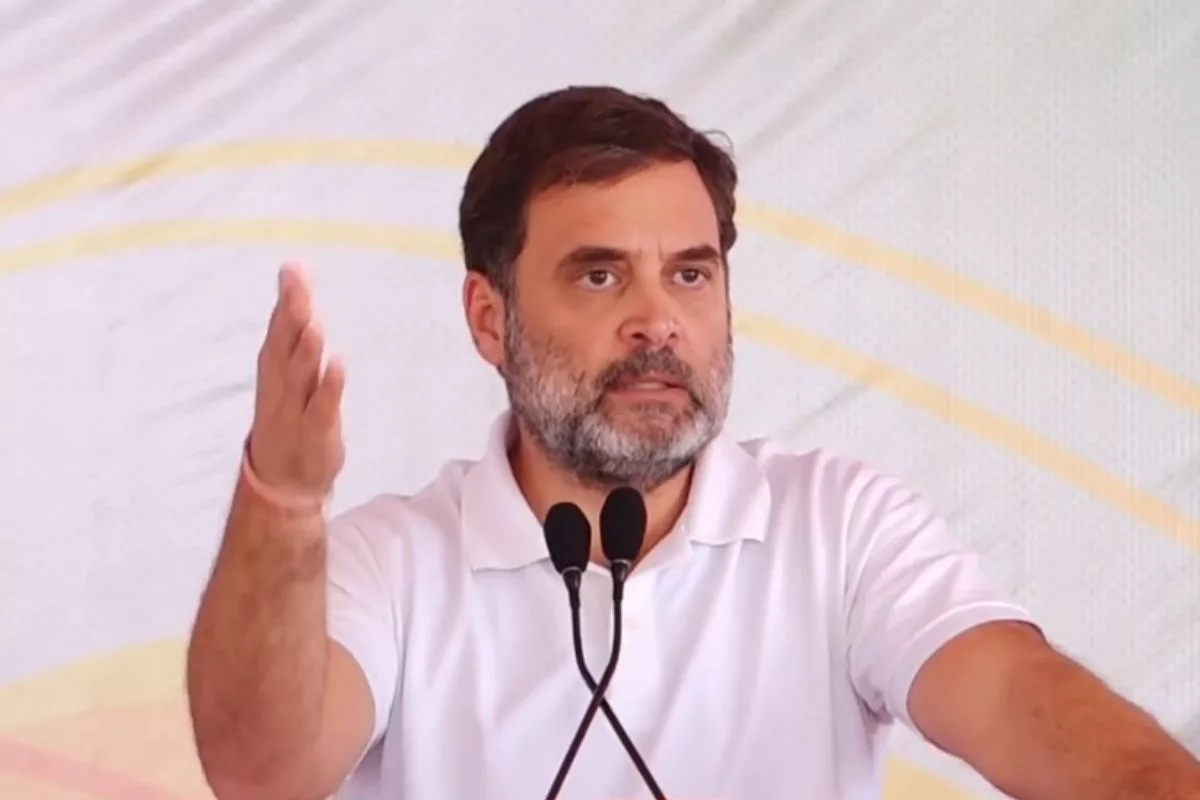
The Bharatiya Janata Party on Wednesday accused the Congress of being “anti-Hindu” after senior leader Rahul Gandhi said he was unfamiliar with the name of the newly introduced G-RAM-G employment guarantee scheme, which has replaced the Mahatma Gandhi National Rural Employment Guarantee Act.

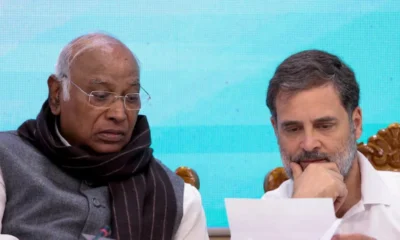
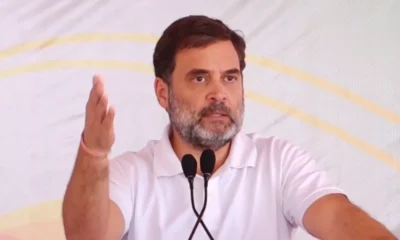
Speaking at a conference held at Delhi’s Jawahar Bhavan, Rahul Gandhi remarked, “I don’t know what G-RAM-G is,” while addressing an event focused on MNREGA, the flagship rural employment programme launched during the Congress-led government. Congress president Mallikarjun Kharge made similar comments at the event.

BJP response and political backlash

The BJP reacted sharply, alleging that Rahul Gandhi’s remarks reflected hostility towards Lord Ram. Party leaders claimed the comments had “exposed the Congress’ anti-Hindu mindset,” a charge that intensified the political confrontation over the new legislation.

Several opposition leaders have argued that one of the core concerns with the G-RAM-G scheme is the replacement of Mahatma Gandhi’s name with that of a religious figure, a move they say politicises a welfare programme that was previously secular in identity.

Congress alleges attempt to weaken employment guarantee

At the conference, Rahul Gandhi said MNREGA had given poor households a legal right to employment, which he claimed Prime Minister Narendra Modi was attempting to dismantle. He also referred to the now-repealed farm laws of 2020, saying sustained public pressure had earlier forced the government to withdraw them.

“If we stand together, the government will be forced to back down and MNREGA will be restarted,” Gandhi said, asserting that the employment guarantee programme could be revived through collective resistance.

Mallikarjun Kharge accused the BJP of trying to erase Mahatma Gandhi’s legacy from public memory and said the Congress would raise the issue again during the upcoming Budget session of Parliament.

States move to support MNREGA

As the political debate continues, at least two opposition-ruled states have taken steps to support MNREGA. Karnataka and Tamil Nadu have both indicated plans to pass Assembly resolutions backing the older scheme.

In Karnataka, proceedings were disrupted after Governor Thawar Chand Gehlot declined to read out portions of a government-prepared speech that criticised the G-RAM-G framework. In Tamil Nadu, Chief Minister MK Stalin said his government would also move a resolution in support of MNREGA.

What the G-RAM-G scheme changes

The new G-RAM-G law introduces several structural changes compared to MNREGA. The guaranteed number of workdays has been increased to 125 from 100, but employment is limited to areas officially notified as rural by the central government.

Under the revised funding structure, states are now required to bear 40 per cent of the scheme’s costs, while the Centre will contribute the remaining amount. Hill states and northeastern states will pay only 10 per cent, and Union Territories will continue to receive full central funding.

The Centre will also adopt a “normative” allocation model, deciding annual fund limits for states based on defined parameters, rather than demand. This gives the Centre greater control over fund releases and the authority to suspend allocations in cases of serious irregularities.

While the government has said the changes will encourage states to take financial ownership without imposing excessive burdens, the opposition has described the scheme as “anti-poor,” warning that it could reduce employment opportunities by straining state finances.

India News

Rahul Gandhi says India must speak to Trump as equal on trade deal

Rahul Gandhi says India should negotiate with US President Donald Trump as an equal, highlighting concerns over data access, energy security and farmers amid revisions to the trade factsheet.

Published

on

Rahul_Gandhi_

Congress leader and Leader of Opposition in the Lok Sabha Rahul Gandhi on Tuesday set out what he said would have been the INDIA alliance’s approach in negotiating with US President Donald Trump on the latest trade agreement.

Speaking during the Budget session in Parliament, Gandhi said the Opposition bloc would have insisted on engaging with the United States “as equals” while safeguarding India’s strategic and economic interests.

He referred to earlier remarks by senior Congress leader Shashi Tharoor, who had described the agreement as appearing less like a free trade pact and more like a pre-committed purchase arrangement that weakens reciprocity.

Three key points outlined

Gandhi said that if the INDIA alliance were negotiating with President Trump, it would begin by acknowledging the importance of the US dollar and expressing willingness to support economic stability. However, he stressed that India’s data and market access are significant assets and any such engagement must be based on equality.

“If you want access to this data, then please understand that you are going to talk to us as an equal,” Gandhi said, adding that India should not be treated as subordinate in trade discussions.

His second point focused on energy security. Without naming specific measures, Gandhi indicated that India would protect its energy interests regardless of external pressure, an apparent reference to US calls for India to halt oil purchases from Russia.

Third, he said that while the US administration may need to safeguard its agricultural voter base, India would also protect its farmers. He added that India should not accept being equated with Pakistan in trade matters.

Changes in US factsheet

The remarks came amid political debate over an interim trade understanding between India and the United States.

The White House revised an earlier factsheet on the agreement. In the updated version, the reference to “pulses” was removed from the list of American products on which India would eliminate or reduce tariffs.

Additionally, the language describing India’s purchases of American goods was changed. The initial document had stated that India “committed” to buying more US products and purchasing over $500 billion worth of US energy, information and communication technology, agricultural goods, coal, and other items. The revised version replaced “committed” with “intends”.

Gandhi criticised the Centre in the Lok Sabha a day after the Congress alleged that India had weakened its own trade leverage.

The current phase of the Budget session is scheduled to conclude on April 2. Parliament will adjourn for recess on February 13 and reconvene on March 9 for further discussions, including examination of demands for grants by standing committees.

Continue Reading

India News

Vande Mataram to be played before national anthem under new government rules

The Centre has mandated that Vande Mataram be played before the national anthem at government events and schools, with standing compulsory and all six stanzas included.

Published

on

Vande Mataram

The Union Home Ministry on Wednesday issued fresh guidelines directing that the national song ‘Vande Mataram’ be played before the national anthem ‘Jana Gana Mana’ at all government events and in all schools across the country.

Under the new rules, individuals must stand when ‘Vande Mataram’ is played at official functions. The directive also expands the occasions on which the song will be performed, including civilian award ceremonies such as the Padma awards and events attended by the President, during both arrival and departure.

The guidelines further state that ‘Vande Mataram’ will be played in public spaces such as cinema halls. However, standing will not be mandatory in such instances.

Significantly, all six stanzas of the song will now be rendered, including four that were not used at national gatherings following a 1937 decision by the Congress leadership.

Legal backing and extension of protections

Last month, sources had indicated that the government was considering extending protocols applicable to the national anthem under the Prevention of Insults to National Honour Act to the national song.

Under this law, anyone who disrupts or prevents others from showing respect to the national anthem — and now the national song — can face imprisonment of up to three years.

Political backdrop to the directive

The move is expected to trigger political debate, especially after last year’s exchange between the ruling BJP and the Congress over the history of ‘Vande Mataram’.

Prime Minister Narendra Modi had accused former Prime Minister Jawaharlal Nehru of opposing the song on the grounds that it could “irritate Muslims”, alleging that this approach mirrored that of Muhammad Ali Jinnah. The BJP had also shared letters written by Nehru to support its position. The issue intensified during a parliamentary discussion marking the 150th anniversary of the song.

The four stanzas that were earlier excluded contain references to Hindu goddesses such as Durga, Kamala (Lakshmi) and Saraswati. In 1937, at a Congress session in Faizpur led by Nehru, it was decided that only the first two stanzas would be used at national gatherings. The rationale was that the later verses were viewed by some members of the Muslim community as exclusionary.

The BJP has argued that the earlier exclusions reflected a divisive approach and that dropping the stanzas contributed to the circumstances leading to Partition.

In response, Congress leaders have criticised the ruling party. Party president Mallikarjun Kharge described it as ironic that those claiming to defend nationalism had not historically sung ‘Vande Mataram’. Priyanka Gandhi Vadra, speaking in Parliament, accused the Prime Minister and the BJP of selectively quoting Nehru and presenting excerpts from his letters without context, and alleged political motives linked to the upcoming Assembly election in Bengal.

Historical context of the song

‘Vande Mataram’ was written on November 7, 1875, by Bengali author Bankim Chandra Chatterjee and later published in his 1882 novel ‘Anandmath’. The song became a rallying cry during India’s freedom movement.

Across its six stanzas, the composition portrays the nation as a mother figure, combining nurturing and protective imagery. The later verses specifically reference Hindu goddesses, which formed the basis of the 1937 decision to limit its official use to the first two stanzas.

With the new directive, the government has reinstated all six stanzas for official performance.

Continue Reading

India News

Himanta Biswa Sarma files Rs 500 crore defamation case against Congress leaders

Assam Chief Minister Himanta Biswa Sarma has filed a Rs500 crore defamation case against senior Congress leaders, accusing them of making false and malicious allegations at a Guwahati press conference.

Published

on

himanta

Assam Chief Minister Himanta Biswa Sarma on Tuesday said he has filed a civil defamation case seeking Rs500 crore in damages against senior Congress leaders Jitendra Singh, Bhupesh Baghel and Assam Congress president Gaurav Gogoi.

The chief minister accused the three leaders of making false, malicious and defamatory allegations against him during a press conference held in Guwahati last week.

In a post on X on Tuesday afternoon, Sarma said he has approached the court over what he described as baseless accusations levelled against him in the public domain.

“Today, I have filed a defamation case seeking Rs500 crore in damages against Congress leaders Jitendra Singh, Bhupesh Baghel and Gaurav Gogoi for making false, malicious and defamatory allegations against me through a press conference,” Sarma wrote.

The legal action follows the Assam Congress’s launch of a website titled “Who Is HBS” on February 4, along with the circulation of a pamphlet accusing the chief minister of corruption, misuse of power and disrespect towards cultural icons.

The website, which sought details of Sarma’s alleged assets, was later allegedly hacked after its launch.

Congress leaders had also claimed that the chief minister and his family owned around 12,000 bighas, or nearly 4,000 acres, of land, alleging that rules were manipulated to convert agricultural land into industrial land.

Sources said the defamation case has been initiated at the Kamrup District Civil Court, with further proceedings currently underway.

Meanwhile, the Assam Pradesh Congress Committee on Tuesday lodged a police complaint at Dispur Police Station against the BJP and Sarma, alleging misuse of artificial intelligence to malign Gaurav Gogoi and targeting Muslims through a now-deleted video referred to as the “point blank shot” clip.

APCC senior spokesperson Gopal Sarma alleged that the BJP was engaging in what he described as “the worst kind of colonisation of politics” in Assam ahead of the 2026 Assembly elections. He also claimed that an AI-generated video was circulated portraying a person from a religious minority as Gogoi.

Responding to the police complaint, Sarma said he would continue speaking openly and was not intimidated by legal action.

“It is good that they have filed the case. What does communal mean? You all know who I am against,” the chief minister said.

“For me, white is white and black is black. They cannot frighten me. Anyone can file a case against me,” he added.

The video in question, posted on Saturday, was deleted following a political backlash. Sarma had on Monday said he was unaware of the video.

Continue Reading

Trending

© Copyright 2022 APNLIVE.com