English हिन्दी
Connect with us

India News

Rahul Gandhi Slams PM Modi Over Farmers Crisis, Cites Suicides and Lack of MSP Guarantee

Published

on

Rahul Gandhi

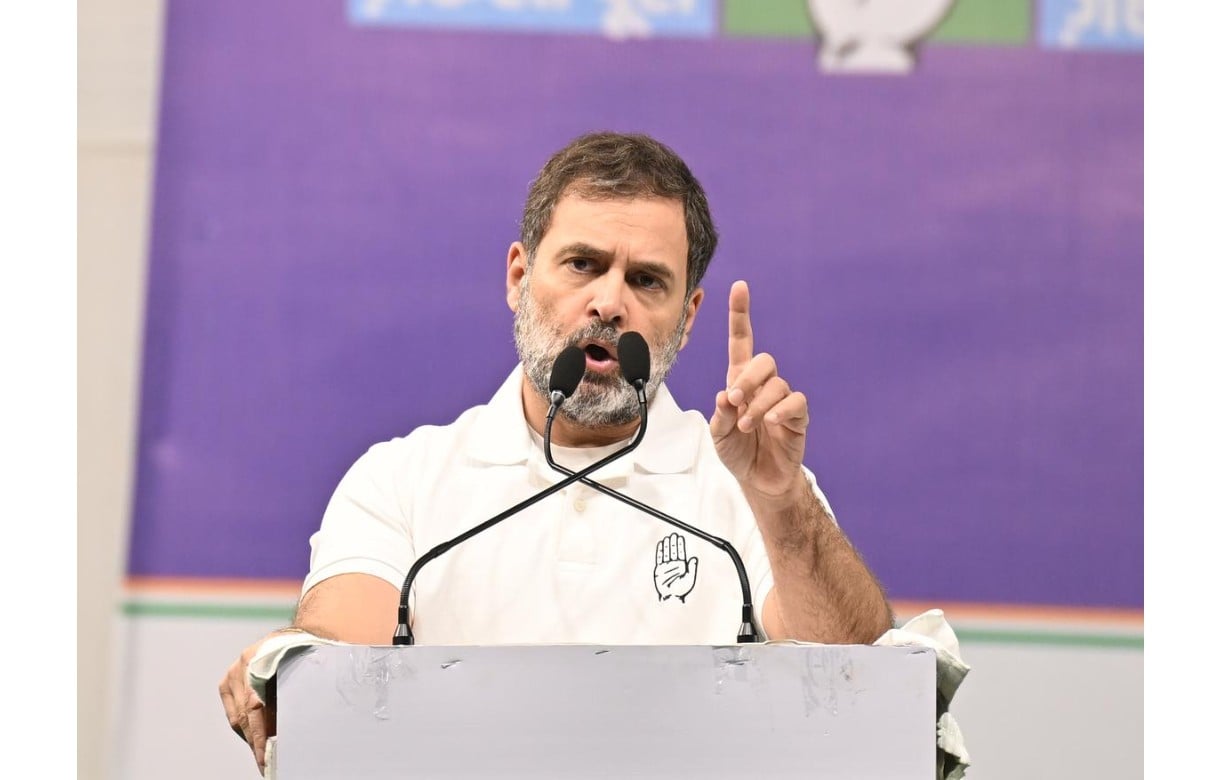
Leader of Opposition Rahul Gandhi launched a scathing attack on Prime Minister Narendra Modi, accusing the government of abandoning India’s farmers and pushing them deeper into debt. Citing rising input costs, lack of Minimum Support Price (MSP) guarantee, and fertilizer shortages, Gandhi claimed the system is silently “killing” farmers.

Taking to social media platform X, Gandhi highlighted a report that revealed 767 farmer suicides in Maharashtra within just three months. “Imagine 767 families shattered in 3 months. These aren’t just numbers, these are lives lost. And the government? Silent. Watching with indifference,” he wrote.

Gandhi pointed to soaring costs of seeds, fertilizers, and diesel, stating that while farmers’ pleas for loan waivers are ignored, industrialists with massive debts are being favored. Every day, farmers are being pushed further into financial distress. But those with billions? Their loans are waived off with ease. Just look at today’s news, Anil Ambani’s ₹48,000 crore SBI ‘fraud’,” he said.

He criticized Modi’s broken promise of doubling farmers income, saying that the very people who nourish the nation are now seeing their own livelihoods shrink drastically. This system is quietly but relentlessly destroying our farmers, while the Prime Minister remains occupied with his PR spectacle.

Gandhi also raised alarms over India’s growing dependency on China for fertilizers. He cited reports showing that India imports 80% of its specialty fertilizers from China, a supply chain now disrupted leading to shortages of essential farming inputs like urea and DAP.

“India is an agrarian country. The farmer is the backbone of our economy. But today, that backbone is buckling under foreign dependence,” Gandhi said, questioning the government’s lack of preparedness. “Despite knowing the risks, no steps were taken to boost domestic production. No policy, no plan.”

He further criticized the government for focusing on image-building rather than addressing the crisis, saying, on one hand, the Prime Minister prints his photo on fertilizer sacks, and on the other, our farmers are forced to rely on ‘Made in China.

Concluding his remarks, Gandhi asked, “Will the Indian farmer now be helpless even on his own soil? As crops fail and debts rise, the farmer is left asking ‘Kiska Sath, Kiska Vikas?”

India News

Vijay’s TVK demands scrapping NEET, seeks state control of medical education

Published

on

By

Tamil Nadu CM Vijay speaking on stage

Tamilaga Vettri Kazhagam (TVK), led by Tamil Nadu Chief Minister C. Joseph Vijay, has on Wednesday again demanded the complete abolition of the National Eligibility-cum-Entrance Test (NEET).

The party described its position as an “uncompromising and firm stand”, stating that it is not merely seeking reforms in the examination system but wants NEET scrapped entirely. The statement comes amid nationwide protests and growing concerns over alleged irregularities in the medical entrance examination.

A TVK statement said medical education should come under the full control of state governments rather than the Centre. The party demanded that education be shifted from the Concurrent List to the State List of the Constitution, allowing states to decide their own admission policies for medical colleges. As an interim measure, TVK proposed creating a Special Concurrent List that would grant states greater authority over education until constitutional changes are made.

The party criticized what it called the “One Nation, One Education” approach, arguing that a single national entrance test places students from rural areas, government schools, Tamil-medium institutions, and economically weaker sections at a disadvantage. TVK reiterated its demand that admissions to MBBS, BDS, and AYUSH courses under the state quota should be based on Class 12 examination marks instead of NEET.

TVK’s latest statement comes as students and activists across the country continue to protest over examination irregularities. The party clarified that its opposition to NEET is not limited to recent controversies but is based on its long-standing belief that states should have complete authority over medical education and admissions. It criticized political parties that promised to abolish NEET without delivering on those commitments, without naming the rival DMK.

The demand has reignited the debate over the future of NEET and the balance of power between the Centre and the states. Supporters believe scrapping the examination would provide a fair opportunity for students from different backgrounds, while opponents argue that NEET ensures a uniform standard for medical admissions across India.

At present, NEET remains a national-level entrance examination, and the Union Government has not announced any decision to abolish it. However, TVK has said it will continue to press for constitutional changes and greater state autonomy in medical education.

Continue Reading

India News

For second time, US strikes ship with Indian crew near Strait of Hormuz

Published

on

By

Strait of Hormuz

The United States Central Command (CENTCOM) has said that an oil tanker carrying Indian crew was drifting with its engine switched off near the Strait of Hormuz before it was struck by US forces.

A CENTCOM spokesperson said the vessel had stopped due to engine failure and was drifting after its crew repeatedly sought additional time to carry out repairs. US officials said the tanker was struck only after it failed to comply with directives issued by US forces enforcing a blockade on vessels allegedly transporting Iranian oil. The military said the strike was aimed at disabling the ship by targeting its engine room rather than sinking it.

The incident involved a tanker carrying Indian seafarers near the Gulf of Oman, close to the Strait of Hormuz, one of the world’s busiest maritime trade routes. The strike triggered a fire onboard, prompting rescue efforts by Omani authorities and maritime agencies. Indian authorities closely monitored the situation and coordinated with local officials regarding the welfare of the crew members.

The incident has drawn concern in India, with the government emphasising the safety of Indian nationals working aboard commercial vessels in the conflict-hit region. The Ministry of External Affairs has remained in touch with the authorities concerned as tensions between the United States and Iran continue to pose risks to international shipping.

In June, three Indian sailors were killed in a US strike on another oil tanker. The Strait of Hormuz handles a significant share of the word’s oil trade, and the latest incident has renewed concerns over the security of merchant vessels operating in the region. Maritime experts have warned that escalating hostilities could further disrupt commercial shipping and endanger civilian crews navigating one of the world’s most strategically important waterways.

Continue Reading

India News

Mumbai water reserves rise to nearly 62% after heavy rainfall boosts lake levels

Heavy monsoon rainfall has pushed Mumbai’s drinking water reserves to 61.9% capacity, with nearly 60,000 million litres added in just 24 hours as IMD continues weather alerts.

Published

on

Mumbai’s drinking water reserves witnessed a significant increase after continuous rainfall over the past two days, with the combined storage of the city’s seven reservoirs reaching 61.9% of their total capacity on Wednesday.

According to the Brihanmumbai Municipal Corporation (BMC), the reservoirs received an additional nearly 60,000 million litres of water in the last 24 hours, taking the total storage to 8,95,907 million litres.

Seven reservoirs receive strong inflows

Mumbai depends on seven lakes—Bhatsa, Modak Sagar, Upper Vaitarna, Middle Vaitarna, Tansa, Vihar and Tulsi—for its drinking water supply. These reservoirs are located across Mumbai, Thane, Palghar and Nashik districts and largely rely on monsoon rainfall.

After water levels had dropped below 6% earlier this season, storage gradually recovered to around 50% in early July before inflows slowed as rainfall weakened. A fresh spell of monsoon showers this week has once again accelerated the replenishment of the reservoirs.

During the corresponding period last year, the combined water stock stood at more than 85.32% of total capacity.

Vihar and Tulsi remain full, Tansa nears overflow

Among the seven reservoirs, Vihar and Tulsi continued to remain at 100% capacity.

Tansa reached 97.96% of its storage capacity, making it one of the reservoirs closest to overflowing if rainfall continues. Modak Sagar was more than 90% full, while Bhatsa, the city’s largest source of drinking water, stood at 57.27% capacity.

Meanwhile, Middle Vaitarna recorded 53% storage, while Upper Vaitarna remained at 39% capacity.

BMC data also showed that the catchment areas received between 70 mm and 224 mm of rainfall over the past 24 hours, supporting further inflows into the reservoirs.

IMD issues rain alerts for Mumbai and nearby districts

The India Meteorological Department (IMD) has issued a yellow alert for Mumbai until Thursday, forecasting heavy rainfall at isolated locations along with strong winds.

The weather department said the city is likely to witness a generally cloudy sky with moderate to heavy rainfall at a few places across Mumbai and its suburbs over the next 48 hours. Gusty winds reaching 50–60 kmph are also expected during this period.

The IMD has also issued an orange alert for Thane and Palghar, where heavy to very heavy rainfall is likely at isolated places. Nashik remains under a yellow alert until Thursday due to the possibility of heavy rainfall and thunderstorms.

With the monsoon remaining active over the reservoir catchment areas, officials expect Mumbai’s water storage to continue improving in the coming days.

Continue Reading

Trending

© Copyright 2022 APNLIVE.com