
Latest world news
Kabul:Terrorist groups reject peace offer, kill 33 in a suicide explosion


President Ashraf Ghani’s reconciliation offer thwarted on New Year
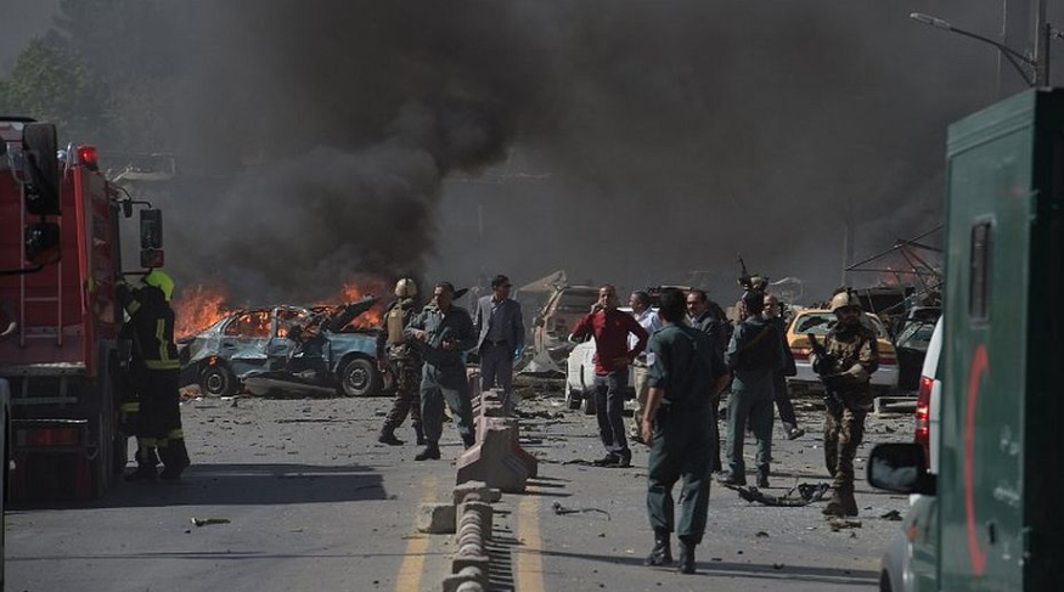
The terrorist groups in Afghanistan have thwarted President Ashraf Ghani’s offer of introducing reforms in the education sector, fast-tracking parliamentary and district council elections and peace process by killing over 33 persons by conducting a suicide bombing at a Shia shrine, near Kabul University on Wednesday.
According to TOLO News, It was Persian Nowruz (new year) day when President Ashraf Ghani along with Chief Executive Abdullah Abdullah called on Afghan people to support and participate in the elections in order to determine the future of the country.
President Ashraf Ghani said, “Within the next six weeks, I will personally deal with the recommendations relating to commitment, resources and coordination (regarding elections). War is not the solution; any group that insists on waging war will face a resolute resistance from our people.”
Abdullah Abdullah, while referring to government’s recent peace offer said, “Our expectation is that our message and our plan for peace is responded to positively by those who are at war.”
In contrast to the government’s offer, terrorists chose to attack people, mainly Shias, at a shrine locally known as Kart-e-Sakhi by a suicide bomber where people gathered to celebrate the Nowroz (New Year) festival. The explosion killed 33 people and injured 52 others.
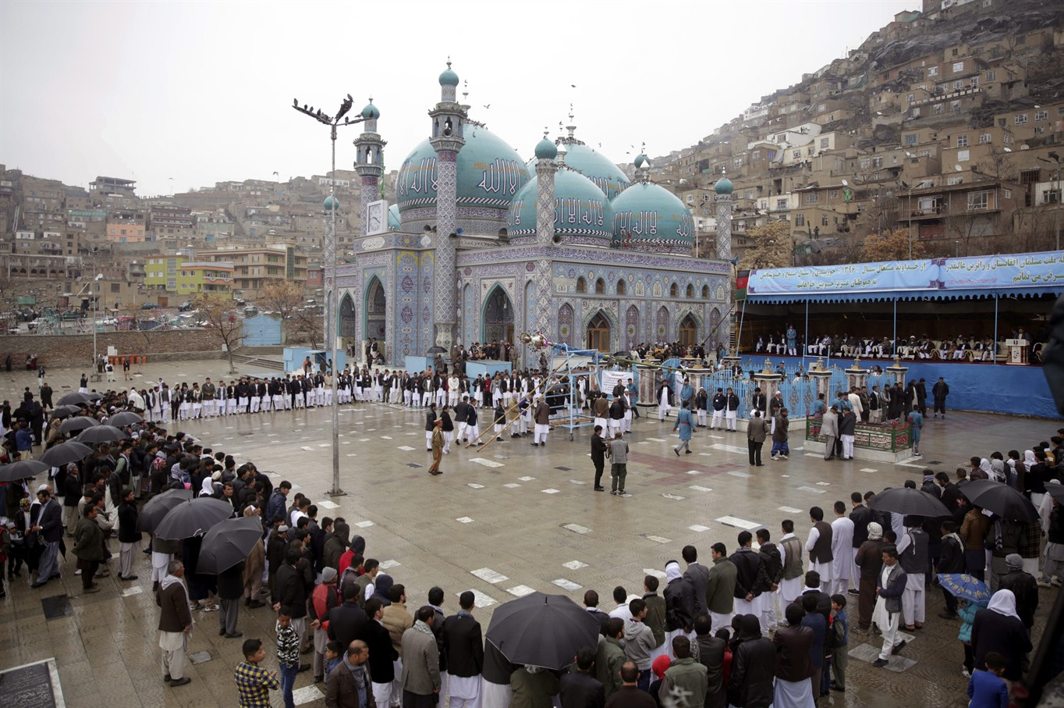
 On March 21, every year Persian calendar based on Hijri-Shamsi, Islamic calendar based on solar system. It is mainly celebrated in Iran, Afghanistan and several central Asian countries.
Meanwhile, United Nations has strongly condemned the deadly attack in Kabul and underscored the need to hold perpetrators and financiers of these “reprehensible” acts accountable. Daesh (IS) has claimed that the attack targeted “a gathering of Shiites celebrating Nowruz.”
UN Secretary-General Antonio Guterres said in a statement, “Nowruz is a time of renewal and celebration, and should be a time for promoting the values of peace and solidarity,” he said, reiterating that those organised the attack “must be brought to justice.”
In a separate statement, Tadamichi Yamamoto, the head of the UN Assistance Mission in Afghanistan (UNAMA) has echoed the secretary-general’s condemnation. “I reiterate that under no circumstances are such attacks justifiable, and I once again call on all parties to uphold their obligations under international humanitarian law, at all times,” he said.
The statement issued said that 15-nation Security Council has condemned in the strongest terms the “heinous and cowardly” terrorist attack. ”
“The members of the Security Council reiterated that any acts of terrorism are criminal and unjustifiable, regardless of their motivation, wherever, whenever and by whomsoever committed,” the statement said.
Both the Taliban and Islamic State carry out attacks in Kabul. The Taliban controls large swathes of Afghanistan and Islamic State terrorists hold sway in a much smaller number of districts.
 Meanwhile Afghanistan’s Ministry of Public Health said late Wednesday night that 32 people were killed and 52 wounded in the deadly bombing. However, some of the survivors have been claiming that death toll must be much higher than what government has stated.The eye witnesses also described scenes of horror and said they saw body parts of victims lying at the blast site.
The Ministry of Interior has confirmed a suicide bomber detonated his explosives while walking among a group of people close to the Ali Abad Hospital and Kabul University at around mid-day.
Earlier, during last year’s Muharram, over a dozen Shia mourners were killed by another suicide bomber at the same shrine in Kabul.
According to the statistics of Afghanistan Human Rights Commission (AIHRC), over 10,00 civilians were killed in the last solar year (from 21 March 2017 to 20 March 2018) over 10,000 Afghan civilians, including 2000 children were killed and wounded during attacks across the country.






Latest world news
S Jaishankar says India is a natural option for Russia amid Europe tensions
External Affairs Minister S Jaishankar said India remained a natural option for Russia as Moscow increasingly turned towards Asia amid strained relations with Europe. He highlighted the continuity of India-Russia ties and their significance for the balance of power in Asia.


Latest world news
Putin praises PM Modi, says he has very good ideas on Ukraine war
Russian President Vladimir Putin has praised Prime Minister Narendra Modi for repeatedly raising the need to end the Ukraine war, describing his ideas for a settlement as “very good”.

Latest world news
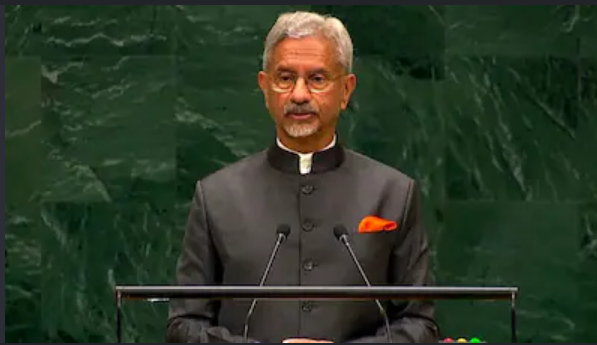
S Jaishankar calls Pakistan a “serial practitioner of terrorism” at UN
S Jaishankar criticised Pakistan at the UN General Assembly, referring to a “serial practitioner of terrorism” and warning against attempts to normalise terrorism.

Supreme Court stays defamation case against Rahul Gandhi over PM Modi remarks

Rahul Gandhi hosts high tea for INDIA bloc after Gyanesh Kumar protests

L Murugan quits Union ministry to strengthen BJP in Tamil Nadu

Amit Shah attacks Rahul Gandhi over Congress poll losses, questions SIR row

BJP focuses on religion as opposition pushes BDM strategy in UP

PM Modi speaks to Mark Carney as India and Canada push to strengthen ties

S Jaishankar says India is a natural option for Russia amid Europe tensions

CJP leaders Saurav Das, Ashutosh Ranka, Ajinkya Shinde sent to 5-day judicial custody
BJP focuses on religion as opposition pushes BDM strategy in UP
L Murugan quits Union ministry to strengthen BJP in Tamil Nadu

Afghan Men Try To Hang With The Jet Engine Of The Aircraft in Kabul- Afghanistan News – Kabul News
Trending Top 10 News: 10000 Crore Fine on Flipkart, Apple to Launch Unique Feature, Hdfc Bank Job Ad

Trending Top 10 News: Nokia 6310, Apple sales, Bachpan ka Pyar Video Kid, Dainik Bhaskar IT Raid

Trending Top 10 News: Canada bans Indian flights, Rain in Delhi NCR, AIMIM Twitter hacked, Raj Kundra case

Trending Top 10 News: Shein India, Apple New Service, Pocket Oxygen, Oppo Launched New Phone
-
 India News23 hours ago
Supreme Court stays defamation case against Rahul Gandhi over PM Modi remarks
-
 India News15 hours ago
Rahul Gandhi hosts high tea for INDIA bloc after Gyanesh Kumar protests
-
 India News14 hours ago
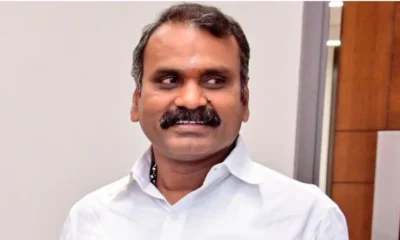
L Murugan quits Union ministry to strengthen BJP in Tamil Nadu
-
 India News14 hours ago
Amit Shah attacks Rahul Gandhi over Congress poll losses, questions SIR row
-
 India News13 hours ago
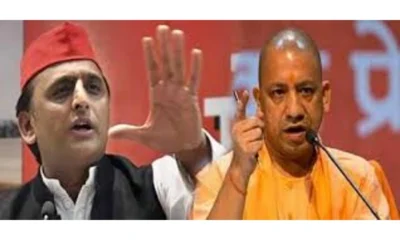
BJP focuses on religion as opposition pushes BDM strategy in UP
-
 India News2 hours ago
CJP leaders Saurav Das, Ashutosh Ranka, Ajinkya Shinde sent to 5-day judicial custody
-
 Latest world news2 hours ago
S Jaishankar says India is a natural option for Russia amid Europe tensions
-
 India News2 hours ago
PM Modi speaks to Mark Carney as India and Canada push to strengthen ties
