
Latest world news
Posturing of inclusion: Pakistan cabinet gets first Hindu minister in 20 years

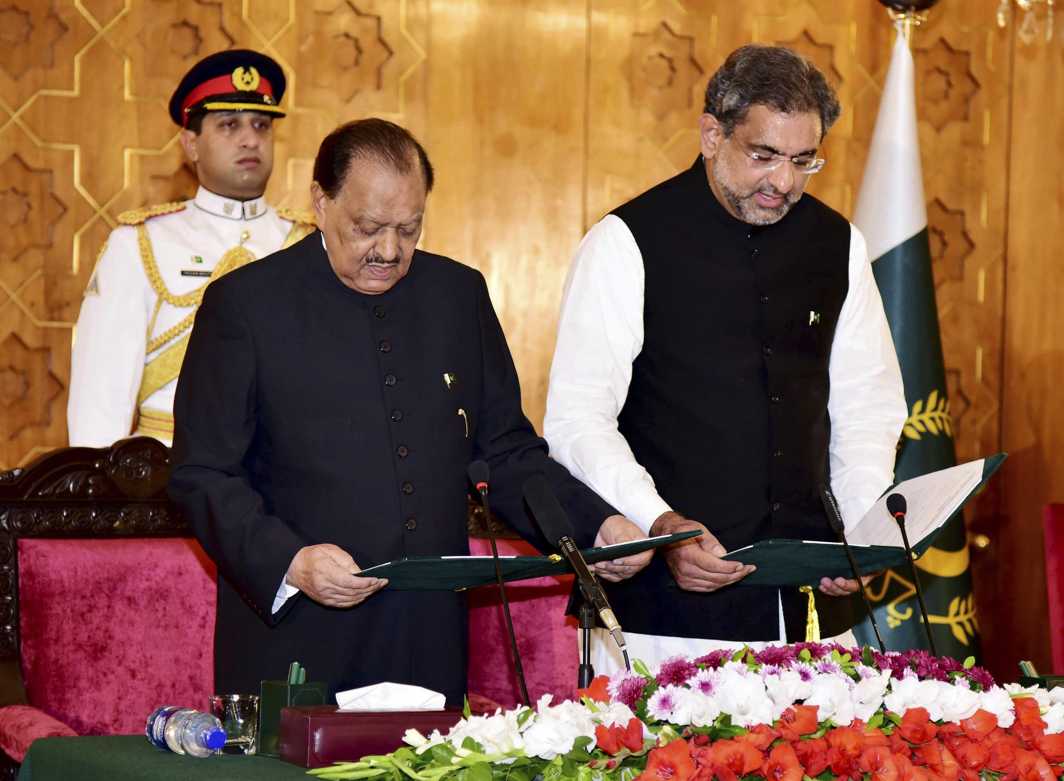
[vc_row][vc_column][vc_column_text]Two-time member of Pakistan National Assembly, Darshan Lal, was formerly a doctor in Mirpur Mathelo town in Ghotki district of Sindh province. He has been assigned the portfolio of inter-provincial coordination which works on synchronising the Pak administration’s works in the country’s four provinces
As the newly sworn-in Prime Minister of Pakistan, Shahid Khaqan Abbasi, formed his cabinet on Friday, one name stood out in the robust exercise that saw federal and state ministerial positions swell from 25 under Nawaz Sharif to 47, that of Darshan Lal Punshi – the first Hindu cabinet minister in Pakistan in nearly 25 years.
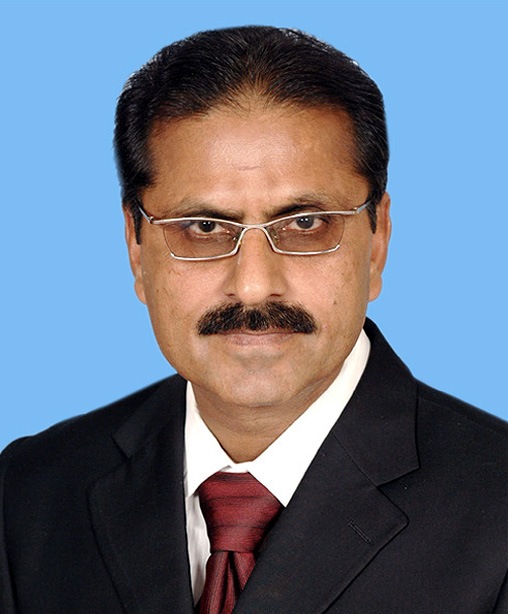
Dr Darshan, as he is popularly called in Pakistan politics and within Sharif’s party – Pakistan Muslim League (Nawaz) – is a two-term member of the Pakistan National Assembly, elected under the minority quota that has five other Hindu representatives to for the fledgling religious minority that comprises just 2 per cent of the country’s population.
Formerly a practicing doctor in Mirpur Mathelo town of Sindh province’s Ghotki district, Darshan Lal was allotted the portfolio of inter-provincial coordination shortly after being sworn in as a member of the Abbasi cabinet. His job would involve maintaining crucial dialogue between the federal government and the four provinces of Pakistan besides overseeing and coordinating the Centre’s initiatives in them.
With his induction in the cabinet, Darshan Lal joins the illustrious club of Jogendranath Mandal (a Dalit from Bengal who was the only Hindu member in Pakistan’s first cabinet under Mohammed Ali Jinnah) and Rana Chandra Singh (a Sodha Rajput royal from the erstwhile Umerkot jagir in Sindh and founding member of ZA Bhutto’s Pakistan People’s Party).
While the Indian establishment and observers may take a Hindu minister’s appointment as a sign of Pakistan’s goodwill gesture towards India and its willingness to at least project a polity that is inclusive, Pakistani political observers are certain that Darshan’s induction – like that of the other ministers who were sworn in on Friday – is purely an effort by the PML-N to shore up nationwide support before the 2018 general elections.
The Hindu minority in Pakistan – although just 2 per cent of the population – is concentrated in small pockets of the Sindh and Punjab provinces and having a person from the community in the federal cabinet could help in incremental electoral gains for the PML-N. Unlike Punjab, which is a stronghold of the Sharif family and has Nawaz’s younger brother Shahbaz as its chief minister, Sindh has traditionally been a bastion of the PPP – the arch political rival of the PML-N and the only other party besides Sharif’s to have a pan-Pakistan appeal. Since Hindu’s have a sway in some seats in Sindh (which sent the last Hindu minister to the Pakistan cabinet in Rana Chandra Singh), Darshan Lal – who also belongs to this province – could help PML-N make further in-road here before next year’s general elections.
Meanwhile, Abbasi has also appointed Khwaja Asif as his foreign minister, the first leader to hold the crucial office since 2013. In the earlier dispensation Sartaj Aziz was serving as PM’s advisor for foreign affairs but no one was officially granted the foreign affairs portfolio.
Asif has earlier served as Minister of Defense, Water and Power. He was Minister of Petroleum and Natural Resources in the Yousaf Raza Gilani government and has been representing the Sialkot constituency in the National Assembly since 1993.[/vc_column_text][/vc_column][/vc_row]






Latest world news
S Jaishankar says India is a natural option for Russia amid Europe tensions
External Affairs Minister S Jaishankar said India remained a natural option for Russia as Moscow increasingly turned towards Asia amid strained relations with Europe. He highlighted the continuity of India-Russia ties and their significance for the balance of power in Asia.


Latest world news
Putin praises PM Modi, says he has very good ideas on Ukraine war
Russian President Vladimir Putin has praised Prime Minister Narendra Modi for repeatedly raising the need to end the Ukraine war, describing his ideas for a settlement as “very good”.

Latest world news
S Jaishankar calls Pakistan a “serial practitioner of terrorism” at UN
S Jaishankar criticised Pakistan at the UN General Assembly, referring to a “serial practitioner of terrorism” and warning against attempts to normalise terrorism.


Supreme Court stays defamation case against Rahul Gandhi over PM Modi remarks

CJP claims Saurav Das, Ashutosh Ranka detained at Jantar Mantar

Rahul Gandhi hosts high tea for INDIA bloc after Gyanesh Kumar protests

L Murugan quits Union ministry to strengthen BJP in Tamil Nadu

Amit Shah attacks Rahul Gandhi over Congress poll losses, questions SIR row

PM Modi speaks to Mark Carney as India and Canada push to strengthen ties

S Jaishankar says India is a natural option for Russia amid Europe tensions

CJP leaders Saurav Das, Ashutosh Ranka, Ajinkya Shinde sent to 5-day judicial custody

BJP focuses on religion as opposition pushes BDM strategy in UP
L Murugan quits Union ministry to strengthen BJP in Tamil Nadu

Afghan Men Try To Hang With The Jet Engine Of The Aircraft in Kabul- Afghanistan News – Kabul News
Trending Top 10 News: 10000 Crore Fine on Flipkart, Apple to Launch Unique Feature, Hdfc Bank Job Ad

Trending Top 10 News: Nokia 6310, Apple sales, Bachpan ka Pyar Video Kid, Dainik Bhaskar IT Raid

Trending Top 10 News: Canada bans Indian flights, Rain in Delhi NCR, AIMIM Twitter hacked, Raj Kundra case

Trending Top 10 News: Shein India, Apple New Service, Pocket Oxygen, Oppo Launched New Phone
-
 India News21 hours ago
Supreme Court stays defamation case against Rahul Gandhi over PM Modi remarks
-
 India News23 hours ago
CJP claims Saurav Das, Ashutosh Ranka detained at Jantar Mantar
-
 India News13 hours ago
Rahul Gandhi hosts high tea for INDIA bloc after Gyanesh Kumar protests
-
 India News12 hours ago
L Murugan quits Union ministry to strengthen BJP in Tamil Nadu
-
 India News13 hours ago
Amit Shah attacks Rahul Gandhi over Congress poll losses, questions SIR row
-
 India News11 hours ago
BJP focuses on religion as opposition pushes BDM strategy in UP
-
 India News45 mins ago
CJP leaders Saurav Das, Ashutosh Ranka, Ajinkya Shinde sent to 5-day judicial custody
-
 Latest world news32 mins ago
S Jaishankar says India is a natural option for Russia amid Europe tensions

