English हिन्दी
Connect with us

Latest world news

Qatar crisis not to be resolved soon, say both sides

Published

on

Qatar crisis not to be resolved soon, say both sides
[vc_row][vc_column][vc_column_text]French Foreign Minister visits the region

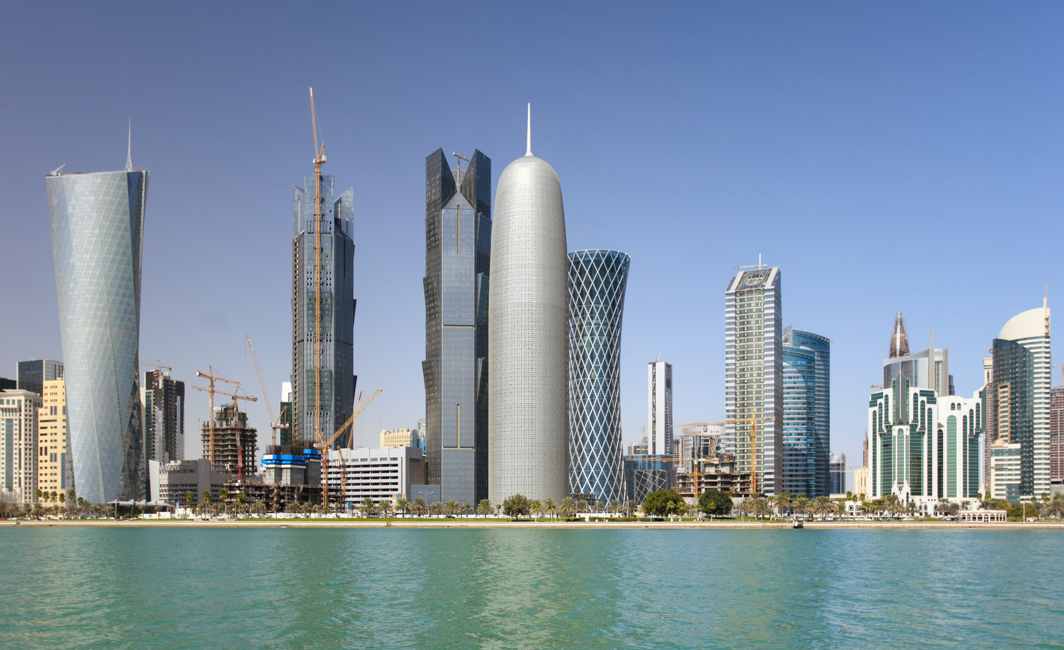
Despite the ongoing shuttle diplomacy from Western countries, the Qatar crisis seems set to continue for long. The UAE Foreign Minister Dr. Anwar Mohammad Gargash has said that estrangement between “anti-terrorism quartet” and Qatar is not going to be resolved any time soon. Similarly Qatari Foreign Minister says that diplomatic row “can’t be solved in a day.”

Gargash, in one of his tweets on Friday said, “All the evidence before us points to this long break. Just like Qatar cries out about sovereign decisions, the four countries that are boycotting terrorism are exercising sovereign measures.”

UAE, along with Saudi Arabia, Bahrain and Egypt, had severed diplomatic ties and closed its borders with Qatar on June 5.

While elaborating on the issue, UAE Foreign Minister said, “The four boycotting states have every right to protect themselves, shut their borders and protect their stability. They will keep up their actions and strengthen their right to isolate conspiracies. Indeed, we are far from the political solution involving a change in Qatar’s directions. In light of that, nothing will change and we must therefore look for a different format of relations.”

Meanwhile Qatar’s Foreign Minister Sheikh Mohammed bin Abdulrahman Al-Thani, while addressing a joint press conference with his Turkish counterpart in Ankara on Friday, said that the current unprecedented diplomatic row “can’t be solved in a day.”  Earlier Qatari Foreign Minister met with President Recep Tayyip Erdogan and discussed the Gulf crisis and bilateral relations.

Turkey and Qatar have also reiterated that Ankara would keep a new military base in the Gulf country, rejecting demands from Saudi Arabia and its allies for the facility to be closed. Turkish foreign Minister Mevlut Cavusolglu said, “A third country has no right to say something to Qatar or Turkey. Everyone must respect this.” Closure of Turkish army base was one of the thirteen demands put forward by Saudi Arabia led quartet.

Friday evening, US President Donald Trump spoke by phone to Saudi King Salman and discussed efforts to resolve the month-long dispute between Qatar and the four Arab states.

On Wednesday Trump was quoted as saying in an interview with CBN News, “We are going to have a good relationship with Qatar and not going to have a problem with the military base [in Qatar]. If we ever had to leave [the base], we’d have 10 countries willing to build us another one. And they’ll pay for it.”

Qatar is home to the Al-Udeid airbase that holds the forward headquarters of the US Central Command with around ten thousand American troops.

On Saturday early morning British navy vessel “HMS Middleton” arrived in Doha to participate in a joint naval exercise between the British Royal navy and Qatari territorial waters. Qatar’s Defense Ministry has said that the exercise came on the basis of prior agreements between the two sides in the framework of bilateral defense cooperation to support efforts of combating terrorism and smuggling as well as to maintain security and stability in the region.

Earlier this week US Secretary of State Rex Tillerson visited Qatar and Saudi Arabia and discussed the issue in detail with Saudi Crown Prince Mohammad bin Salman Al-Saud and Qatar’s Emir Sheikh Tamim bin Hamad Al-Thani to mend the widening rift. He could not achieve any breakthrough.

On Saturday French Foreign Minister Jean-Yves Drian is visiting Doha, as part of his two day Gulf tour to ease the tension in the region. After meeting Qatari Emir, he will travel to Saudi Arabia, Kuwait and UAE.

British and German Foreign Ministers have already visited the rival countries to defuse the situation without any success.

In a dramatic move, UAE Minister for the Federal National Council, Noura al-Kaabi,  while talking to London based The Times on Friday, said that Emirates sought “fundamental change and restructuring” of Al-Jazeera rather than to shut it. She also said that the Saudi-led group was ready to negotiate with Qatar on the subject.

After severing ties with Qatar, the four countries put forward thirteen demands to Qatar which included severing ties with their perceived arch rival Iran, closure of Aljazeera News network and shutting down of Turkish military base in the country. Qatar has refused to bow to the pressure and started meeting its daily requirements from Iran and Turkey.[/vc_column_text][/vc_column][/vc_row]

Latest world news

Iran set to execute anti-Khamenei protester as Trump warns of strong US action

Iran is preparing to execute a protester linked to anti-regime demonstrations as US President Donald Trump warns of strong action amid a deadly crackdown.

Published

on

unrest in iran

Iran is reportedly preparing to execute an anti-government protester on Wednesday, triggering sharp warnings from US President Donald Trump, who said Washington would take “very strong action” if the hanging goes ahead. The development comes amid a sweeping crackdown on nationwide protests that rights groups say has killed more than 2,000 people.

According to human rights groups, 26-year-old Erfan Soltani, arrested last week during protests in Karaj near Tehran, has been sentenced to death and faces execution without a proper trial. Iranian authorities have not publicly detailed the charges or judicial process in his case.

Trump urges Iranians to keep protesting

Trump has publicly encouraged Iranians to continue protesting, saying “help is on its way”, while warning Tehran against executing demonstrators. Speaking to media, the US president said the United States would respond forcefully if Iran began hanging protesters arrested during the unrest.

Earlier, Trump posted messages urging people in Iran to continue demonstrations and said he had cancelled meetings with Iranian officials until the killing of protesters stops. He did not specify what assistance the US might provide or which meetings had been cancelled.

Iranian prosecutors have reportedly threatened capital punishment under charges of “moharebeh”, or waging war against God, for some detainees linked to the protests.

Rising death toll and reports from morgues

Rights groups say the crackdown has been one of the deadliest in recent years. According to activist organisations, the death toll has crossed 2,500, including civilians and members of the security forces. Iranian officials, however, have blamed what they described as “terrorists” for the deaths and have not provided a clear breakdown.

Videos circulating on social media show bodies lined up at the Kahrizak mortuary near Tehran, wrapped in black bags, as families search for missing relatives. Authorities have declared national mourning for security personnel killed during the unrest and announced mass funeral ceremonies in the capital.

Internet blackout and Starlink access

Iran has imposed a widespread internet blackout, now extending beyond five days, limiting communication and information flow. Amid the restrictions, SpaceX has reportedly waived subscription fees for its Starlink satellite service in Iran, allowing users with receivers to access the internet without payment, according to groups working to restore connectivity.

Some international phone links were partially restored, but reports indicate services remain unstable and limited.

Political tensions and international reaction

Iranian leaders have insisted that control has been restored following days of protests described as one of the biggest challenges to the clerical leadership since the 1979 revolution. Supreme Leader Ayatollah Ali Khamenei has hailed pro-government rallies as evidence that the protest movement has failed.

Senior Iranian officials have accused Trump and Israeli leadership of responsibility for violence in Iran. Meanwhile, Western leaders have condemned the use of force against protesters, with some warning that sustained repression could further destabilise the country.

Analysts note that while the protests represent a serious challenge to Iran’s leadership, the government retains powerful security and enforcement mechanisms, making the outcome uncertain.

Continue Reading

Latest world news

Nearly 2,000 killed as Iran acknowledges high death toll in nationwide protests

Iran has for the first time acknowledged that nearly 2,000 people were killed during nationwide protests sparked by economic distress, as authorities continue a strict security crackdown.

Published

on

unrest in iran

Iran has acknowledged for the first time that close to 2,000 people, including members of the security forces, have been killed during two weeks of widespread protests across the country, according to an Iranian official.

The official said the deaths occurred amid violent clashes during nationwide unrest that erupted over worsening economic conditions. The figure marks the highest acknowledged toll so far from the current wave of demonstrations, which has posed one of the most serious internal challenges to Iran’s leadership in recent years.

Official blames “terrorists” for violence

According to the official, those described as “terrorists” were responsible for the deaths of both protesters and security personnel. However, no detailed breakdown was provided regarding how many civilians or security forces were killed.

Iran’s clerical leadership has accused the United States and Israel of instigating unrest in the country, alleging that external actors exploited public anger and escalated the demonstrations into violent confrontations.

Dual approach to protests

Authorities have attempted to balance their response by distinguishing between what they describe as legitimate protests over economic hardship and acts of violence. While acknowledging public frustration over living conditions, the government has simultaneously enforced a strict security crackdown to contain the unrest.

The protests are reported to be the most significant challenge to the Iranian establishment in at least three years and come at a time of heightened international pressure following military strikes by the US and Israel last year.

Rights groups cite arrests and casualties

Human rights organisations had earlier reported that hundreds of people were killed during the protests and said thousands were detained as security forces moved to suppress demonstrations across several cities.

The flow of information from inside Iran has been severely restricted due to communications curbs, including recent internet blackouts, making independent verification difficult.

Clashes captured on video

Despite restrictions, multiple videos circulating online have shown intense nighttime clashes between demonstrators and security forces. Some of these visuals, verified by media, depict gunfire, burning vehicles, and damage to buildings, highlighting the scale of violence during the unrest.

Continue Reading

Latest world news

Khamenei warns US against deceitful actions as Trump announces 25% tariff threat

Ayatollah Ali Khamenei has warned the United States against “deceitful actions” after Donald Trump announced a 25% tariff threat, as protests continue to challenge Iran’s leadership.

Published

on

khamenei

Iran’s Supreme Leader Ayatollah Ali Khamenei has warned the United States to stop what he described as “deceitful actions” and reliance on “traitorous hirelings,” responding to escalating pressure from US President Donald Trump, including a proposed 25 per cent tariff on countries trading with Iran.

In a post on X, Khamenei said the Iranian nation had demonstrated its resolve in the face of external pressure and issued a warning to American politicians. He asserted that Iran remained strong, aware of its adversaries, and firmly present on the political stage.

Protests pose major challenge to Iran’s leadership

Khamenei’s remarks come amid more than two weeks of nationwide demonstrations that began over economic grievances and have since grown into one of the most serious challenges to Iran’s theocratic system since the 1979 Islamic revolution.

Rights groups have claimed that at least 646 people have been killed during the protests, which have spread across several cities. The unrest has intensified international scrutiny of Tehran’s response and further strained relations with Washington.

Trump signals economic and military options

President Trump has repeatedly warned Iran over its handling of the protests, stating that the United States was prepared to act if demonstrators were killed. He has said possible US responses range from low-risk to high-risk options, depending on the ultimate objective.

While Trump has previously criticised “regime change” as a foreign policy goal, citing past US involvement in Iraq, he has continued to apply economic pressure on Tehran. On Monday, he announced a 25 per cent tariff on countries that trade with Iran, marking a significant escalation in sanctions-linked measures.

Trump has also spoken about efforts to restore internet access in Iran after authorities imposed shutdowns during the protests.

Limited communication revealed

Despite the sharp public rhetoric, both governments have acknowledged that some level of communication has taken place. These contacts were reportedly coordinated through Trump’s envoy Steve Witkoff.

Iran and the United States have remained adversaries since the 1979 revolution that overthrew the pro-Western shah. Any major shift in Iran’s political system would have far-reaching consequences for the Middle East, making the current standoff closely watched across the region.

Continue Reading

Trending

© Copyright 2022 APNLIVE.com