
Latest world news
Surprise: North-South Korean leaders held “sudden meeting”


US-North Korea Summit again on track for June 12, Singapore
In the fast developing dramatic move the leaders of North and South Korea met late Saturday evening in less than a month after their historic summit and generated hopes that US President Donald Trump and North Korean leader Kim Jong-un will actually meet on June 12 in Singapore.
In a sudden and unscheduled meeting Kim Jong-un and Moon Jae-in spoke for two hours on the North Korean side of Panmunjom in the demilitarized zone and discussed how to implement their declaration following their April 27 meeting and the proposed talks between Trump and Kim.
Read More: North Korea: will not beg the US for dialogue
The two leaders, in the joint statement, after the meeting said, “There is no reason why we should fight each other- we are one nation.”
The office of the South Korean president said the outcome of the Saturday’s surprise meeting will b announced on Sunday.
After meeting Kim, South Korean President Moon Jae-in said that Kim was still committed to denuclearization.
 “What is unclear to Chairman Kim Jong Un is not the will for denuclearization, but the concern that if (North Korea) denuclearizes, whether the US can end hostile relations and guarantee the security of the (Kim) regime,” Moon said.
Meanwhile, US President Donald Trump, who abruptly canceled the summit with North Korea, citing hostile comments from the top North Korean officials, has once again, seemed to revive hopes for a summit, telling reporters late Saturday, “We’re looking at June 12 in Singapore. That hasn’t changed.”
He said there was a “lot of goodwill” for the meeting. “A lot of people are working on it. It’s moving along very nicely.”
Read More: North and South come closer on Korean Peninsula
South Korean President Moon Jae-in said Sunday that practical talks will be held between US and North Korea “very soon,” and the outcome of those talks will dictate if the June 12 summit will go ahead. Moon added that he expected the practical talks and summit go “very smoothly.”
Moon said on Sunday that the North Korean leader “once again has made clear his will for the complete denuclearization of the Korean Peninsula and expressed his intent to settle the history of war and confrontation, and to cooperate for peace and prosperity through the success of the North Korea-US summit. Our journey to the complete denuclearization of the Korean Peninsula and a permanent peace agreement cannot be stopped, and we have decided to cooperate closely.”
Moon also suggested a US-North Korean hotline could be opened, and possibly a three-way hotline with South Korea, though he said a trilateral summit should be held first. “I hope if the NK-US summit is successful, through the three-way summit, we can declare the end of the war,” Moon said.
Read More: Trump-Kim Summit in jeopardy after US-South Korea drill
North Korean state media said the meeting took place “all of a sudden.”
Meanwhile North Korean official KCNA Watch released the details of the meeting between the two leaders. It said, “At the talks there were in-depth exchanges of opinions to tackle the matters which should be resolved to quickly carry out the Panmunjom Declaration agreed upon at the third north-south summit and to realize the denuclearization of the Korean peninsula and achieve regional peace, stability and prosperity, and the matters the north and the south are now faced with, and the one of successfully holding the DPRK-U.S. summit.”
The two leaders “agreed to hold the north-south high-level talks on coming June 1 and further accelerate the talks of various fields including the ones of military authorities and Red Cross.”
Read More: North Korea criticize US for misleading and provocative move
They agreed to “meet frequently in the future to make dialogue brisk and pool wisdom and efforts, expressing their stand to make joint efforts for the denuclearization of the Korean peninsula.”
North Korean leader Kim Jong Un thanked his South Korean counterpart Moon Jae In for “much effort made by him for the DPRK-U.S. summit scheduled for June 12, and expressed his fixed will on the historic DPRK-U.S. summit talks.”
Read More: Trump-Kim Summit not happening on June 12
Moon assured Kim to positively cooperate with each other as ever to improve the DPRK-U.S. relations and establish mechanism for permanent and durable peace.
The official North Korean media said,”The top leaders of the north and the south open-heartedly listened to each other’s opinions on the crucial pending matters without formality, and had a candid dialogue. The meeting offers another historic occasion in opening up a new chapter in the development of the north-south relations. They reached a satisfactory consensus in the matters discussed at the talks.”
Meanwhile, Sarah Huckabee Sanders, a spokeswoman for Trump said on Saturday that a White House team is still heading to Singapore this weekend to work on logistics for the Trump-Kim summit, in case the meeting is reset. She said, the “pre-advance team for Singapore will leave as scheduled in order to prepare should the summit take place”.







Latest world news
Magnitude 7 earthquake strikes Tibet after floods
A magnitude 7 earthquake struck northern Tibet on Thursday, October 22. The tremor came weeks after deadly flash floods and landslides hit the mountainous region near the Nepal-China border. Initial reports did not confirm casualties or damage from the earthquake.


Latest world news
Macron rejects Trump’s immigration claims over France riots
French President Emmanuel Macron criticised Donald Trump and other foreign leaders over their comments on France’s recent unrest. Macron rejected claims that the country was being overrun by migrants and Islamists, calling such assertions false.

Latest world news
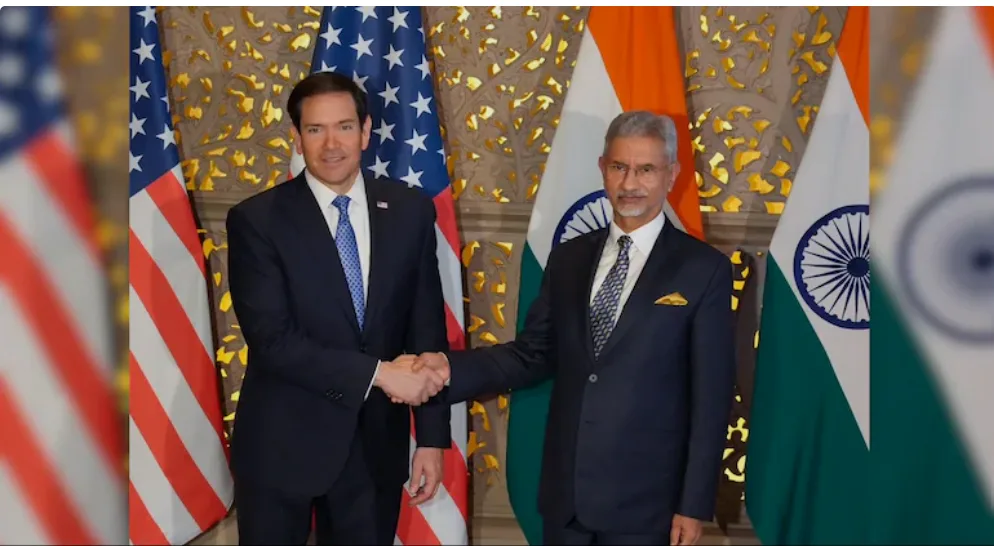
Marco Rubio says India and US share extraordinary alignment on key issues
US Secretary of State Marco Rubio said India and the United States share an extraordinary alignment on core issues, even though disagreements between the two countries may arise.

Punjab strike hits public services as 3 lakh employees and roadways workers protest

Two election commissioners complained against senior poll officer, RTI reveals

Om Prakash Mathur sworn in as Keralam Governor

PM Modi to inaugurate Rs 169-crore RBI data centre in Odisha on October 25

Delhi High Court rejects Neha Bora’s plea against peace bond notice

MEA responds after ITBP chief flags ongoing face-offs with China in Arunachal
Delhi High Court rejects Neha Bora’s plea against peace bond notice
PM Modi to inaugurate Rs 169-crore RBI data centre in Odisha on October 25
Om Prakash Mathur sworn in as Keralam Governor
Two election commissioners complained against senior poll officer, RTI reveals

Afghan Men Try To Hang With The Jet Engine Of The Aircraft in Kabul- Afghanistan News – Kabul News
Trending Top 10 News: 10000 Crore Fine on Flipkart, Apple to Launch Unique Feature, Hdfc Bank Job Ad

Trending Top 10 News: Nokia 6310, Apple sales, Bachpan ka Pyar Video Kid, Dainik Bhaskar IT Raid

Trending Top 10 News: Canada bans Indian flights, Rain in Delhi NCR, AIMIM Twitter hacked, Raj Kundra case

Trending Top 10 News: Shein India, Apple New Service, Pocket Oxygen, Oppo Launched New Phone
-
 India News18 hours ago
Punjab strike hits public services as 3 lakh employees and roadways workers protest
-
 India News18 hours ago
Two election commissioners complained against senior poll officer, RTI reveals
-
 India News7 hours ago
Om Prakash Mathur sworn in as Keralam Governor
-
 India News6 hours ago
PM Modi to inaugurate Rs 169-crore RBI data centre in Odisha on October 25
-
 India News5 hours ago
Delhi High Court rejects Neha Bora’s plea against peace bond notice
-
 India News5 hours ago
MEA responds after ITBP chief flags ongoing face-offs with China in Arunachal
