
Latest world news
Syrian forces clear 90 per cent of Eastern Ghouta


Amidst criticism from US, UN and several other countries for allegedly killing civilians, Syrian government forces have gained control over 90 percent of the Eastern Ghouta region where militants continue to leave their last major stronghold near Damascus.
Reuters reports that Syrian forces celebrated the departure of the last group of militants and their families from the town of Harasta in Eastern Ghoutaon Friday.
Under severe pressure from Syrian forces ongoing operations having Russian air force support, militants agreed to leave the area to the other militant-held territory in northwest of the country, close to Turkey border.
Read More: UN Chief asks Security Council to end Syrians’ sufferings
Under the agreement between the militants and Syrian government, nearly 70,000 militants and their families were leaving from Saturday morning around the towns of Arbin, Jobar, Zamalka and Ein Terma. This was confirmed by Wael Alwan, spokesman of lesser known group Failaq al-Rahman. In exchange, the groups will release captured government soldiers.
Read More: Syrian President visits Eastern Ghouta frontline, civilians
The city of Douma is the last militant stronghold in eastern Ghouta. Negotiations are underway for removing the militants from the city where heavy fighting still continues. Recently, thousands of people have fled Douma into government-held territories.
The liberation of Eastern Ghouta from militants is considered to be the biggest victory of Syrian army after the liberation of Aleppo in December 2016.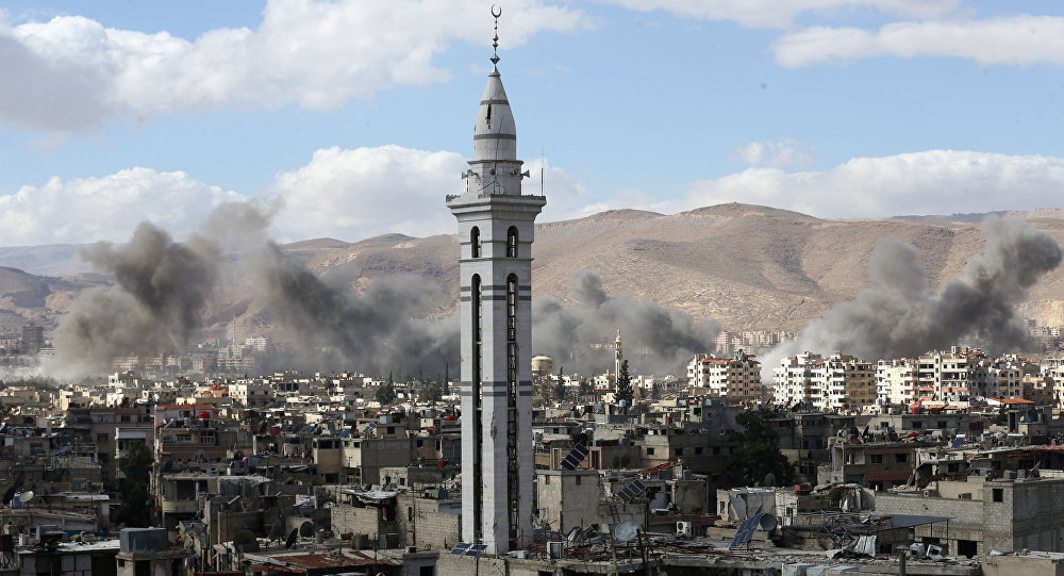
During the recent weeks, Syria and Russia have cornered the terror groups as part of their campaign to liberate civilians who were being used as human shield by the militants. This was also aimed to end militant attacks from EEastern Ghouta on the capital Damscus.
Read More: Syria: Chemical weapon factory unearthed in Eastern Ghouta
Earlier, UN had estimated that 400,000 people were trapped inside the besieged area without access to food or medicine and 50,000 others fled the area after the heavy military confrontations started in mid-February.
Due to ongoing campaign Eastern Ghouta was left splintered into three shrinking pockets each held by a separate militant group. However, all the groups, including Jaish al_Islam, Jabhat al-Nusra and Daesh (IS), who were involved in heinous crimes of killing innocents were following the Saudi nursed Wahabi ideology.
Eastern Ghouta fell to militants in 2012, months after Syria plunged into crisis, and has since served as a launch pad for fatal mortar attacks against residents and infrastructure in the capital. The area is situated not very far from Damascus airport.





Latest world news
Magnitude 7 earthquake strikes Tibet after floods
A magnitude 7 earthquake struck northern Tibet on Thursday, October 22. The tremor came weeks after deadly flash floods and landslides hit the mountainous region near the Nepal-China border. Initial reports did not confirm casualties or damage from the earthquake.


Latest world news
Macron rejects Trump’s immigration claims over France riots
French President Emmanuel Macron criticised Donald Trump and other foreign leaders over their comments on France’s recent unrest. Macron rejected claims that the country was being overrun by migrants and Islamists, calling such assertions false.

Latest world news
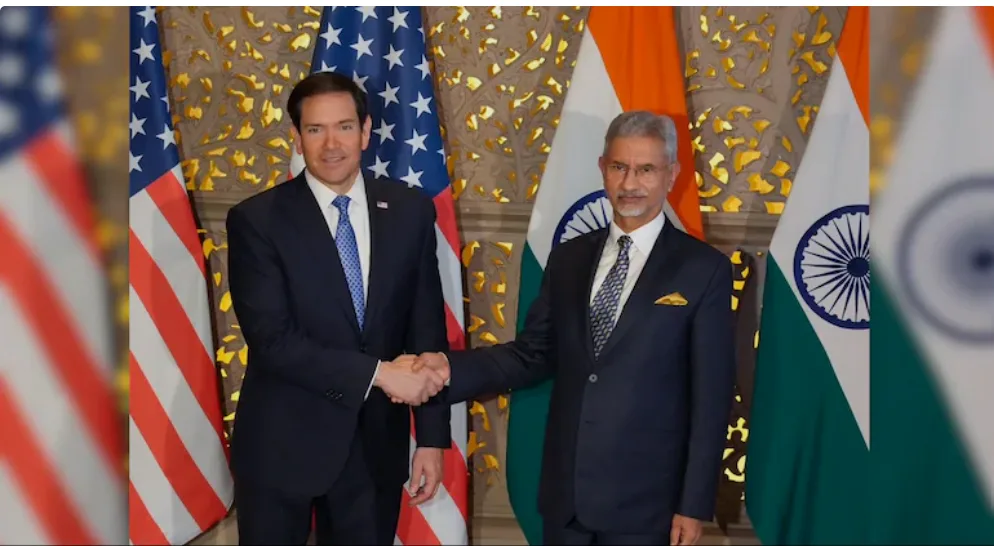
Marco Rubio says India and US share extraordinary alignment on key issues
US Secretary of State Marco Rubio said India and the United States share an extraordinary alignment on core issues, even though disagreements between the two countries may arise.

Punjab strike hits public services as 3 lakh employees and roadways workers protest

Two election commissioners complained against senior poll officer, RTI reveals

Om Prakash Mathur sworn in as Keralam Governor

PM Modi to inaugurate Rs 169-crore RBI data centre in Odisha on October 25

Delhi High Court rejects Neha Bora’s plea against peace bond notice

MEA responds after ITBP chief flags ongoing face-offs with China in Arunachal
Delhi High Court rejects Neha Bora’s plea against peace bond notice
PM Modi to inaugurate Rs 169-crore RBI data centre in Odisha on October 25
Om Prakash Mathur sworn in as Keralam Governor
Two election commissioners complained against senior poll officer, RTI reveals

Afghan Men Try To Hang With The Jet Engine Of The Aircraft in Kabul- Afghanistan News – Kabul News
Trending Top 10 News: 10000 Crore Fine on Flipkart, Apple to Launch Unique Feature, Hdfc Bank Job Ad

Trending Top 10 News: Nokia 6310, Apple sales, Bachpan ka Pyar Video Kid, Dainik Bhaskar IT Raid

Trending Top 10 News: Canada bans Indian flights, Rain in Delhi NCR, AIMIM Twitter hacked, Raj Kundra case

Trending Top 10 News: Shein India, Apple New Service, Pocket Oxygen, Oppo Launched New Phone
-
 India News16 hours ago
Punjab strike hits public services as 3 lakh employees and roadways workers protest
-
 India News16 hours ago
Two election commissioners complained against senior poll officer, RTI reveals
-
 India News5 hours ago
Om Prakash Mathur sworn in as Keralam Governor
-
 India News5 hours ago
PM Modi to inaugurate Rs 169-crore RBI data centre in Odisha on October 25
-
 India News3 hours ago
Delhi High Court rejects Neha Bora’s plea against peace bond notice
-
 India News3 hours ago
MEA responds after ITBP chief flags ongoing face-offs with China in Arunachal
