
Latest world news
Saudi Arabia claims intercepting Yemen’s Houthi missiles


Houthi leader vows to defeat Saudi led coalition
Amidst Crown Prince Mohammed Bin Salman’s ongoing two-and-half weeklong visit to US, Saudi Arabian forces have intercepted seven missiles fired by Yemen’s Houthi Ansarullah in retaliation to the continued bombing on civilian targets. One of the missiles was targeted on capital Riyadh.
Read More: Trump meets Saudi Crown Prince MBS, sells weapons
According to official Alarabia.net, Turki al-Malki, spokesman for Arab Coalition said “This aggressive and hostile action by the Iran-backed Houthi group proves that the Iranian regime continues to support the armed group with military capabilities. The firing of multiple ballistic missiles towards cities is a serious development.”
Read More: Iranian Foreign Minister meets Yemen’s Houthi official
It has also claimed of receiving a video covering the moment anti-missile defense missiles were fired from Saudi Patriot batteries to intercept the Houthi missile over the capital.
Since November last year, Yemen’s Iran-aligned Houthi militias have fired multiple missiles into Saudi Arabia, all of which Saudi forces have intercepted.
Meanwhile Tehran based Press TV reports that Yemen’s Ansarullah fighters and allied army units have carried out more retaliatory missile attacks against Saudi Arabia, targeting several positions in the kingdom.
Read More: Iran to continue support to people in Syria and Yemen
It further said, Yemen’s military targeted King Khalid International Airport in Riyadh and Abha, Najran and Jizan regional airports with ballistic missiles. It quoted Saudi state television saying that its air force intercepted “some of the missiles over the northeastern part of the capital Riyadh on Sunday night”.
Official Saudi Press Agency (SPA) has reported that Yemeni forces fired seven missiles into the kingdom killing an Egyptian resident and wounding two other Egyptian nationals. Turki al-Malki, the official spokesman for the coalition, has confirmed that the death and injuries occurred in a residential house and were caused by falling debris.
Meanwhile, Abdul Malik Badreddin al-Houthi, the leader of the Houthi Ansarullah, has said that Saudi Arabia would not have dared to launch a campaign against Yemen if it had not received direct assistance from the US.
He was addressing live on state television on Sunday night on the third anniversary of the beginning of the Saudi led campaign. He said that the parties involved in the Saudi-led aggression against Yemen are backed by Washington, and are offered extensive military support as well as media coverage.
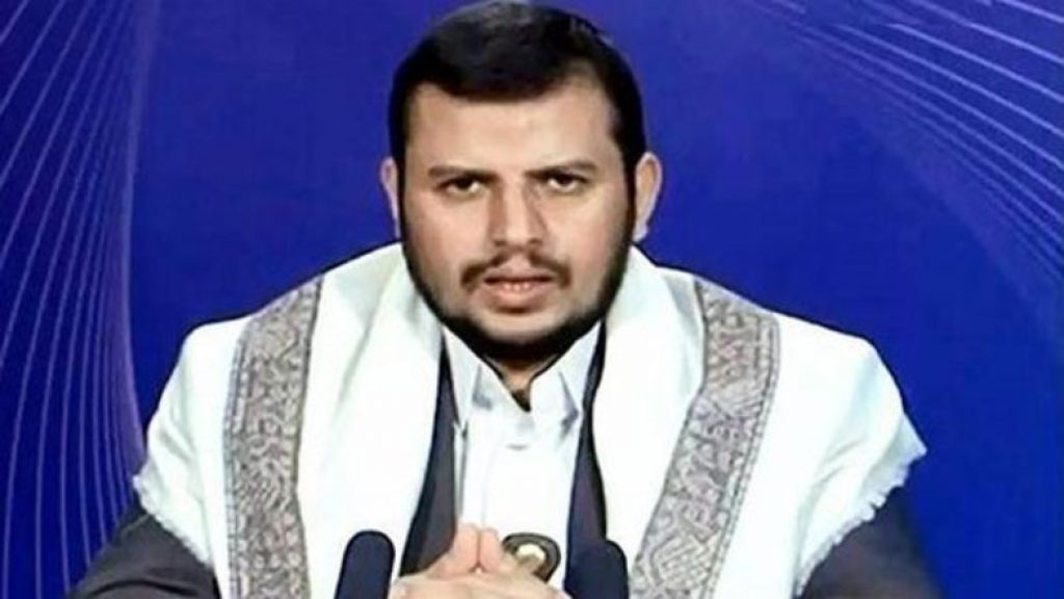 Al-Houthi alleged that Saudi Arabia and UAE were “puppet regimes” that are implementing US and Israeli plots in Yemen. He said, “The only parties benefiting from civil wars in the [Middle East] region are Americans and Israelis, who are responsible for most of the regional conflicts. The US is playing the principal intelligence and logistical role concerning the military aggression against Yemen.”
He further said, “Saudi Arabia is paying all the costs of the war on Yemen, and US officials are accordingly reaping substantial benefits. Aggressors want to take control of Yemen because of its highly strategic location.”
Describing his commitment with other oppressed people in the region, the Houthi leader extended his support to Palestinians and Bahraini counterparts. He said that Yemenis would never forget the sufferings of Palestinian nation and Bahraini people.
His opinions on the regional conflicts are similar to that of Iranian government. The basic tenets of the Iran’s Islamic revolution are clearly marked with their support to the oppressed Palestinians by Israeli forces and anti-Al-Khalifa regime movement, dominated by Shias in Bahrain. Iran does not recognise Israel as a country, instead Tehran calls the country a “Zionist entity”.
The Houthi Ansarullah leader also praised the Yemenis resistance against Saudi-led aggression, and said, “They wanted to bring us to our knees. However, they did not expect us to mount such spirited resistance because we do not want to give them any concessions.”
Earlier last week, Abdul Malik Badreddin al-Houthi had stressed that Saudi Arabia will finally fail in its all-out military aggression against Yemen as it failed in Syria and Iraq. He was speaking in an exclusive interview with Lebanon’s Arabic language Al-Akhbar daily newspaper.
Meanwhile, Yemen’s Ministry of Human Rights announced on Sunday, that the Saudi-led war has left 600,000 civilians killed and injured since March 2015.
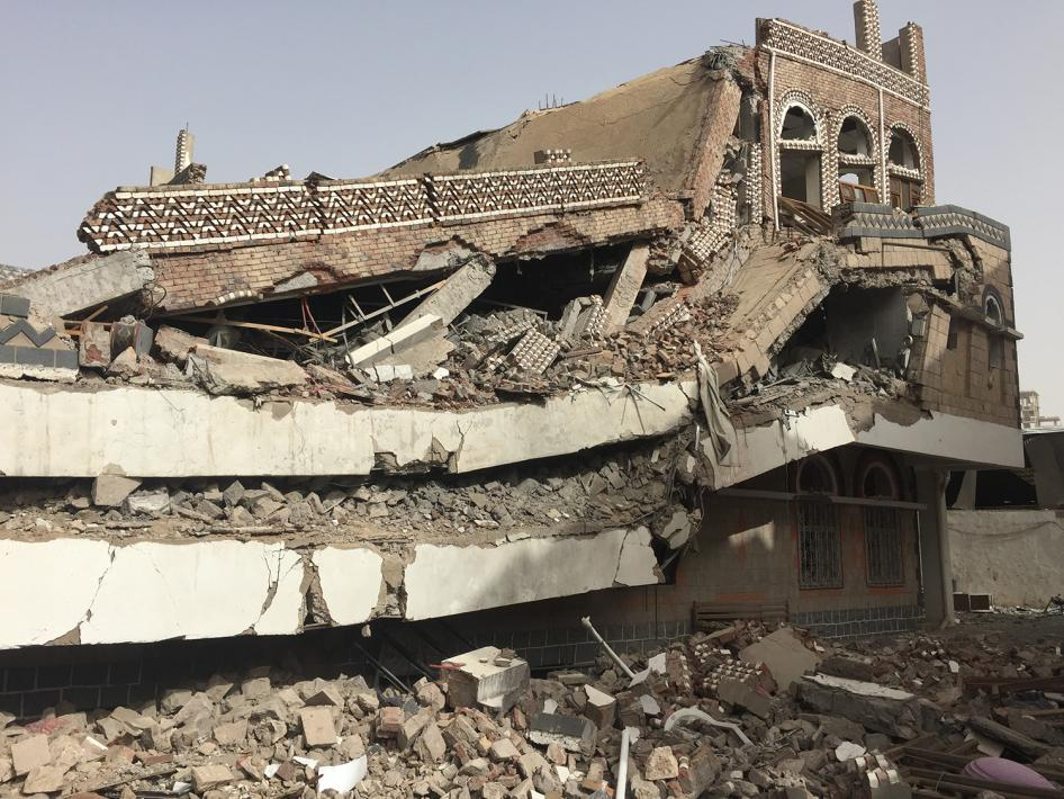 United Nations say that a record 22.2 million Yemenis are in need of food aid, including 8.4 million threatened by severe hunger. It has warned against the “catastrophic” living conditions saying that there is a growing risk of famine and cholera in the country.
Read More: UN criticise Saudi Arabia for human rights violations in Yemen
Yemen is facing sea, land and air blockade which started in 2015 with the positioning of Saudi Arabian warships. US had joined the blockade in October 2016, which was further constricted following the November 2017 launch of a Houthi missile targeting Riyadh airport.
Saudi authorities had claimed of intercepting the missile while Houthis claimed of hitting the target. Riyadh had alleged Iran for supplying the powerful missile, which was denied by Tehran.






Latest world news
Magnitude 7 earthquake strikes Russia’s Kamchatka Peninsula
A magnitude 7 earthquake struck Russia’s Kamchatka Peninsula region on Friday. The initial report placed the earthquake at a depth of 140 kilometres.


Latest world news
S Jaishankar says India is a natural option for Russia amid Europe tensions
External Affairs Minister S Jaishankar said India remained a natural option for Russia as Moscow increasingly turned towards Asia amid strained relations with Europe. He highlighted the continuity of India-Russia ties and their significance for the balance of power in Asia.

Latest world news
Putin praises PM Modi, says he has very good ideas on Ukraine war
Russian President Vladimir Putin has praised Prime Minister Narendra Modi for repeatedly raising the need to end the Ukraine war, describing his ideas for a settlement as “very good”.


Election Commission orders voter roll revision in 17 states, UTs

Delhi Police offers 11-person limit for CJP’s Connaught Place protest

Actor Imran Khan asked to leave India after CJP protest

Mallikarjun Kharge’s ‘Your Friends’ jab at Rahul Gandhi over congress exits

Delhi deploys 25,000 personnel, installs CCTV cameras ahead of CJP march

Magnitude 7 earthquake strikes Russia’s Kamchatka Peninsula
Delhi deploys 25,000 personnel, installs CCTV cameras ahead of CJP march
Mallikarjun Kharge’s ‘Your Friends’ jab at Rahul Gandhi over congress exits
Delhi Police offers 11-person limit for CJP’s Connaught Place protest
Actor Imran Khan asked to leave India after CJP protest

Afghan Men Try To Hang With The Jet Engine Of The Aircraft in Kabul- Afghanistan News – Kabul News
Trending Top 10 News: 10000 Crore Fine on Flipkart, Apple to Launch Unique Feature, Hdfc Bank Job Ad

Trending Top 10 News: Nokia 6310, Apple sales, Bachpan ka Pyar Video Kid, Dainik Bhaskar IT Raid

Trending Top 10 News: Canada bans Indian flights, Rain in Delhi NCR, AIMIM Twitter hacked, Raj Kundra case

Trending Top 10 News: Shein India, Apple New Service, Pocket Oxygen, Oppo Launched New Phone
-
 India News22 hours ago
Election Commission orders voter roll revision in 17 states, UTs
-
 India News20 hours ago
Delhi Police offers 11-person limit for CJP’s Connaught Place protest
-
 India News21 hours ago
Actor Imran Khan asked to leave India after CJP protest
-
 India News9 hours ago
Mallikarjun Kharge’s ‘Your Friends’ jab at Rahul Gandhi over congress exits
-
 India News8 hours ago
Delhi deploys 25,000 personnel, installs CCTV cameras ahead of CJP march
-
 Latest world news8 hours ago
Magnitude 7 earthquake strikes Russia’s Kamchatka Peninsula
