English हिन्दी
Connect with us

Latest world news

Syrian Militants Secretly Flown To Afghanistan, China Raises a Battalion

Published

on

Syrian Militants Secretly Flown To Afghanistan, China Raises a Battalion

~By: Saeed Naqvi


Among the dozen or so guests US Ambassador Frank Wisner was escorting to Bhutan for a holiday was Richard Holbrooke, former US ambassador to the UN. Wisner had invited a few Indian friends to the long hall of Roosevelt House to meet the group. The year was 1996. The ebb and flow of conversation was interrupted when Holbrooke raised his hand like a Japanese tour leader. “Silent” he whispered audibly. He walked to the far end of the hall to talk on the telephone.


He returned with his mouth full of news. “US-Taleban romance is over” he announced with authority. Until the previous day the US was operating on the assumption that the Taleban was the most organized and muscular group in Afghanistan, who could be relied upon to stabilize the country. TAPI or the Turkmenistan, Afghan, Pak, India gas pipeline would then begin to look feasible to the US oil company, UNOCAL – the principal reason for the Afghan conflict.


What the US had not bargained for was the brutality with which the Taleban applied Shariah law on Afghan women. A series of prime time features on Taleban cruelty against women, telecast by the CNN’s Christiane Amanpour created a sensation in Washington. Without any waste of time, the US decided to distance itself from the Taleban. US officials supportive of the UNOCAL project, did not conceal their disappointment. “US gender politics has scuttled a strategic initiative”.


Fast forward to the great Tajik leader, Ahmad Shah Massoud (the lion of Panjshir valley) addressing the European Union in Brussels, in early spring 2001. He alerted the EU leaders, of the information his anti Taleban Northern Alliance had collected: Al Qaeda, helped by the Taleban, were planning a major attack on the US mainland. For this audacity Massoud was to pay with his life. On September 9, two days before the attack on the Twin towers in New York, Massoud was assassinated at his hideout on the Tajik border. It is interesting that the two Tunisian suicide bombers who had approached Massoud disguised as journalists travelled on passports forged in Brussels, the city where Massoud exposed the plot which turned out to be 9/11. At whose behest was Massoud killed?


Had the financial crisis of 2008 not weakened the West, there may have been different scripts for many regions, including Afghanistan. But given the ground realities, President Barack Obama settled on July 2011 as the date on which US troops would begin to withdraw. In August 2011 precisely a month after the Afghan withdrawal date was announced, the Syrian theatre was opened up. Coordination or chaos?


In a paper for the Observer Research Foundation in September 2010 I had argued that Obama’s exit plans were a pipedream. Do Americans have an endgame planned? Can a superpower, in a theatre of strategic importance, have a linear exit plan when multiple strategic options present themselves? US has been extremely watchful of a nuclear Pak. Is it now willing to walk away leaving the world’s only “Islamic” bomb unmonitored? Let’s not forget, Afghanistan has been the US watch tower on this count.


Moreover, a US being bled by an endless war suits all powers in the region. Demanding American departure but doing everything to keep it tied down in Afghanistan is an elementary game everyone is playing. Would interests in Pakistan wish the logistical supply line from the Karachi harbour to Afghanistan past Baluchistan to dry up? It is a regular source of incalculable earnings.


Would not a possible US departure cause Iran, Pakistan, Uzbekistan, Tajikistan, Russia and China to contemplate the Afghan real estate as a huge vacuum which each power must rush to fill up before the next one does? Here is a recipe for the mother of all civil wars.


Are the Americans likely to walk away simply because they are exasperated? After having spent a trillion dollars, losing thousands of lives, losing face – so soon after their reversal in Syria – are they really contemplating withdrawal? Will the bosses of UNOCAL suck their thumbs now? Will the priceless poppy fields of Helmand, the oil in the North, the unexplored mineral wealth now become a Russian asset?


Of course not. Absence of consistency has been one of the constants in US policy on Afghanistan. To cloak this inconsistency, amplified in the time of Trump, we have strange reports coming out of the White House. Before Steve Bannon, the President’s Chief strategist was shown the door in August 2017 he had drawn the President’s attention to an outlandish proposition put forward by Eric Prince, the founder of Blackwater, the world’s biggest provider of private armies.


At a strategy session in Camp David, Trump’s Best and Brightest considered the plan: Afghanistan should be administered exactly as the British controlled India – under a viceroy. Is former US ambassador to Kabul, Zalmay Khalilzad, to be that Viceroy? He is an ethnic Afghan and is being tipped as special Envoy which is what the Viceroys were.


Ofcourse, the senior military brass around Trump shot down the first Prince proposal. But with Trump beginning to look vulnerable, all manner of risky adventures are being contemplated. The other day National Security Adviser john Bolton leaked the alarming news that Syria was about to launch a chemical attack in Idlib. How did he know? From Hezbullah leader Hasan Nasrallah’s speech last Sunday? Nasrallah said “data indicates that preparations are underway to stage a new chemical incident in Idlib”. This is the western “ruse to launch an aggression on Syria.”


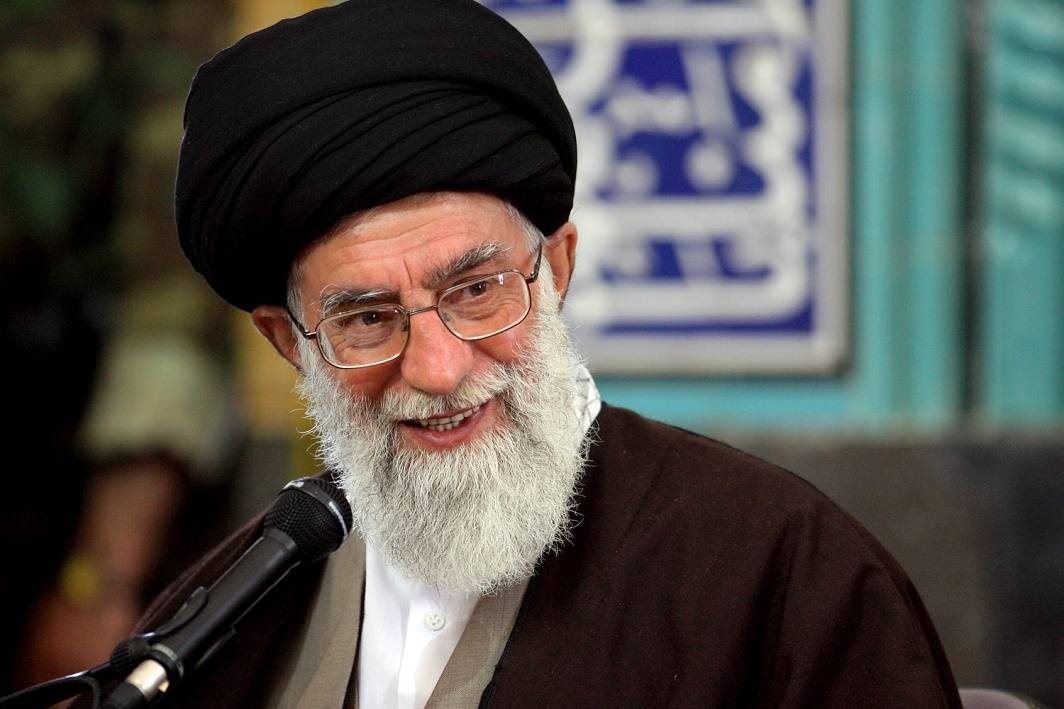
Meanwhile, there are statements by Iranian Supreme leader Ayatullah Ali Khamenei, Russian Foreign Ministry and reports by independent journalists like Robert Fisk that militant groups like Jabhat al Nusra, trounced in Syria, are being secretly airlifted to Northern Afghanistan. There are unconfirmed reports of a Chinese retaliation: a battalion being raised in the Wakhan Corridor to block terrorism being transported from Afghanistan. An air strike on the Afghan-Tajik border killed eight militants. According to the Afghan spokesman Khalil Asir, the origin of the aircraft remains unclear. Strange things are happening.


US Presidents have been known to dramatically divert attention when faced with internal crises. Is some catastrophe being manufactured to protect Trump?

Latest world news

Israel-Lebanon ceasefire to begin within hours as Trump announces 10-day truce

Israel and Lebanon may begin a 10-day ceasefire within hours after a proposal announced by Donald Trump amid ongoing tensions.

Published

on

Donald Trump

A temporary halt in hostilities between Israel and Lebanon is expected to begin within hours after US President Donald Trump announced a proposed 10-day ceasefire between the two sides, amid ongoing tensions in the region.

According to his statement, the ceasefire is likely to take effect around 5 p.m. Eastern Time, although independent confirmation from both sides is still awaited.

The development follows discussions involving Israeli Prime Minister Benjamin Netanyahu and Lebanese President Joseph Aoun, with mediation efforts led by the United States.

Officials indicated that the proposed truce is aimed at creating a limited window to reduce violence and potentially pave the way for broader diplomatic engagement. The situation along the Israel-Lebanon border has remained tense in recent weeks, with escalation linked to the activities of Hezbollah.

Diplomatic efforts have intensified in recent days, with discussions facilitated by the United States, including the involvement of US Secretary of State Marco Rubio. However, details of the agreement and the extent of coordination between the parties remain unclear.

The situation remains fluid, and the success of the ceasefire will depend on adherence by all sides involved. The conflict has already led to significant humanitarian and geopolitical consequences, including displacement and disruption in affected areas.

While the proposed ceasefire is being seen as an important step toward de-escalation, broader negotiations involving regional stakeholders are expected to be necessary for any lasting resolution.

Continue Reading

Latest world news

US ends oil sanctions waiver for Iran and Russia, impact likely on India’s energy imports

The US decision to end the Iran and Russia oil waiver may impact India’s oil imports, fuel prices and global energy markets.

Published

on

US oil tanker

The United States has decided not to extend a temporary sanctions waiver that allowed limited trade in Iranian and Russian oil, marking a shift towards stricter enforcement of economic restrictions.

The waiver, introduced in March 2026, had permitted the sale of oil already loaded on ships to stabilise global supply during heightened geopolitical tensions. However, it is now set to expire around mid-April without renewal.

US officials have indicated that the move is part of a broader strategy to increase pressure on both Iran and Russia amid ongoing conflicts and geopolitical tensions.

What the waiver did and why it mattered

The short-term waiver allowed millions of barrels of oil—estimated at around 140 million barrels—to enter global markets, helping ease supply shortages and prevent sharp price spikes.

It also enabled countries like India to purchase discounted crude oil from Russia and resume limited imports from Iran after years of restrictions.

Impact on India

India, one of the world’s largest oil importers, is expected to feel the impact of the decision in several ways:

  • Reduced access to discounted oil
    India had been buying cheaper Russian crude and recently resumed Iranian imports under the waiver. Its end may limit these options.
  • Potential rise in fuel costs
    With fewer discounted supplies available, India may need to rely more on costlier sources, which could increase domestic fuel prices.
  • Supply diversification pressure
    India may need to explore alternative suppliers in the Middle East, Africa, or the US to maintain energy security.
  • Geopolitical balancing challenge
    The move adds pressure on India to align with US sanctions while managing its own economic interests.

Global energy market concerns

The end of the waiver comes at a time when global oil markets are already under stress due to conflict in West Asia and disruptions in key routes like the Strait of Hormuz.

Analysts warn that tightening sanctions could:

  • Reduce global oil supply
  • Increase price volatility
  • Intensify competition among major buyers like India and China

Bigger picture

The US decision reflects a broader shift from temporary relief measures to stricter enforcement of sanctions, even if it risks tightening global energy markets.

For India, the development highlights a recurring challenge—balancing affordable energy access with geopolitical realities.

Continue Reading

Latest world news

Sanctioned tanker fails to breach US blockade, turns back near Strait of Hormuz

A US-sanctioned tanker failed to cross the Hormuz blockade and turned back, underscoring rising tensions and disruption in global shipping routes.

Published

on

A US-sanctioned oil tanker failed to break through a newly imposed American naval blockade and was forced to turn back near the Strait of Hormuz, highlighting growing tensions in the region.

The vessel, identified as the Rich Starry, reversed its course after attempting to exit the Gulf, according to shipping data. The development comes just days after the United States enforced restrictions on ships linked to Iranian ports.

The blockade was announced by Donald Trump following the collapse of recent diplomatic talks with Iran. The move aims to restrict maritime traffic associated with Iranian trade.

Officials said that during the first 24 hours of enforcement, no vessel successfully crossed the blockade. Several ships, including the sanctioned tanker, complied with instructions from US forces and turned back toward regional waters.

The tanker is reported to be linked to a Chinese company previously sanctioned for dealing with Iran. It was carrying a cargo of methanol loaded from the United Arab Emirates at the time of the incident.

The situation underscores the rising risks in one of the world’s most critical oil transit routes. The Strait of Hormuz typically handles a significant share of global energy shipments, but traffic has sharply declined due to ongoing geopolitical tensions.

The blockade, which applies specifically to vessels travelling to or from Iranian ports, has added further uncertainty for shipping companies, insurers and global energy markets.

Continue Reading

Trending

© Copyright 2022 APNLIVE.com