English हिन्दी
Connect with us

Latest world news

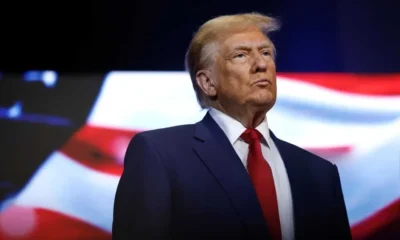
Trump backs off Europe tariff threat after Greenland talks with NATO

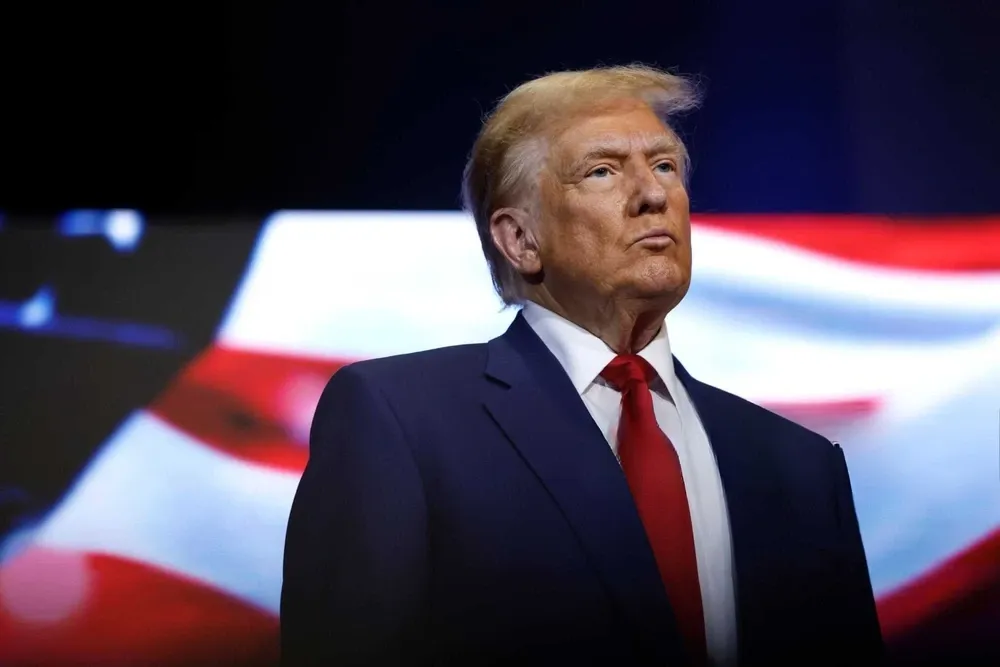
Donald Trump has withdrawn his planned tariffs on European allies following talks with NATO, even as his remarks on Greenland continue to raise diplomatic concerns.

Published

on

donald-trump

President Donald Trump on Wednesday announced that he would not proceed with planned tariffs on European allies following discussions with NATO Secretary General Mark Rutte over Arctic security and Greenland.

In a post on his social media platform, Trump said the tariffs scheduled to take effect on February 1 would be cancelled after the two sides agreed on what he described as a “framework of a future deal”. He did not provide details of the agreement.

The decision marked a sharp reversal from Trump’s earlier remarks the same day, when he had reiterated his desire for the United States to acquire Greenland, insisting on “right, title and ownership” of the island, while claiming military force would not be used.

Greenland remarks trigger concern among allies

Speaking at the World Economic Forum in Davos, Trump described Greenland as strategically important for global security, citing threats in the Arctic region from Russia and China. He argued that the US had long protected Europe and suggested that acquiring Greenland was a reasonable demand in that context.

Trump said he did not intend to use military force, but warned that pressure could increase if negotiations failed. His comments raised concerns among European leaders and NATO members, as Greenland is a semi-autonomous territory under Danish sovereignty.

Denmark and other NATO allies have consistently stated that Greenland is not for sale. Danish officials have said they are open to discussions on security cooperation but stressed that sovereignty remains a non-negotiable issue.

Denmark and Greenland respond

After Trump’s speech, a Danish government official said Copenhagen was willing to discuss US security concerns, but made it clear that Denmark’s sovereignty over Greenland was a firm red line.

Greenland’s government, meanwhile, advised residents to be prepared for potential crises. Authorities released guidance urging citizens to keep basic supplies at home for several days. Some residents said they viewed Trump’s statements as threats but preferred to be cautious.

Local voices in Greenland expressed concern over the rhetoric, with residents describing the remarks as unsettling and dismissive of the island’s people and identity.

Tariff threat eased, tensions remain

Trump had earlier warned that the US could impose import tariffs starting at 10 percent on Denmark and seven other European allies, potentially rising to 25 percent by June, unless negotiations progressed. Those threats drew strong responses from European leaders, who warned of firm and united countermeasures if tariffs were imposed.

Economists cautioned that renewed trade tensions could disrupt economic stability on both sides of the Atlantic. Markets reacted nervously to the tariff threats before recovering later in the day.

Despite cancelling the immediate tariff plan, Trump continued to push for negotiations over Greenland, framing the issue as one of long-term national and international security.

Latest world news

Donald Trump calls India trade deal historic, highlights rise in US coal exports

Donald Trump describes the India trade deal as historic and links it to rising US coal exports, while India reiterates national interest in energy decisions.

Published

on

Donald Trump

US President Donald Trump has described the recent trade agreement with India as “historic”, saying it has contributed to a sharp rise in American coal exports.

Speaking at the Champion of Coal Event on Wednesday, Trump said the United States has strengthened its position as the world’s leading energy producer and is rapidly expanding its footprint as an energy exporter.

He said that trade deals signed in recent months with countries including Japan, South Korea and India have helped increase coal exports from the US.

“America is now the number one energy producer in the world. We’re becoming a massive energy exporter. In just the past few months, we’ve made historic trade deals with Japan, Korea, India, and others to increase our coal exports dramatically. The quality of our coal is supposed to be the finest anywhere in the world,” Trump said.

He also asserted that American coal is considered among the best globally in terms of quality.

India says national interest will guide energy choices

Meanwhile, on February 9, Foreign Secretary Vikram Misri said that India’s energy-related decisions will continue to be guided by national interest.

During a special briefing by the Ministry of External Affairs (MEA), Misri underlined that India’s energy policy is driven by adequate availability, fair pricing and reliable supply. His remarks came amid reports suggesting that India may be reducing its oil imports from Russia.

Clarifying how energy sourcing decisions are made, Misri said procurement is handled by oil companies based on prevailing market conditions. These companies assess availability, risks, pricing and logistical considerations while following internal accountability and fiduciary processes.

“As far as the actual sourcing of energy is concerned, this is undertaken by oil companies, which make decisions based on market conditions. They assess availability, evaluate risks, analyse costs, and follow their internal accountability processes and fiduciary responsibilities. At any given time, there is a complex matrix of considerations, including financial and logistical aspects, that these companies must take into account,” he said.

He added that both government and business decisions in the energy sector would continue to prioritise national interest.

Misri also noted that India remains a net importer of oil and gas and, as a developing economy, must remain mindful of resource availability and the inflationary impact of import dependence.

Continue Reading

India News

Piyush Goyal lauds USA’s fabulous effort against India in T20 World Cup

Piyush Goyal praised the US cricket team’s performance against India in the T20 World Cup, calling it fabulous despite the defeat and making a light-hearted remark on tariffs.

Published

on

Piyush goel

Union Commerce and Industry Minister Piyush Goyal on Monday praised the United States cricket team for their performance against India in the ongoing T20 World Cup, saying the side played “fabulously” despite losing the match.

Goyal made the remarks while responding to light-hearted comments by US Ambassador Sergio Gor at a reception hosted by the diplomat. Both were present at the India-USA T20 World Cup match played on Saturday.

Speaking at the event, the minister acknowledged the rapid progress made by the US cricket team in recent years. He also joked that trade policy might have changed the match’s outcome.

“The US may not have won the match, but for a country which has not known cricket and has started playing only a few years ago, the performance was fabulous,” Goyal said.

Referring to Ambassador Gor’s comments, he added humorously that if the US had made reciprocal tariffs zero, “you would possibly have won the match”.

India seal first win of the tournament

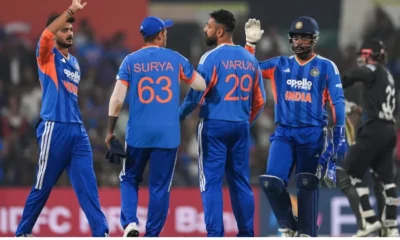
India registered their first victory of the tournament with a 29-run win over the USA. After being asked to bat first, India posted 161 for nine in their allotted 20 overs.

Suryakumar Yadav anchored the innings with an unbeaten 84 off 49 balls, hitting 10 fours and four sixes. Ishan Kishan contributed 20 off 16 deliveries, while Tilak Varma added 25 off 16 balls.

For the USA, Shadley van Schalkwyk returned figures of 4 for 29, while Harmeet Singh picked up two wickets for 26 runs.

USA fall short in chase

Chasing 162, the USA were restricted to 132 for eight, falling short by 29 runs.

Milind Kumar scored 34 off 34 balls, while Sanjay Krishnamurthi (37 off 31) and Shubham Ranjane (37 off 22) provided resistance in the middle order.

India’s bowlers shared the spoils, with Mohammed Siraj taking three wickets for 29 runs. Axar Patel and Arshdeep Singh chipped in with two wickets each.

Continue Reading

Latest world news

NSA Ajit Doval’s Canada visit signals cautious reset in India-Canada ties

NSA Ajit Doval’s visit to Canada marks a cautious effort by New Delhi and Ottawa to stabilise strained ties through renewed security and law enforcement cooperation.

Published

on

Ajit Doval

India and Canada have taken a measured step toward repairing strained bilateral ties following National Security Adviser Ajit Doval’s visit to Ottawa last week. The NSA-level engagement marks one of the most substantive security interactions between the two countries in recent years and signals a cautious return to dialogue after a prolonged diplomatic freeze.

Doval’s visit, held from February 6 to 7, comes against the backdrop of tensions that followed a diplomatic row in 2023 over the killing of a Khalistani separatist. While both sides described the talks as part of routine bilateral engagement, officials and analysts see the timing as significant, indicating a deliberate effort to stabilise relations.

Focus on security and law enforcement cooperation

During the visit, Doval held meetings with Canada’s Deputy Clerk and National Security and Intelligence Adviser to the Prime Minister, Nathalie Drouin, and Public Safety Minister Gary Anandasangaree. The discussions centred on strengthening cooperation in national security and law enforcement, with an emphasis on practical and result-oriented collaboration.

According to India’s official statement, both sides acknowledged progress on initiatives aimed at enhancing the safety and security of their citizens. They also agreed on a shared work plan to guide future cooperation, underscoring a mutual intent to rebuild trust through structured engagement.

Canada’s readout echoed this approach, highlighting agreement on concrete steps rather than broad political signalling. A key outcome of the meetings was the decision to establish security and law-enforcement liaison officers in each other’s countries, a move expected to streamline communication and improve information-sharing.

Cooperation on cyber threats, drugs and immigration enforcement

Officials said the liaison mechanism would help address issues such as transnational organised crime, the illegal flow of drugs—including fentanyl precursors—and other cross-border security challenges. These concerns have increasingly featured in bilateral discussions between New Delhi and Ottawa.

The talks also covered cooperation on cybersecurity policy and the sharing of information related to cyber threats. Continued engagement on fraud prevention and immigration enforcement was discussed as well, with both sides stressing that collaboration would remain aligned with domestic laws and international obligations.

The careful wording of official statements reflects sensitivity to past disputes and the need for institutional safeguards as ties are gradually rebuilt.

Message on extremism and diplomatic reset

Beyond the immediate outcomes, Doval’s visit is being viewed as a broader signal that extremist groups, including Khalistani-linked networks, do not enjoy official backing under the current Canadian government led by Prime Minister Mark Carney.

The engagement is also seen as laying the groundwork for a possible prime ministerial-level visit. Officials in both capitals are treating the NSA talks as an important precursor to Carney’s likely visit to India next month, which would mark the first such engagement since relations deteriorated sharply.

Background of strained ties

India-Canada relations hit a low point during the tenure of former prime minister Justin Trudeau, particularly after his 2023 allegations of a potential Indian link to the killing of Khalistani separatist Hardeep Singh Nijjar. India had rejected the claims as “absurd,” leading to mutual recriminations and downgraded diplomatic engagement.

Against that backdrop, the resumption of structured security dialogue is being interpreted as a sign that both sides are seeking to move past recent turbulence. Analysts note that cooperation in technical and functional areas such as law enforcement and cybersecurity could help rebuild confidence and create momentum for broader political engagement.

While the visit does not resolve all outstanding issues, it reflects a willingness to re-engage seriously. With high-level political contact potentially on the horizon, India and Canada appear to be cautiously steering their relationship back toward a more stable and predictable footing.

Continue Reading

Trending

© Copyright 2022 APNLIVE.com