
Latest world news
US Pressure to Stop Buying Iran’s Oil May Trigger Crisis


President Hassan Rouhani Threatens for Consequences
The US pressure on global community to stop buying Iranian oil by early November may trigger a regional crisis and force Iran to completely stop oil movement in the region. This was indicated by Iranian President Hassan Rouhani on Monday when he stressed that “it is not possible for the region’s oil to be exported while Iran’s oil is not”.
While addressing Iranian Diaspora in Swiss capital Bern, Rouhani said, “It would be meaningless that Iran cannot export its oil while others in the region can. Do this if you can and see its consequences.” Observers believe this could be serious threat.
Read More: US asks nations to stop Iranian oil import by Nov.4 or face sanctions
He said that Iranian nation has never bowed and will never bow to the foreign pressures. He said that Swiss officials have voiced their support to JCPOA and reiterated for continuation of economic ties with Iran. Representatives of 40 Swiss companies are scheduled to hold talks with Iranian counterparts on Tuesday, he informed.
Rouhani is currently visiting Europe to discuss the fate of the multilateral nuclear deal after US withdrawal. After visiting Switzerland he is scheduled to go to Austria where he will meet President Alexander Van der Bellen and Chancellor Sebastian Kurs.
Read More: India under US pressure to cut oil imports from Iran, Govt says exploring all options
On Monday, Rouhani met his Swiss counterpart Alain Berset and discussed issues of common interest and explored the ways to strengthen ties in various fields. He described the Iran deal as “multilateral international agreement” adding that the US withdrawal from the accord proved its lack of commitment to its international obligations.

Meanwhile, Brian Hook, the State Department Director of Policy Planning, on Monday, has spelled out a campaign of “maximum economic and diplomatic pressure” to drive Iran towards negotiating a “better” deal to replace the Iran nuclear deal.
He told reporters that Iran is not a “normal” country and must meet 12 demands in order to be relieved of US sanctions. “Normal countries don’t terrorize other nations, proliferate missiles and impoverish their own people,” he said.
He further said, “This new strategy is not about changing the regime, it is about changing the behaviour of the leadership in Iran to comport with what the Iranian people really want them to do.”
Read More: US urge Security Council to punish Iran for malign behaviour
US Department of State called on its allies in Europe, Asia and the Middle East to adhere to the sanctions with the aim of pressuring Iran into negotiating a new agreement.
By the end of this week Hook is scheduled to visit aome European allies: Britain, France and Germany to discuss Iran. Hook has also said he and senior Treasury Department officials would visit Gulf states “in the coming days.”
Hook told reporters that the goal of the US was to get as many countries as possible down to zero Iranian oil imports. “Our goal is to increase pressure on the Iranian regime by reducing to zero its revenue on crude oil sales,” he said.
“We are working to minimize disruptions to the global market but we are confident there is sufficient global spare oil capacity.”
Read More: Khamenei: US will fail in dividing Iran’s people and government
He also claimed that more than 50 international firms have already announced their intention to leave the Iranian market, especially in the energy and financial sectors.
The State Department official said that new sanctions, describes as “snap back” sanctions, will begin on August 4, targeting Iran’s automotive sector and its trade in gold and other key metals.
The second set of sanctions will snap back on November 6 targeting Iran’s energy sector, focusing on petroleum-related transactions, plus transactions with the central bank of Iran.
The move comes two months after US President Donald Trump announced US withdrawal from the Iran nuclear deal.
During 1980-1988 Iraq-Iran war, when most of the Arab states and Western countries were supporting Iraq’s Saddam Hussein regime against newly established Islamic Republic of Iran after throwing pro-US Shah Pehlavi out of power, Tehran had threatened to stop oil movement from regional Arab countries by blocking the Strait of Hormuz, the world’s most strategic important choke point. It is the narrowest strait having width of 54 kms.
Observers consider that Iran’s President Hassan Rouhani’s threat of “consequences” in case Iran’s oil was not allowed to be exported may cause a huge crisis in the region.

Meanwhile Major General Gholam Ali Rashid, a senior commander of Islamic Revolution Guards Corps (IRGC), said on Monday, that any threat against Iran at any level will not be left unanswered and emphasised that the country’s armed forces were fully prepared to give a firm and crushing response to enemies.





Latest world news
S Jaishankar says India is a natural option for Russia amid Europe tensions
External Affairs Minister S Jaishankar said India remained a natural option for Russia as Moscow increasingly turned towards Asia amid strained relations with Europe. He highlighted the continuity of India-Russia ties and their significance for the balance of power in Asia.


Latest world news
Putin praises PM Modi, says he has very good ideas on Ukraine war
Russian President Vladimir Putin has praised Prime Minister Narendra Modi for repeatedly raising the need to end the Ukraine war, describing his ideas for a settlement as “very good”.

Latest world news
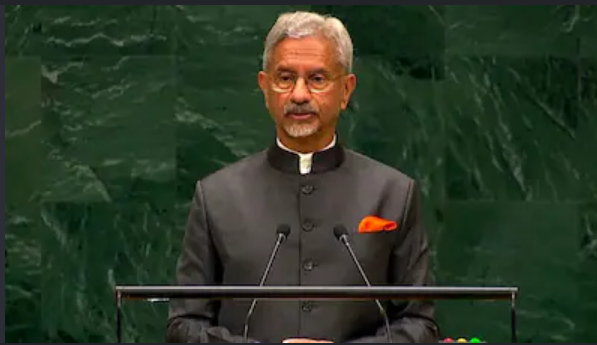
S Jaishankar calls Pakistan a “serial practitioner of terrorism” at UN
S Jaishankar criticised Pakistan at the UN General Assembly, referring to a “serial practitioner of terrorism” and warning against attempts to normalise terrorism.

Rahul Gandhi hosts high tea for INDIA bloc after Gyanesh Kumar protests

L Murugan quits Union ministry to strengthen BJP in Tamil Nadu

Amit Shah attacks Rahul Gandhi over Congress poll losses, questions SIR row

BJP focuses on religion as opposition pushes BDM strategy in UP

CJP leaders Saurav Das, Ashutosh Ranka, Ajinkya Shinde sent to 5-day judicial custody

PM Modi speaks to Mark Carney as India and Canada push to strengthen ties

S Jaishankar says India is a natural option for Russia amid Europe tensions
CJP leaders Saurav Das, Ashutosh Ranka, Ajinkya Shinde sent to 5-day judicial custody
BJP focuses on religion as opposition pushes BDM strategy in UP
L Murugan quits Union ministry to strengthen BJP in Tamil Nadu

Afghan Men Try To Hang With The Jet Engine Of The Aircraft in Kabul- Afghanistan News – Kabul News
Trending Top 10 News: 10000 Crore Fine on Flipkart, Apple to Launch Unique Feature, Hdfc Bank Job Ad

Trending Top 10 News: Nokia 6310, Apple sales, Bachpan ka Pyar Video Kid, Dainik Bhaskar IT Raid

Trending Top 10 News: Canada bans Indian flights, Rain in Delhi NCR, AIMIM Twitter hacked, Raj Kundra case

Trending Top 10 News: Shein India, Apple New Service, Pocket Oxygen, Oppo Launched New Phone
-
 India News16 hours ago
Rahul Gandhi hosts high tea for INDIA bloc after Gyanesh Kumar protests
-
 India News15 hours ago
L Murugan quits Union ministry to strengthen BJP in Tamil Nadu
-
 India News15 hours ago
Amit Shah attacks Rahul Gandhi over Congress poll losses, questions SIR row
-
 India News14 hours ago
BJP focuses on religion as opposition pushes BDM strategy in UP
-
 India News3 hours ago
CJP leaders Saurav Das, Ashutosh Ranka, Ajinkya Shinde sent to 5-day judicial custody
-
 Latest world news3 hours ago
S Jaishankar says India is a natural option for Russia amid Europe tensions
-
 India News3 hours ago
PM Modi speaks to Mark Carney as India and Canada push to strengthen ties
