
Latest world news
US Questions Fairness of Pakistan Elections, UN Praises Commitment To Democracy


Amidst cry of foul play and rigging, US has questioned the fairness of Wednesday’s elections in Pakistan adding that it shared the concerns expressed by the European Union and the Human Rights Commission of Pakistan.
According to Dawn report from Washington, the US State Department, in a statement issued on Friday, underlined what it said were flaws in the pre-voting electoral process and the constraints placed on freedom of expression and association.
“The United States shares concerns about flaws in the pre-voting electoral process, as expressed by the Human Rights Commission of Pakistan,” said the department’s spokesperson Heather Nauert.
 “These included constraints placed on freedoms of expression and association during the campaign period that were at odds with Pakistani authorities’ stated goal of a fully fair and transparent election.”
Read More: Pakistan elections marred with suicide attack -25 killed in Quetta
Ms Nauert said the United States concurs with the conclusions of the European Union Election Observation Mission, whose report notes that while there were positive changes to the legal framework for elections in Pakistan, these were “overshadowed by restrictions on freedom of expression and unequal campaign opportunities”.
She further said that US also “has deep reservations over the participation of terrorist-affiliated individuals in the elections.” She also commended Pakistani voters for “fully rejecting these candidates.”
“Along with our international partners, the United States will continue to encourage a broadening of opportunities for political participation for all Pakistanis, and for the further strengthening of legitimate, democratic institutions,” said Ms Nauert.
“As Pakistan’s elected leaders form a new government, the United States will look for opportunities to work with them to advance our goals of security, stability, and prosperity in South Asia,” she added.
Read More: Pakistan: Hafiz Saeed’s JuD to contest elections in 2018
The European Union Election Observation Mission (EUEOM), which had appointed observers for the July 25 elections, said on Friday that although “there were several legal provisions aimed at ensuring level playing field, there as lack of equality of opportunity” provided to the contesting parties.
The Human Rights Commission of Pakistan (HRCP), in its statement on Wednesday, said that it has observed the lectoral process over the past several months, paying special attention to reports of violence, allegations of pre-poll manipulation and the arrangements put in place by the Election Commission of Pakistan. The HRCP pointed out several shortcomings during the polling including lack of facilities and discouraging attitude of the staff responsible for conducting the process.
 Meanwhile, Antonio Guterres, the UN Secretary General,has congratulated the people of Pakistan upon the conclusion of elections, saying that he “looks forward to the formation of a new government”.
Read More: Army and IS involvement in Pakistan election a matter of concern
In a statement read out by his spokesman Stephane Djuarric on Friday, Guterres said, “By exercising their constitutional right to vote, the people of Pakistan have reaffirmed their commitment to a democratic Pakistan.”
 On Wednesday, Pakistan Muslim League-Nawaz (PML-N) president Shahbaz Sharif, had expressed strong reservations over the polling process, saying his party doesn’t accept the preliminary results shared by the Election Commission of Pakistan. He was quoted saying, “I am forced to say that we completely reject these results” alleging that there has been a “blatant violation of public’s mandate”.
According to the results declared so far, out of 272 contestable seats in the national assembly, Imran Khan led Pakistan Tehreek-e-Insaf has won 116 seats, Shahbaz Sharif led PML-N won 63, Bilawal Bhutto led Pakistan Peoples’ Party (PPP) remained distant third with 43, while others won 45 seats. Counting is still one for five remaining seats.








Latest world news
Magnitude 7 earthquake strikes Tibet after floods
A magnitude 7 earthquake struck northern Tibet on Thursday, October 22. The tremor came weeks after deadly flash floods and landslides hit the mountainous region near the Nepal-China border. Initial reports did not confirm casualties or damage from the earthquake.


Latest world news
Macron rejects Trump’s immigration claims over France riots
French President Emmanuel Macron criticised Donald Trump and other foreign leaders over their comments on France’s recent unrest. Macron rejected claims that the country was being overrun by migrants and Islamists, calling such assertions false.

Latest world news
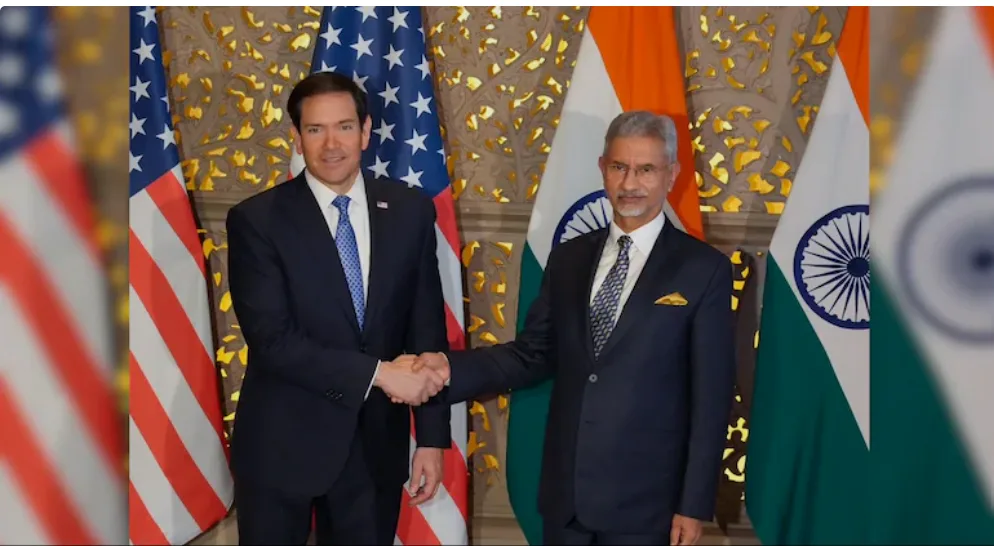
Marco Rubio says India and US share extraordinary alignment on key issues
US Secretary of State Marco Rubio said India and the United States share an extraordinary alignment on core issues, even though disagreements between the two countries may arise.

Om Prakash Mathur sworn in as Keralam Governor

PM Modi to inaugurate Rs 169-crore RBI data centre in Odisha on October 25

MEA responds after ITBP chief flags ongoing face-offs with China in Arunachal

Delhi High Court rejects Neha Bora’s plea against peace bond notice

Thousands bang utensils, beat drums in Manipur protest over continued killings

Congress seeks 175-200 seats in UP, Samajwadi Party stresses on winnability
Thousands bang utensils, beat drums in Manipur protest over continued killings
MEA responds after ITBP chief flags ongoing face-offs with China in Arunachal
Delhi High Court rejects Neha Bora’s plea against peace bond notice
PM Modi to inaugurate Rs 169-crore RBI data centre in Odisha on October 25

Afghan Men Try To Hang With The Jet Engine Of The Aircraft in Kabul- Afghanistan News – Kabul News
Trending Top 10 News: 10000 Crore Fine on Flipkart, Apple to Launch Unique Feature, Hdfc Bank Job Ad

Trending Top 10 News: Nokia 6310, Apple sales, Bachpan ka Pyar Video Kid, Dainik Bhaskar IT Raid

Trending Top 10 News: Canada bans Indian flights, Rain in Delhi NCR, AIMIM Twitter hacked, Raj Kundra case

Trending Top 10 News: Shein India, Apple New Service, Pocket Oxygen, Oppo Launched New Phone
-
 India News23 hours ago
Om Prakash Mathur sworn in as Keralam Governor
-
 India News23 hours ago
PM Modi to inaugurate Rs 169-crore RBI data centre in Odisha on October 25
-
 India News21 hours ago
MEA responds after ITBP chief flags ongoing face-offs with China in Arunachal
-
 India News21 hours ago
Delhi High Court rejects Neha Bora’s plea against peace bond notice
-
 India News8 hours ago
Thousands bang utensils, beat drums in Manipur protest over continued killings
-
 India News8 hours ago
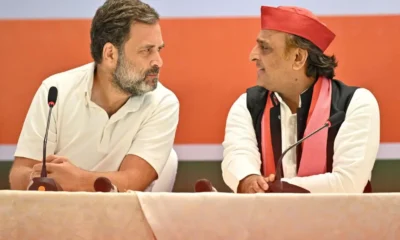
Congress seeks 175-200 seats in UP, Samajwadi Party stresses on winnability
