English हिन्दी
Connect with us

Latest world news

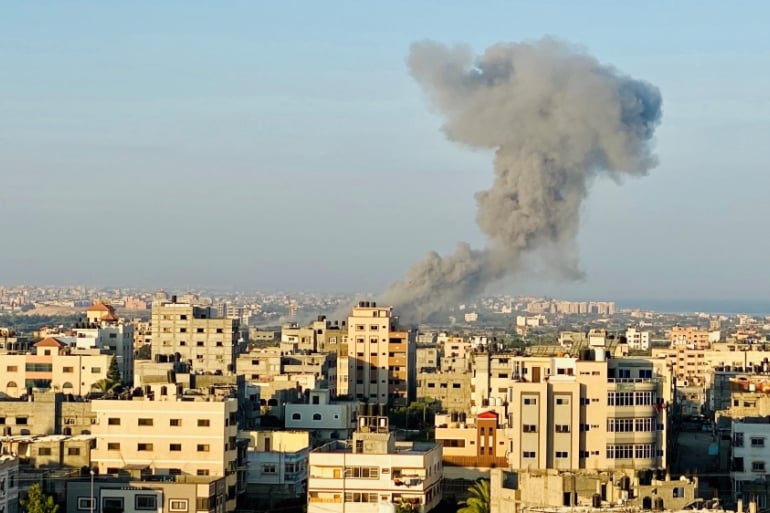
Israeli military air raids Gaza after violent protests along border, several injured

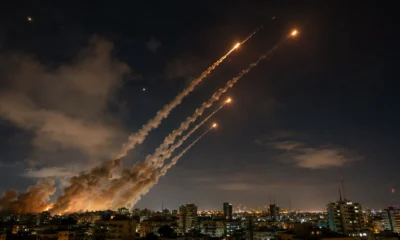
Israel military launched air raids on Gaza’s Palestinian militant weapons sites in the early hours of Sunday. The air raids were launched in response to a violent demonstration on the fence due to which many people were injured, among the injured was an Israeli police officer, who is critically injured.

Published

on

Israeli military air raids

Israel military launched air raids on Gaza’s Palestinian militant weapons sites in the early hours of Sunday. The air raids were launched in response to a violent demonstration on the fence due to which many people were injured, among the injured was an Israeli police officer, who is critically injured.

What happened on Saturday?

On Saturday, several people joined the protest to attract attention towards the Israeli-Egyptian blockade of the territory. However, the protest took a U-turn and it became violent. In the violent protest, several protesters started rushing towards the fence and they started hitting the Israeli soldiers with rocks.

The Gaza health ministry reported that around 24 Palestinians, including a 13-year-old, were injured by Israeli gunfire. Apart from this, an Israeli Border Police Officer was also shot and he was critically injured.

The ministry further said in the statement that around forty-one civilians were also wounded with several injuries. The Israeli military said that they were rioters, not protestors and they just responded with riot dispersal means including when necessary live fire.

Read Also: Kamala Harris kicks off Asia tour week after Kabul’s fall

Al Jazeera’s reporter Youmna al-Sayed said that around 10 of the Palestinians wounded were children and two were in a critical condition.

Earlier, the worst air raids were launched in May in which more than 200 people were killed.

Meanwhile, Israel has also announced a new agreement with Qatar in which some aid will be given to the thousands of families in the Gaza strip. It is reported that the funds will be transferred by the UN directly to Gaza families. The payments are expected to begin in the coming weeks.

Latest world news

Strait of Hormuz open but Iran’s Guards impose new transit conditions

Iran has reopened the Strait of Hormuz during a ceasefire, but new restrictions by the Revolutionary Guards limit how vessels can pass.

Published

on

Strait of Hormuz

The Strait of Hormuz has been declared open for commercial shipping during the ongoing ceasefire, but fresh conditions imposed by Iran’s Revolutionary Guards have raised questions over how unrestricted the passage actually is.

Iran’s Foreign Minister Abbas Araghchi announced that the crucial waterway would remain “completely open” for commercial vessels for the duration of the ceasefire. However, a separate statement from the Islamic Revolutionary Guard Corps (IRGC) clarified that ships must comply with specific operational requirements while transiting the strait.

According to the IRGC, all vessels must obtain prior permission before entering the strait. Additionally, civilian ships are required to follow designated routes set by Iranian authorities, while military vessels continue to be prohibited from passing through.

The Guards described these measures as part of a “new order” aligned with ceasefire terms, though these details were not explicitly mentioned in the foreign minister’s initial announcement.

The differing messages have also triggered reactions within Iran, with some state-backed outlets criticising the earlier statement for lacking clarity and potentially creating confusion around the reopening of the strait.

Meanwhile, global attention remains focused on the strategic waterway, which handles a significant share of the world’s oil shipments. The reopening announcement led to a sharp drop in crude prices, reflecting expectations of improved supply flows.

US President Donald Trump also confirmed that the strait is open for passage, though he indicated that the American naval blockade targeting Iran would continue until broader negotiations are completed.

Despite the reopening, analysts suggest that the situation remains fragile, with ongoing restrictions, geopolitical tensions, and security concerns continuing to affect maritime movement through one of the world’s most critical energy corridors.

Continue Reading

Latest world news

Trump calls PM Modi friend, says had very good conversation amid West Asia tensions

Trump described PM Modi as a friend after a 40-minute call focusing on Iran tensions, trade and strategic ties.

Published

on

Donald Trump statement

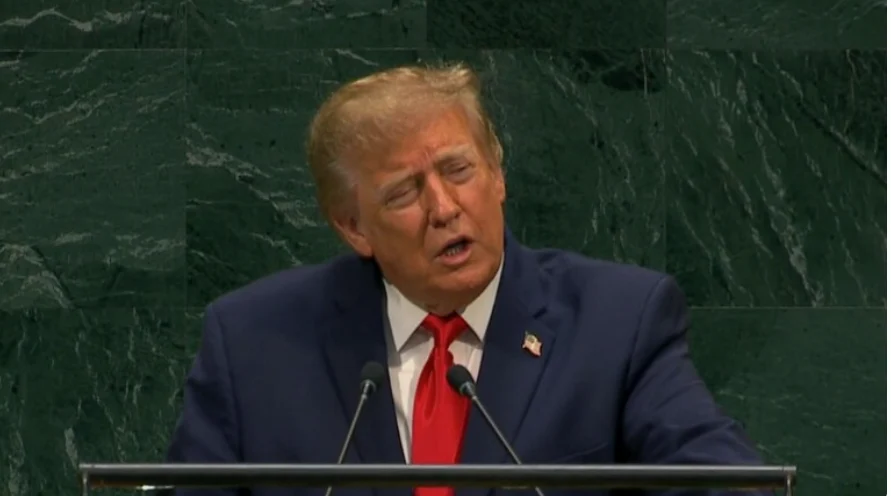
US President Donald Trump described Prime Minister Narendra Modi as a “friend” and said the two leaders had a “very good conversation” during a recent phone call held amid rising tensions in West Asia.

The call, which lasted around 40 minutes, comes shortly after developments in the ongoing Iran-related conflict and diplomatic efforts in the region. During the conversation, both leaders discussed key issues including regional security, trade, and bilateral cooperation.

The interaction marks one of the first high-level engagements between the two leaders following recent ceasefire-related developments involving the United States and Iran. The evolving situation in West Asia, including concerns around stability and global energy routes, was a significant focus of the discussion.

Officials indicated that the leaders also reviewed progress in India-US ties and reiterated their commitment to strengthening the strategic partnership across multiple sectors.

The phone call reflects continued coordination between New Delhi and Washington as geopolitical tensions persist in the Middle East, with both sides maintaining close communication on global and regional issues.

Continue Reading

Latest world news

Israel-Lebanon ceasefire to begin within hours as Trump announces 10-day truce

Israel and Lebanon may begin a 10-day ceasefire within hours after a proposal announced by Donald Trump amid ongoing tensions.

Published

on

Donald Trump

A temporary halt in hostilities between Israel and Lebanon is expected to begin within hours after US President Donald Trump announced a proposed 10-day ceasefire between the two sides, amid ongoing tensions in the region.

According to his statement, the ceasefire is likely to take effect around 5 p.m. Eastern Time, although independent confirmation from both sides is still awaited.

The development follows discussions involving Israeli Prime Minister Benjamin Netanyahu and Lebanese President Joseph Aoun, with mediation efforts led by the United States.

Officials indicated that the proposed truce is aimed at creating a limited window to reduce violence and potentially pave the way for broader diplomatic engagement. The situation along the Israel-Lebanon border has remained tense in recent weeks, with escalation linked to the activities of Hezbollah.

Diplomatic efforts have intensified in recent days, with discussions facilitated by the United States, including the involvement of US Secretary of State Marco Rubio. However, details of the agreement and the extent of coordination between the parties remain unclear.

The situation remains fluid, and the success of the ceasefire will depend on adherence by all sides involved. The conflict has already led to significant humanitarian and geopolitical consequences, including displacement and disruption in affected areas.

While the proposed ceasefire is being seen as an important step toward de-escalation, broader negotiations involving regional stakeholders are expected to be necessary for any lasting resolution.

Continue Reading

Trending

© Copyright 2022 APNLIVE.com