English हिन्दी
Connect with us

India News

Ramchandra Manjhi, Padma Shri Bhojpuri artist, passes away

The Padma Shri awardee was regarded as the Shakespeare of Bhojpuri.

Published

on

Ramchandra Manjhi

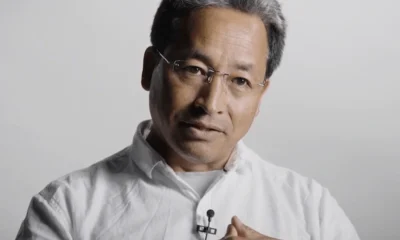
Padma Shri Bhojpuri artist Ramchandra Manjhi passed away on Wednesday night. He was 97. Manjhi’s last rites will be performed by his elder son on Thursday.

Reports say Manjhi was admitted to the Indira Gandhi Institute of Medical Sciences (IGIMS) due to heart related ailments. He was regarded as the Shakespeare of Bhojpuri.

Bihar Chief Minister Nitish Kumar paid condolences on the demise of Ramchandra Manjhi.

The CM took to Twitter and expressed his sadness. He applauded the artist as he represented Bhojpuri dance and music internationally. Kumar further wrote his death caused the irreparable loss in the field of dance, art, and culture, especially Bhojpuri.Ramchandra Manjhi has also worked in a 72-minute long Documentary film Naach Bhikhari Naach on Launda Naach.

Read Also: Uttar Pradesh: Teacher beats 14-year-old boy with sticks for coming to school 5 minutes late, legs fractured

Have a look at Nitish Kumar’s tweet:

Bihar Minister of Art, Culture, and Youth Department also paid condolences to Manjhi’s family.

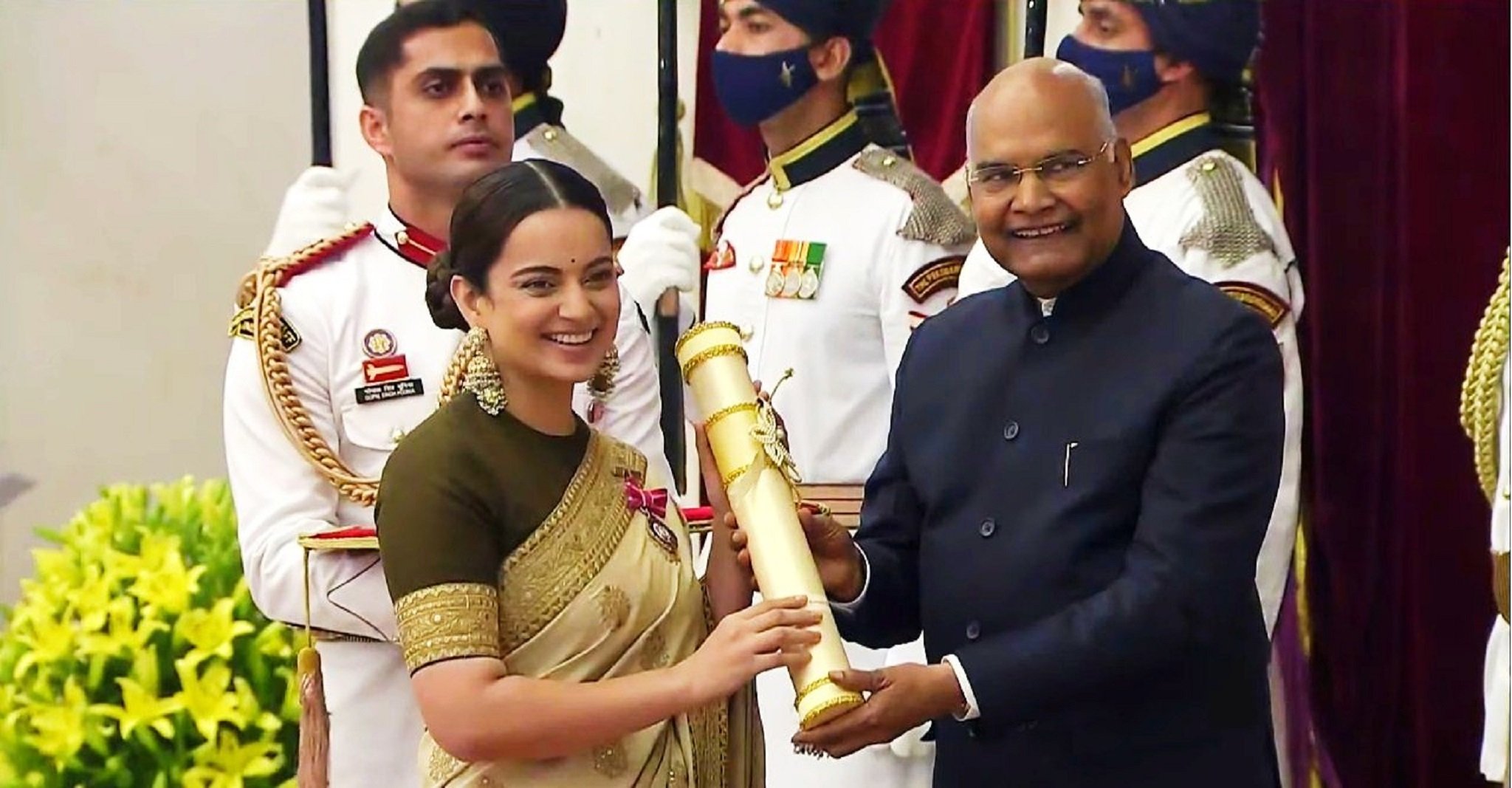
Ramchandra Manjhi was honoured with India’s fourth highest civilian award, Padma Shri by then-President Ram Nath Kovind in 2021. Famous for Launda Naach, he was one of the members of Bhikhari Thakur’s drama team and was also the oldest member. In 2017, Manjhi was awarded the Sangeet Natak Akademi Award.

Born in Tajpur in the Saran district of Bihar, Manjhi started his drama career at the age of 10 and joined the Bhikhari Thakur drama team. He performed in front of veteran actors from the Hindi film industry including Meena Kumari, Helen, Waheeda Rehman, Suraiya, and others.

Ramchandra Manjhi has also worked in a 72-minute long Documentary film Naach Bhikhari Naach on Launda Naach.

For the unversed, Launda Naach is a popular Bhojpuri folk dance practised in Bihar and Nepal. The art was conceptualised by Bhikhari Thakur in the 19th century. The art form comprises comedy, satire, dance, songs, banter, parody, pun, and theatre wherein men dress like women and perform.

Andhra Pradesh official arrested for breaching Amit Shah’s security

WATCH: Kid dressed in Superman costume cycles around Chile President during his press conference

India News

Budget session begins amid opposition push on Trump remarks, SIR and G RAM G Act

The Budget Session of Parliament begins with opposition parties lining up issues ranging from Donald Trump’s remarks to the G RAM G Act, though debate in the first phase is expected to be limited.

Published

on

Rajya Sabha

The first phase of Parliament’s Budget Session begins today with President Droupadi Murmu addressing the joint sitting of both Houses, setting the stage for a politically charged session ahead of the Union Budget.

In the run-up to the session, opposition parties have signalled their intent to corner the Narendra Modi government on a range of issues, including recent remarks by US President Donald Trump, the Special Intensive Revision (SIR) of electoral rolls, and the replacement of the Mahatma Gandhi National Rural Employment Guarantee Act (MGNREGA) with the G RAM G Act.

Opposition flags key concerns

At an all-party meeting chaired by Defence Minister Rajnath Singh on Monday, opposition leaders outlined the matters they want raised during the session. However, the scope for extended debate in the first phase is expected to remain limited due to a packed schedule focused largely on budgetary business.

After the President’s address today, the Economic Survey will be tabled tomorrow. Finance Minister Nirmala Sitharaman is scheduled to present the Union Budget on Sunday, marking her ninth consecutive budget presentation. This will be followed by discussions on the Motion of Thanks to the President’s Address in both Houses, to which Prime Minister Narendra Modi will respond.

The first leg of the Budget Session will conclude on February 13, while the second phase is set to begin on March 9.

Trump remarks, SIR and rural job law in focus

Among the issues highlighted by the opposition are what they describe as shifting statements by US President Trump regarding a trade deal with India. Opposition parties have also raised concerns over complications arising from the Special Intensive Revision of voter lists in several states.

The G RAM G Act, which has replaced MGNREGA, is another major flashpoint. Opposition parties argue that the new legislation requires detailed discussion, while also alleging misuse of central agencies against opposition leaders.

An ally of the ruling National Democratic Alliance, the Telugu Desam Party, is learnt to be preparing a demand for restrictions on social media access for children aged between 0 and 16 years.

Opposition leaders may also question the government’s silence on geopolitical developments in regions such as Venezuela and Greenland.

Government rules out debate on select issues

The Centre has made it clear that it is not inclined to reopen discussions on SIR and the G RAM G Act during the session. Parliamentary Affairs Minister Kiren Rijiju has maintained that the SIR was debated extensively during discussions on electoral reforms in the Monsoon Session.

Despite this, the Trinamool Congress is expected to push for a discussion on SIR, particularly in the context of the upcoming West Bengal Assembly elections. Chief Minister Mamata Banerjee is also likely to lead a protest in Delhi on the issue.

On the G RAM G Act, the government’s stand is that the legislation has already been passed and enacted, leaving little room for further debate in Parliament.

UGC regulations unlikely to dominate session

The controversy surrounding the new University Grants Commission regulations is not expected to feature prominently during the Budget Session. Major political parties have largely remained silent on the issue, with only a few leaders raising concerns publicly.

While some Members of Parliament may attempt to flag the matter, the UGC regulations are unlikely to emerge as a central point of confrontation in the current session.

Continue Reading

India News

Siddaramaiah snaps at Youth Congress sloganeering for DK Shivakumar during protest rally

Siddaramaiah lost his temper at a Congress protest rally after Youth Congress workers raised slogans supporting deputy CM D K Shivakumar while he was about to speak.

Published

on

Karnataka Chief Minister Siddaramaiah on Tuesday lost his cool during a Congress protest rally after Youth Congress workers repeatedly raised slogans in favour of Deputy Chief Minister D K Shivakumar while he was preparing to address the gathering.

The incident took place at a demonstration organised by the ruling Congress to oppose the Centre’s decision to replace the Mahatma Gandhi National Rural Employment Guarantee Act (MGNREGA) with a new rural employment initiative titled Viksit Bharat Guarantee for Rozgar and Ajivika Mission (Gramin) (VB-G RAM G).

Senior Congress leaders, including Shivakumar, party general secretary Randeep Singh Surjewala, ministers, Members of Parliament and legislators, were present at the rally.

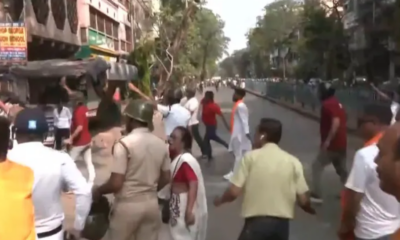
As Siddaramaiah stood up from his seat and walked towards the podium, a section of party workers began chanting “DK, DK”, referring to the deputy chief minister. The sloganeering grew louder as the chief minister reached the stage.

Visibly annoyed, Siddaramaiah asked the workers to stop shouting. When the slogans continued, he sharply questioned party leaders on the stage, asking, “Who are those shouting ‘DK, DK’?”

The compere intervened, urging the Youth Congress workers to maintain silence while the chief minister addressed the rally. Despite the appeal, attempts to interrupt Siddaramaiah reportedly continued even after he began speaking.

Power struggle backdrop within Karnataka Congress

The episode comes amid ongoing speculation about a power struggle within the Karnataka Congress, with several MLAs and MLCs openly expressing support for Shivakumar. The internal dynamics between the two senior leaders have repeatedly drawn public attention since the party came to power in the state.

Both Siddaramaiah and Shivakumar have earlier stated that they would abide by the decision of the party high command regarding leadership matters.

The chief minister has also asserted on multiple occasions that he enjoys the backing of the high command and is confident of completing the full five-year term in office.

Continue Reading

India News

Shankaracharya–Yogi row intensifies as Ayodhya GST officer resigns in protest

The Shankaracharya–Yogi Adityanath row has escalated after an Ayodhya GST officer resigned, backing the Uttar Pradesh government amid the Magh Mela controversy and UGC rule debate.

Published

on

Shankaracharya yogi Adityanath

Resignation comes amid heated exchange between Shankaracharya Swami Avimukteshwaranand Saraswati and Uttar Pradesh chief minister Yogi Adityanath over Magh Mela incident and wider political issues

The confrontation between Shankaracharya Swami Avimukteshwaranand Saraswati and Uttar Pradesh chief minister Yogi Adityanath has escalated further with the resignation of an Ayodhya-based bureaucrat, who said he stepped down in support of the government, the Constitution and democratic values.

The row began earlier this month after the Shankaracharya and his supporters alleged they were prevented from taking a holy dip at the Sangam in Prayagraj during the Magh Mela. The local administration, however, maintained that the seer’s chariot procession was stopped to avoid the risk of a stampede in the crowded area and that he was asked to proceed on foot like other devotees.

Terming the incident an insult, the Shankaracharya launched a protest, leading to a sharp verbal exchange with the chief minister. Without naming him, Yogi Adityanath cautioned people against figures like “Kalanemi”, a demon from the Ramayana who disguised himself as a saint to deceive Lord Hanuman.

Responding to the remark, the Shankaracharya said the chief minister, now a politician, should focus on governance and leave religious matters to seers. He questioned the appropriateness of a chief minister discussing religious symbolism instead of issues such as education, health, law and order, and economic development.

The Shankaracharya also weighed in on the controversy surrounding newly notified University Grants Commission rules that propose special committees, helplines and monitoring teams to address complaints, particularly from SC, ST and OBC students. Critics have argued that the framework could result in discrimination against general category students.

Speaking to media, the Shankaracharya criticised the approach, stating that injustice cannot be attributed to an entire caste and warning that pitting one caste against another could harm Hindu society. He called for the rules to be withdrawn.

Ayodhya GST officer quits citing ‘insult’ to elected leadership

On Tuesday, Ayodhya deputy GST commissioner Prashant Kumar Singh tendered his resignation, saying he could not tolerate what he described as an insult to the chief minister, the Prime Minister and other constitutional authorities.

In a statement, Singh said he had resigned in accordance with service rules and out of loyalty to the government, adding that he was deeply hurt by what he termed unrestrained comments aimed at dividing society. He said the government had provided him livelihood and that he could not continue in service while remaining silent.

Singh alleged that personal remarks were made against the chief minister and emphasised that Yogi Adityanath is a democratically elected leader. He also said he was troubled by what he described as political motives behind the debate over the UGC rules.

The officer stated that once his resignation is accepted, he plans to take up social work.

Continue Reading

Trending

© Copyright 2022 APNLIVE.com