English हिन्दी
Connect with us

India News

Registry of sex offenders: 4.4 lakh names in all, 3000 identified in Delhi since 1995

Published

on

Registry of sex offenders: 4.4 lakh names in all, 3000 identified in Delhi since 1995

India became the ninth country in world to maintain a dedicated database on sexual offenders with the Centre on Thursday rolling out a National Registry of Sexual Offenders (NRSO), a massive database of convicted sexual offenders from across the nation.

Other countries to maintain a database of sexual offenders are USA, United Kingdom, Australia, Canada, Ireland, New Zealand, South Africa and Trinidad and Tobago. Except for US, the date of convicted sex offenders is purely for the consumption of the law enforcement authorities. US is the only country to keep its database in public domain even as the demand to review the policy grows.

India too has said that the database will remain accessible to law enforcement agencies only.

The database will have personal details, including residential address, fingerprints, photo-identification, Aadhaar numbers, DNA sample and PAN number of not only convicted criminals but also of those accused of the crime or against whom an FIR is registered.

However, the details of arrested and chargesheeted offenders can be accessed only by officers with the requisite clearance, The Indian Express reported.

The government is also mulling over introducing the list of juvenile offenders, the newspaper reported. But a final decision on the same will be taken at a later time.

The decision to set up the database was taken in April following nationwide outrage over cases of sexual assault on minors, including the rape and murder of an eight-year-old girl in J&K’s Kathua.

The Union Cabinet had subsequently promulgated the Criminal Law Ordinance, 2018, for the death penalty to be handed out to those convicted of raping children below 12 years.

With the launch of this database, the Government hopes to convey the message ahead of elections next year that the safety of women and children is its top priority. Recently, it set up a National Mission for the Safety of Women, headed by the Union Cabinet Secretary, to undertake specified actions, including setting up Special Fast Track Courts, strengthening forensic facilities, appointing additional public prosecutors, and providing appropriate medical and rehabilitation facilities to victims.

The National Crime Records Bureau (NCRB) will be tasked to maintain the database and profile of sexual offenders over the past fifteen years, with details from jails across the country.

According to NCRB, there has been a three per cent increase in crimes against women and a 12 per cent rise in rapes in 2016, as compared to 2015. As many as 38,947 rape cases were registered in 2016, up from 34,651 in 2015. Overall, cases of crimes against women rose from 3,29,243 in 2015 to 3,38,954 in 2016, according to NCRB.

India has one-fifth of the world’s child population and unfortunately, also has the largest number of child sexual abuse cases registered in the world. According to government figures released in December 2017, a child is sexually abused every 15 minutes.

Following the US style, the database classifies offenders based on the ‘severity of threat’ they pose to the society. According to The Hindu, the data will be stored for 15 years in the case of those who pose a low danger, 25 years for those posing “moderate danger” and lifetime for “habitual offenders, violent criminals, convicts in gangrape and custodial rapes.”

Move gets support from WCD ministry, child and women rights’ groups

There have been instances in the past where convicted sexual offenders have committed the crime multiple times only because there was no central registry maintaining records.

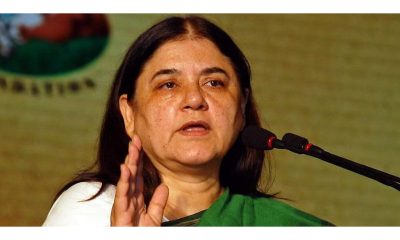
Union Minister of Women and Child Development Maneka Gandhi has been a long-time advocate of such a register. When the 38-year-old Sunil Rastogi was arrested earlier this year for raping and sexually assaulting minors, he confessed to the cops that he had assaulted around 500 girls in the states of Delhi, Uttar Pradesh and Uttarakhand. Rastogi was arrested, jailed and then released only to repeat this crime. Union minister Maneka Gandhi lamented that if an SOR was in place, many of Rastogi’s crime could have been prevented, said report on news portal Firstpost.

Gandhi pointed out that the listing of names of sexual offenders and placing it in the public domain would definitely act as a deterrent.

Sunita Krishna, who runs the NGO Prajwala which claims it has rescued and rehabilitated more than 10,000 rape victims, told Firstpost that she suppports the move. She believes only “the public naming and shaming of offenders” will stop this sharp increase in rape.

Nobel laureate Kailash Satyarthi had also urged the government to push for a registry of sexual offenders, propagating the ‘name and shame’ approach in dealing with sexual predators.  “Name and shame them. Sexual offenders should not be accepted as employees anywhere,” he had said in the past.

Experts point out flaws in system, say move will discourage victims from reporting crime

“Government statistics (in the US) indicate that most sexual abuse of children is committed by family members or trusted authority figures, and by someone who has not previously been convicted of a sex offence. In India, too, children are often sexually abused by people known to them and regarded as authority figures. The government must ensure implementation of existing measures…including enforcement of the POCSO Act,” Jayshree Bajoria, author of Human Rights Watch report documenting barriers to justice for sexual assault survivors in India, told PTI.

Activists in India say that the talk of these lists is a knee-jerk reaction to cases such as the Kathua and Unnao rape cases, both of which involved minor victims, and is intended to satisfy the public rage against sexual abuse by strangers.

“If it is a family member, a person known to the family of the victim, which is true in most cases in India, will this work? I have my doubts. The registry operates most aggressively in the US. However, there is very little evidence in that country to show that it has helped to prevent sexual assaults against children,” said Supreme Court advocate KV Dhananjay.

Speaking to Hindustan Times, Apar Gupta, a lawyer who works on privacy issues, even opined that there is no empirical evidence to support that the law actually helped bring down crime in countries where it has been existence for over a decade.

“Many international studies have shown that instead of preventing repeat offences, maintaining such a database has an adverse affect as person accused of sex crime does not have any incentive to reform. His identity as a rapist is established for life even after he has completed his sentence,” he said.

India News

Paytm Payments Bank licence cancelled by RBI, regulator moves for winding up

RBI revokes Paytm Payments Bank licence over regulatory violations and begins winding-up process.

Published

on

Reserve Bank of India

Central bank cites regulatory violations and depositor interest concerns, initiates process to shut down operations

The Reserve Bank of India (RBI) has cancelled the banking licence of Paytm Payments Bank Limited, marking a major regulatory action against one of India’s prominent digital banking entities. The decision came into effect from the close of business on April 24, 2026.

With the licence revoked, the bank is no longer permitted to carry out any banking activities, including accepting deposits or offering services defined under banking laws. The RBI has also said it will approach the High Court to initiate the process of winding up the bank.

Reasons behind RBI action

The central bank cited multiple serious concerns in its order. It stated that the affairs of the bank were conducted in a manner detrimental to the interests of depositors and the broader public. Additionally, the management practices were found to be prejudicial to depositor interests.

The RBI further noted that the bank failed to comply with conditions attached to its payments bank licence, and allowing it to continue operations would not serve any public interest.

Long history of regulatory issues

The latest move comes after prolonged regulatory scrutiny. Earlier, in January 2024, the RBI had already barred Paytm Payments Bank from accepting fresh deposits due to non-compliance issues, including lapses in customer due diligence, fund usage, and technology systems.

Over time, restrictions tightened as the bank failed to address regulatory concerns, ultimately leading to the cancellation of its licence.

What happens to customers

Despite the shutdown process, the RBI has indicated that the bank has sufficient liquidity to repay its depositors during the winding-up phase.

Customers are expected to be able to withdraw their existing funds, although the bank will not be allowed to continue normal banking operations going forward.

Impact on fintech sector

The cancellation of Paytm Payments Bank’s licence is being seen as one of the strongest regulatory actions in India’s fintech space. It signals stricter enforcement of compliance norms and could have wider implications for digital banking and payments companies operating under similar frameworks.

Continue Reading

India News

Raghav Chadha joins BJP, claims two-thirds of AAP Rajya Sabha MPs merging with ruling party

Raghav Chadha joins BJP and claims two-thirds of AAP’s Rajya Sabha MPs are merging, marking a major political shift.

Published

on

A major political development unfolded on Friday as Raghav Chadha announced his decision to join the Bharatiya Janata Party, claiming that a significant section of the Aam Aadmi Party’s Rajya Sabha members will also merge with the ruling party.

Addressing a press conference, Chadha said that nearly two-thirds of AAP’s Members of Parliament in the Rajya Sabha have decided to move to the BJP. He added that the decision has been formally communicated to the Chairman of the Upper House.

According to available information, AAP currently has around 10 MPs in the Rajya Sabha, which means roughly 6 to 7 members could be part of this shift.

Chadha described the move as a political and ideological decision, alleging that AAP had moved away from its original principles of clean and honest governance. He stated that he had been associated with the party for over a decade but now felt compelled to take a different path.

Several other MPs, including leaders like Sandeep Pathak and Ashok Mittal, were also present during the announcement and are expected to be part of the transition.

Political reactions and implications

The development is being seen as a major setback for AAP and its leadership under Arvind Kejriwal. The party has accused Chadha of betraying its mandate, while also criticising the BJP over the development.

On the other hand, the move could strengthen the BJP’s position in the Rajya Sabha, potentially aiding its legislative agenda in the Upper House.

Importantly, the merger may not attract disqualification under the anti-defection law, as Indian constitutional provisions allow such a shift if two-thirds of a party’s legislators agree to merge with another party.

This marks one of the most significant political realignments involving AAP in recent years and could have wider implications for opposition politics at the national level.

Continue Reading

India News

Mamata Banerjee says she will take over Delhi after Bengal win, sharpens attack on BJP

Mamata Banerjee says her party will move towards Delhi after winning Bengal, signalling national ambitions.

Published

on

Mamata Banerjee

West Bengal Chief Minister Mamata Banerjee has made a strong political statement during the ongoing West Bengal assembly elections 2026, saying her party will aim for a larger role at the national level after securing victory in the state.

Addressing a rally, Banerjee said that once her party wins the Bengal elections, it will move forward to “take over Delhi,” indicating a broader political strategy beyond the state. The remark comes at a time when campaigning has intensified across constituencies.

Her statement is being seen as part of a wider push by the Trinamool Congress to position itself as a key force against the Bharatiya Janata Party at the national level.

Banerjee has repeatedly expressed confidence that her party will return to power in West Bengal, aiming for another consecutive term.

Political context

The West Bengal elections have witnessed aggressive campaigning from both the ruling Trinamool Congress and the BJP. Leaders from both sides have exchanged sharp remarks, highlighting the high-stakes nature of the contest.

Banerjee’s latest comment adds to her earlier calls for opposition unity and signals her intent to expand political influence beyond the state. Similar remarks in recent weeks have indicated that her party sees the Bengal result as a stepping stone toward a larger national role.

At the same time, BJP leaders have projected confidence about their performance in the elections, further intensifying the political contest.

High-stakes election

The 2026 West Bengal assembly elections are crucial for both parties, with the Trinamool Congress seeking to retain power and the BJP aiming to make significant inroads in the state.

Banerjee’s “Delhi” remark underscores the broader national implications of the election, as regional parties increasingly position themselves in the national political landscape.

Continue Reading

Trending

© Copyright 2022 APNLIVE.com