English हिन्दी
Connect with us

India News

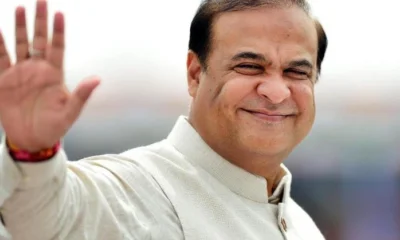
Himanta Biswa Sarma files Rs 500 crore defamation case against Congress leaders

Assam Chief Minister Himanta Biswa Sarma has filed a Rs500 crore defamation case against senior Congress leaders, accusing them of making false and malicious allegations at a Guwahati press conference.

Published

on

himanta

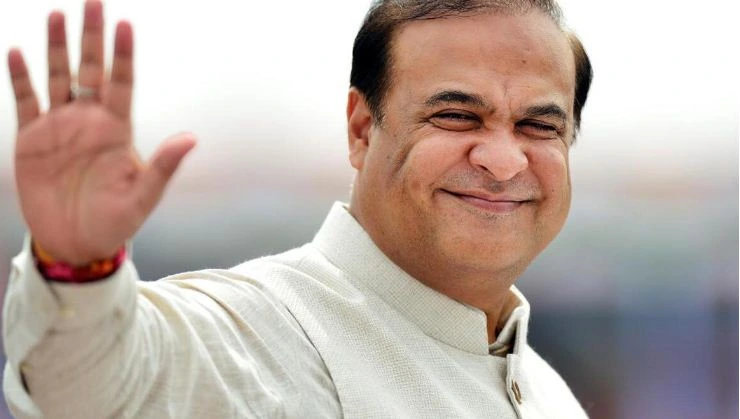
Assam Chief Minister Himanta Biswa Sarma on Tuesday said he has filed a civil defamation case seeking Rs500 crore in damages against senior Congress leaders Jitendra Singh, Bhupesh Baghel and Assam Congress president Gaurav Gogoi.

The chief minister accused the three leaders of making false, malicious and defamatory allegations against him during a press conference held in Guwahati last week.

In a post on X on Tuesday afternoon, Sarma said he has approached the court over what he described as baseless accusations levelled against him in the public domain.

“Today, I have filed a defamation case seeking Rs500 crore in damages against Congress leaders Jitendra Singh, Bhupesh Baghel and Gaurav Gogoi for making false, malicious and defamatory allegations against me through a press conference,” Sarma wrote.

The legal action follows the Assam Congress’s launch of a website titled “Who Is HBS” on February 4, along with the circulation of a pamphlet accusing the chief minister of corruption, misuse of power and disrespect towards cultural icons.

The website, which sought details of Sarma’s alleged assets, was later allegedly hacked after its launch.

Congress leaders had also claimed that the chief minister and his family owned around 12,000 bighas, or nearly 4,000 acres, of land, alleging that rules were manipulated to convert agricultural land into industrial land.

Sources said the defamation case has been initiated at the Kamrup District Civil Court, with further proceedings currently underway.

Meanwhile, the Assam Pradesh Congress Committee on Tuesday lodged a police complaint at Dispur Police Station against the BJP and Sarma, alleging misuse of artificial intelligence to malign Gaurav Gogoi and targeting Muslims through a now-deleted video referred to as the “point blank shot” clip.

APCC senior spokesperson Gopal Sarma alleged that the BJP was engaging in what he described as “the worst kind of colonisation of politics” in Assam ahead of the 2026 Assembly elections. He also claimed that an AI-generated video was circulated portraying a person from a religious minority as Gogoi.

Responding to the police complaint, Sarma said he would continue speaking openly and was not intimidated by legal action.

“It is good that they have filed the case. What does communal mean? You all know who I am against,” the chief minister said.

“For me, white is white and black is black. They cannot frighten me. Anyone can file a case against me,” he added.

The video in question, posted on Saturday, was deleted following a political backlash. Sarma had on Monday said he was unaware of the video.

India News

Total lunar eclipse on March 3: When and how to watch blood moon safely

A total lunar eclipse on March 3 will create a stunning blood moon. Here are the timings, visibility details and safe viewing tips for India and other regions.

Published

on

Lunar Ecliple234

Sky-watchers across several parts of the world are set to witness a spectacular total lunar eclipse on March 3, when the Moon will take on a striking coppery-red hue, popularly known as a “blood moon”.

A total lunar eclipse occurs when the Earth moves directly between the Sun and the Moon, casting its shadow completely over the lunar surface. During this phase, instead of turning dark, the Moon glows in shades of deep red or orange. This phenomenon happens because the Earth’s atmosphere bends and filters sunlight, allowing only red wavelengths to reach the Moon.

Where will the lunar eclipse be visible

The total lunar eclipse will be visible across eastern Asia, Australia, New Zealand, the Pacific region, and parts of North and South America.

In India, only the final phase of the eclipse will be visible around moonrise at sunset. Northeastern states including Assam, Arunachal Pradesh, Meghalaya and West Bengal are expected to have a view of the celestial event, subject to clear weather conditions.

According to official timings shared by the India Meteorological Department, the eclipse schedule in India is as follows:

  • Eclipse begins: 3:20 pm
  • Total phase begins: 4:34 pm
  • Total phase ends: 5:33 pm
  • Eclipse ends: 6:48 pm

Globally, totality will last for approximately 58 minutes, from 6:04 am EST (1104 GMT / 4:34 pm IST) to 7:02 am EST (1202 GMT / 5:32 pm IST).

Is it safe to watch the blood moon

Unlike a solar eclipse, a lunar eclipse is completely safe to observe with the naked eye. There is no need for protective eyewear.

Experts advise choosing a location with a clear and unobstructed view of the eastern horizon for the best experience. While the eclipse can be seen without equipment, binoculars or a small telescope can enhance the view and bring out the Moon’s reddish tones more clearly.

Tips for photographing the blood moon

Those planning to capture the rare event can consider the following tips:

  1. Use a DSLR or mirrorless camera paired with a telephoto lens between 200 mm and 600 mm for closer shots.
  2. Increase the ISO between 400 and 1600 and slow the shutter speed to around 1–2 seconds during totality to capture the dimmer red glow.
  3. Use a tripod to ensure stability and avoid blurred images.

The March 3 total lunar eclipse offers astronomy enthusiasts a unique opportunity to witness one of the most captivating natural spectacles in the night sky.

Continue Reading

India News

PM Modi to review ministry reforms in next cabinet meeting, ministers asked to submit impact report

PM Narendra Modi will review major reforms undertaken by ministries since the formation of the government in June 2024, with ministers directed to submit a two-page impact report.
Published

on

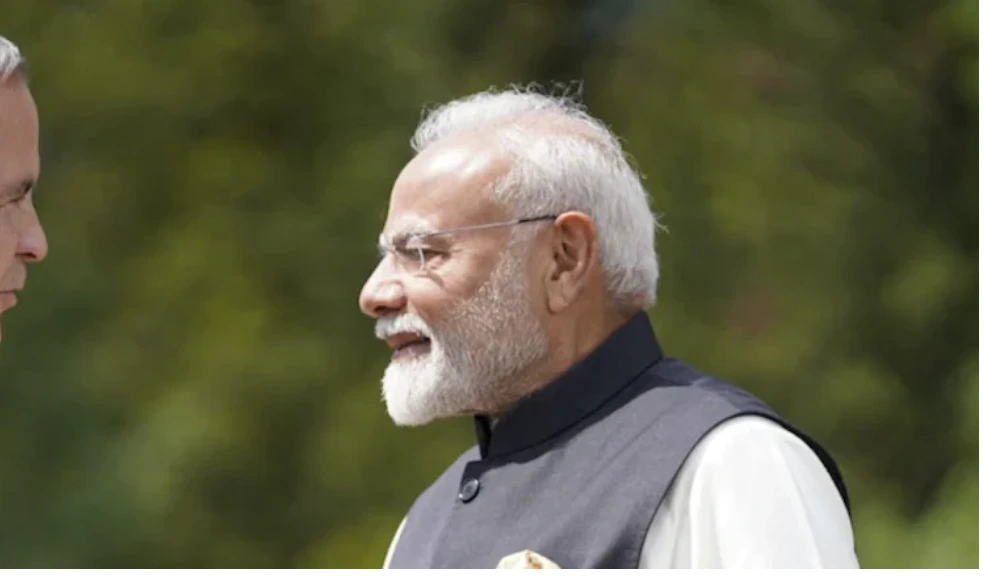
Prime Minister Narendra Modi is set to review the key reforms undertaken by various ministries since the formation of the government for a third term in June 2024. Ministers have been directed to submit a concise report highlighting the most significant changes introduced by their departments and their measurable impact.

According to sources, the Prime Minister wants to assess reforms that have directly improved the lives of citizens and enhanced the ease of doing business in the country.

Ministers asked to list three major reforms

During his first cabinet meeting on February 24 at Seva Tirtha, the Prime Minister instructed all ministers to prepare a list of major reforms carried out by their respective ministries. The Cabinet Secretary subsequently circulated a standard format for submissions.

Each ministry has been asked to identify three key reforms along with their impact, summarised within a two-page document. The reports are expected to be presented at the next cabinet meeting, which is likely to take place this week.

Sources said ministries are currently working at a rapid pace to compile the required details.

Focus on sector-specific achievements

Officials indicated that several ministries are preparing to highlight notable policy interventions and administrative measures undertaken since June 2024.

A senior official from the Ministry of Consumer Affairs said the department has implemented reforms aimed at simplifying processes for consumers and businesses. These include changes in legal metrology and quality control frameworks.

The Home Ministry is expected to outline progress in its campaign against Naxalism and steps taken towards modernising the police force.

The Defence Ministry may present updates related to production policy and incentive schemes designed to strengthen self-reliance in the sector. Measures focusing on artificial intelligence and quantum technology are also likely to be part of the discussion.

Sources added that the Ministry of Jal Shakti has moved to decriminalise minor violations under the Water Pollution Act, a step aimed at promoting ease of doing business.

Meanwhile, the Ministry of Road Transport is expected to highlight the implementation of a satellite-based toll system and revised FASTag rules to simplify travel and improve compliance.

Push for accountability under Modi 3.0

Sources said the government views this review exercise as a way to increase accountability and directly evaluate the tangible outcomes of reform initiatives. The move is being seen as part of efforts to accelerate the reform agenda under the third term of the Modi government.

Continue Reading

India News

Sonia Gandhi questions Centre’s silence on Khamenei killing, cites Iran’s past support on Kashmir
Published

on

sonia

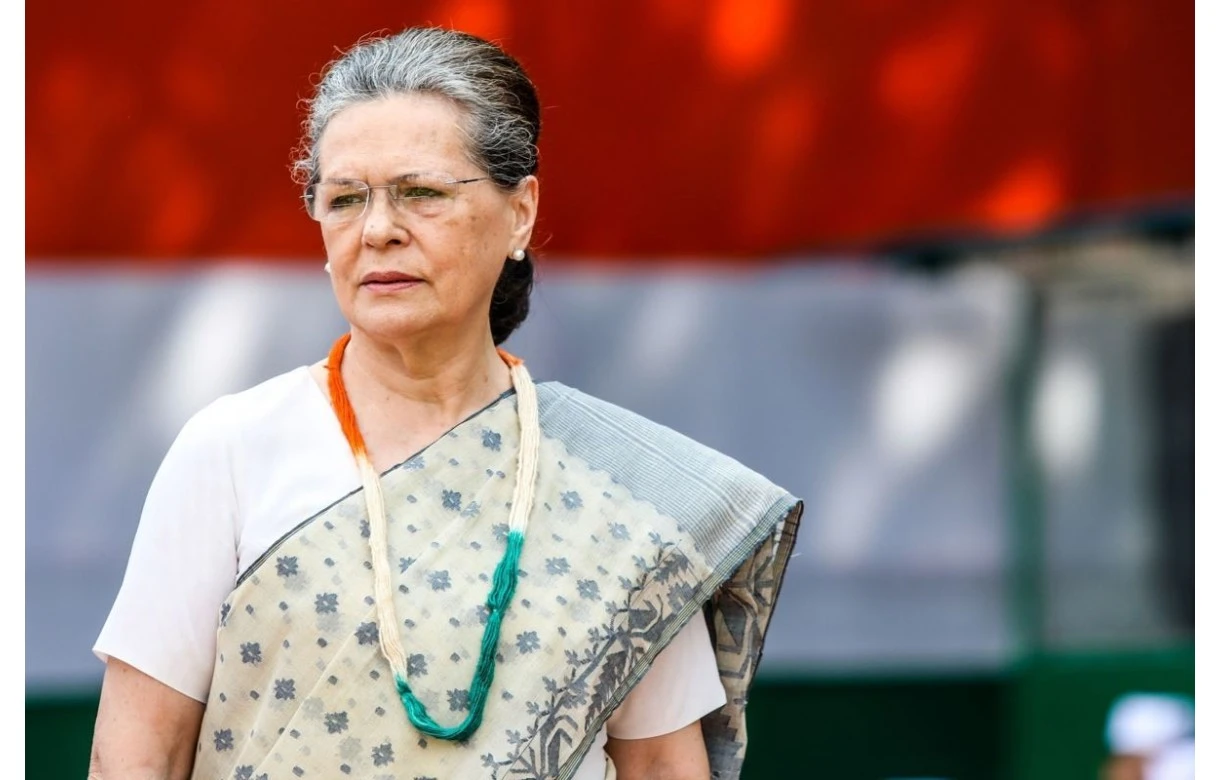
Senior Congress leader Sonia Gandhi has criticised the Centre for not issuing a direct statement on the reported killing of Iran’s Supreme Leader Ayatollah Ali Khamenei, saying that silence in such a situation amounts to an “abdication” rather than neutrality.

In a column published in media, Gandhi argued that India’s relationship with Tehran is rooted in both civilisational and strategic interests and said the government should have responded more clearly to the development.

Centre calls for restraint, avoids direct comment

While the government has not issued a specific statement on Khamenei’s death, it has urged restraint and de-escalation in the Middle East. Sources have indicated that India’s calibrated response is in line with that of major global powers and reflects a diplomatic approach guided by national interest.

Gandhi, however, questioned this position. Referring to Iran’s confirmation on March 1 that Khamenei was assassinated in targeted strikes allegedly carried out by the United States and Israel, she described the episode as a “grave rupture” in international relations, particularly as it occurred during ongoing negotiations.

She also criticised Prime Minister Narendra Modi for initially condemning Iran’s retaliatory strike on the UAE without addressing what she called the preceding US-Israeli actions. Later remarks expressing “deep concern” and advocating dialogue and diplomacy, she suggested, did not sufficiently acknowledge the broader context.

Questions over foreign policy direction

According to Gandhi, failing to clearly defend sovereignty and international law in the face of such an incident could weaken India’s credibility on the global stage. She argued that if the targeted killing of a foreign leader during a diplomatic process passes without principled objection, it risks normalising the erosion of international norms.

She further noted that the timing of the episode — shortly after the Prime Minister’s visit to Israel, where he reiterated support for the government led by Benjamin Netanyahu — adds to the unease, especially amid ongoing global criticism over civilian casualties in Gaza.

Kashmir reference and strategic ties

Gandhi also invoked a past diplomatic episode related to Kashmir. She recalled that in 1994, when sections within the Organisation of Islamic Cooperation sought to advance a resolution against India at the UN Commission on Human Rights over Kashmir, Iran played a significant role in blocking the move. According to her, that intervention helped prevent the internationalisation of the issue at a sensitive time for India.

She further pointed to Iran’s role in facilitating India’s diplomatic presence in Zahedan, near the Pakistan border, describing it as strategically relevant in the context of the development of Gwadar port and the China-Pakistan Economic Corridor.

Gandhi also referred to former Prime Minister Atal Bihari Vajpayee’s 2001 visit to Tehran, during which he had reaffirmed India’s longstanding ties with Iran.

Balancing ties in West Asia

Acknowledging that India’s relations with Israel have expanded in recent years across defence, agriculture and technology, Gandhi said that New Delhi’s ability to maintain ties with both Tehran and Tel Aviv gives it diplomatic space to urge restraint. However, she added, such space depends on credibility and a perception of principled engagement.

Highlighting the presence of nearly 10 million Indians in the Gulf region, she argued that India’s ability to safeguard its citizens during past crises — including conflicts in Iraq, Syria and Yemen — has depended on being viewed as an independent actor.

For a country that aspires to represent the Global South, Gandhi said, perceptions matter. Invoking the principle of “vasudhaiva kutumbakam”, she maintained that India’s civilisational ethos calls for justice, restraint and dialogue, especially at a time when the rules-based international order is under strain.

Continue Reading

Trending

© Copyright 2022 APNLIVE.com