English हिन्दी
Connect with us

Top Stories

Government vehicles older than 15 years to be scrapped off, everything you need to know

Published

on

Goa Assembly Elections 2022 Live Updates: Nitin Gadkari to release BJP's manifesto today

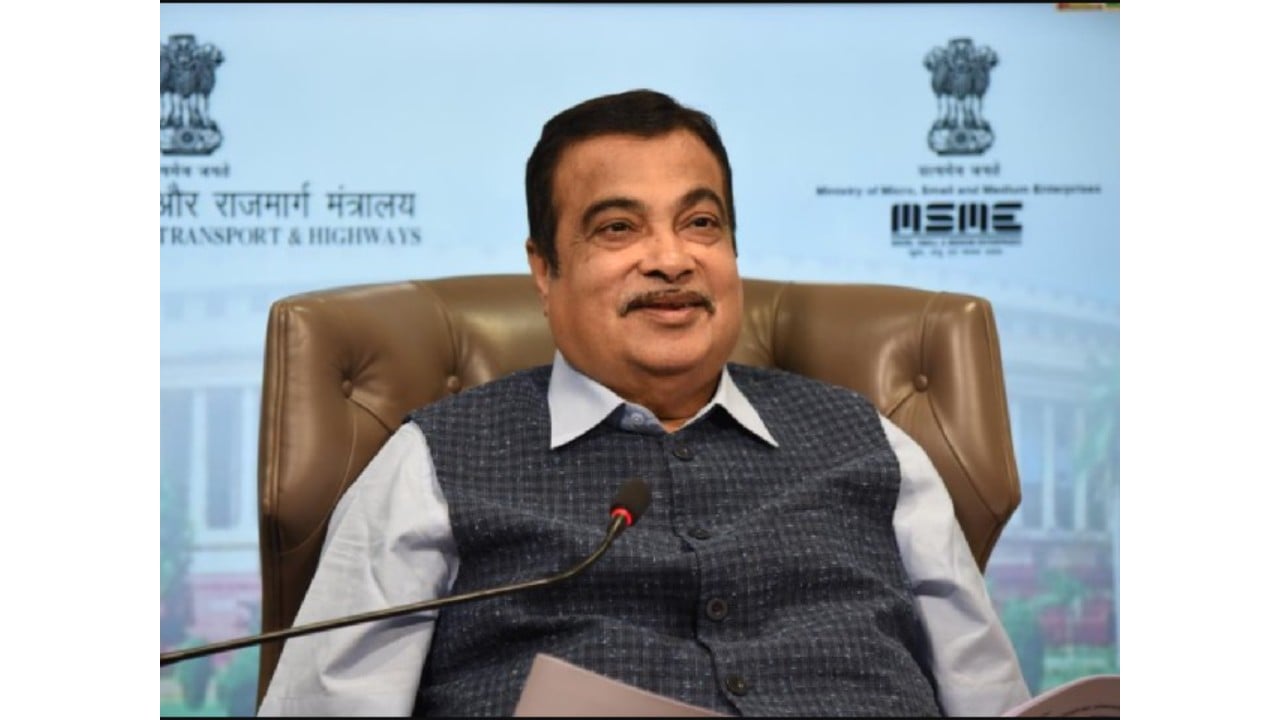
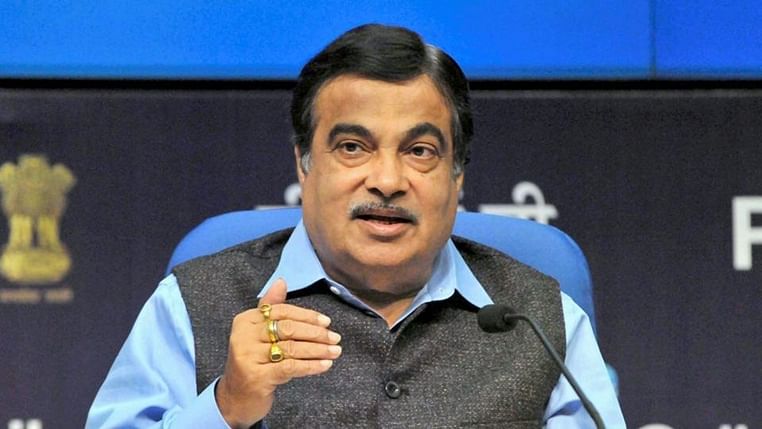
In order to improve the air quality in the country, the government has been taking every possible step by introducing new policies every day. To fight against pollution, transport minister Nitin Gadkari along with the Indian government issued a draft notification. The report says under the new notification, it has stated that the central and state government-owned vehicles which are older than 15 years will be scrapped come April 2023.

During the opening ceremony of the 2022 edition of Agrovision in Nagpur, Gadkari said that he has signed a file under the guidance of PM Narendra Modi, asking the centre to scrap all the government vehicles including buses, trucks cars which have completed 15 years. I have sent this policy of the Indian government to all the states. They should adopt this policy at the state level, the transport minister added.

The notice came at a time when the country’s air quality index in some cities or states has been crossing 400, which falls under the very poor to severe category.

Gadkari told the media that he has already given the green signal to the order to scrap the old government vehicles, which causing or damaging the country’s environment. In or to push the EV culture in the country, he has also been pushing for the modernization of buses which will be transformed to total electric.

To combat the threat of automobile pollution, the government announced its policy on vehicle scrappage earlier this year. Gadkari had previously stated that the government intends to set up 1-2 auto-recycling units in each district across the nation. The union minister added that old tyres and other components from scrapped cars would be used to build roads.

Amid this, on October 2018, before the announcement of the scrappage policy by the government, the Supreme Court also ordered to stop using more than 15-year-old petrol and 10-year-old diesel vehicles in Delhi-NCR.

India News

Supreme Court urges Centre to reconsider introducing third language for CBSE Class 9

Published

on

By

Supreme Court

The Supreme Court on Thursday orally urged the Centre and the Central Board of Secondary Education (CBSE) to reconsider the introduction of the compulsory third language policy for Class 9, observing that the move could place an unnecessary academic burden on children.

During a hearing of petitions challenging the policy, the bench of Justice B.V. Nagarathna and Justice R. Mahadevan remarked that introducing a new language at the Class 9 level may create additional stress for students and suggested that, if such a policy is necessary, it would be more appropriate to begin it from Class 6, when children have more time to adapt. The court, however, did not pass any interim order staying the policy.

The petitions challenge the CBSE’s three-language policy introduced under the New Education Policy 2020. Under the revised framework, students entering Class 9 are required to study three languages, with at least two being Indian languages. The petitioners argued that the sudden implementation has created difficulties for students, schools and teachers, particularly due to the availability of textbooks, qualified language teachers and the increased academic workload.

During the hearing, the Supreme Court sought responses from the Union Government and the CBSE on the concerns raised in the petitions. The Bench emphasised that while learning languages is valuable, educational reforms should be implemented in a manner that does not place avoidable pressure on students.

The matter will be heard again after the Centre and the CBSE file their replies. The outcome of the case is expected to influence the implementation of the three-language policy in CBSE-affiliated schools across the country, particularly for students entering Class 9 in the current academic session.

Continue Reading

India News

Ganga and Varuna corridor projects get Cabinet nod, Varanasi to receive Rs 25,000 crore infrastructure boost

The Union Cabinet has approved nearly Rs 25,000 crore Ganga and Varuna Corridor projects in Varanasi to improve connectivity, reduce congestion and support tourism in the holy city.

Published

on

Ganga Varuna Corridors

The Union Cabinet has approved two major elevated corridor projects worth nearly Rs 25,000 crore in Varanasi, marking a major infrastructure initiatives for the holy city in recent years. The Ganga Corridor and Varuna Corridor are expected to improve urban mobility, reduce congestion and support the growing number of tourists and pilgrims visiting the city every year.

The projects are aimed at creating faster road connectivity while also strengthening tourism infrastructure in one of India’s oldest and most significant spiritual destinations.

Ganga Elevated Corridor to reduce travel time

The larger project, the 46-km six-lane Ganga Elevated Corridor, will connect NH-19 with the Varanasi Ring Road through an alignment along the Ganga river.

Developed by the National Highways Authority of India (NHAI), the elevated corridor is designed to divert traffic away from congested city roads while minimising disruption to existing settlements.

According to the project plan, the corridor is expected to increase average travel speeds to nearly 100 kmph, significantly reducing travel time on the route from around 60 minutes to approximately 20 minutes.

Apart from improving connectivity, the project also focuses on tourism. Plans include a cable-stayed bridge that could become a new landmark for Varanasi, along with dedicated viewpoints and visitor spaces overlooking the Ganga and its ghats.

The project covers several villages, including Samne, Domri, Sirgovardhanpur, Chhitupur, Kila Kohna, Korauta, Ramnagar, Bhagwanpur, Sujabad, Nagwa, Nadesar and Varidpur. Authorities have halted land sale and purchase activities in these villages as part of the project process.

Varuna Corridor to improve access from neighbouring districts

The Cabinet has also approved the 43.2-km Varuna Elevated Corridor, estimated to cost around Rs 11,000 crore.

The project will connect NH-31 with the Varanasi Ring Road along the Varuna river through a network of elevated roads, flyovers, ramps, loops and link roads to improve movement across the city.

A key feature is a 21-km elevated section extending from near Harahua to the confluence of the Varuna and Ganga rivers near Namo Ghat.

The four-lane corridor is expected to provide direct access for travellers arriving from Lucknow, Jaunpur and Prayagraj, allowing them to reach Namo Ghat without entering congested city roads. Pilgrims will then be able to travel by boat to the Kashi Vishwanath Temple, helping reduce traffic pressure in central Varanasi.

Part of the project will pass through approximately 2.56 acres of land under the Cantonment Board, for which approval from the Ministry of Defence was required.

The Varuna Corridor alignment includes villages such as Kuduhana, Rustampur, Parshurampur, Sarai, Piran, Baragaon Pratham, Chhapri, Loharapur, Raniyapur, Chhitauni, Korauta, Kila Kohna, Inderpur, Sirista, Chauka, Jetupur, Kazi Sarsaulpur, Atharpur, Makdoompur, Bhatke, Karanjapur and Katesar in Sadar tehsil.

Projects planned as tourist numbers continue to rise

The approval comes as Varanasi continues to witness a sharp increase in tourist and pilgrim arrivals. According to the information shared, the city now receives nearly 15 crore visitors annually, increasing the need for stronger transport infrastructure to manage traffic efficiently.

The government expects the two corridor projects to improve accessibility while supporting the city’s long-term urban development and tourism growth.

Industry experts see wider economic benefits

Industry representatives have welcomed the projects, saying their impact could extend beyond transport improvements.

Aman Gupta, Director of RPS Group, said the Ganga and Varuna Corridor projects represent an integrated approach to urban development by combining connectivity, tourism and public infrastructure. He said better connectivity often encourages investment, employment generation and real estate development.

Gupta also noted that infrastructure-led development has produced similar outcomes in the National Capital Region, citing projects such as the Delhi-Mumbai Expressway, Metro expansion, Jewar International Airport and the proposed Faridabad-Noida-Ghaziabad Expressway.

Meanwhile, Manoj Kumar Garg, Chairman of NorthWind Estates, said the corridors could strengthen Varanasi’s position as a global spiritual, cultural and tourism destination while supporting economic growth through sectors such as hospitality, retail, commercial real estate and employment.

He added that Uttar Pradesh’s ambition of becoming a $1 trillion economy would receive support from continued investments in infrastructure, including expressways, airports and urban development projects that encourage private investment and improve ease of doing business.

Continue Reading

Football news

England’s World Cup dream ends as Thomas Tuchel’s defensive gamble backfires against Argentina

England’s World Cup campaign ended in heartbreak as Argentina scored twice late to win 2-1 after Thomas Tuchel’s defensive tactical changes shifted momentum.

Published

on

Thomas Tuchel

England’s hopes of reaching the FIFA World Cup 2026 final ended in heartbreaking fashion after Argentina produced a late comeback to claim a 2-1 victory in the semi-final in Atlanta. While the Three Lions looked in control for much of the contest, their increasingly defensive approach after taking the lead proved costly.

Cagey first half offers few clear chances

The opening 45 minutes were dominated by physical battles and disciplined defending, leaving both teams with limited opportunities in front of goal. According to Opta, England registered an expected goals (xG) value of 0.05 in the first half, while Argentina managed just 0.03.

Despite the lack of attacking moments, England remained organised and frustrated the defending champions throughout the opening period.

Gordon breaks the deadlock

England finally found the breakthrough in the 55th minute when Anthony Gordon met a well-delivered cross from Morgan Rogers to put his side 1-0 ahead. The goal sparked celebrations among England supporters and appeared to put Thomas Tuchel’s side on course for a place in the World Cup final.

Argentina initially struggled to respond. With central defenders Lisandro Martinez and Cristian Romero both carrying yellow cards, the South American side had to remain cautious in defence, limiting their ability to challenge England’s attackers aggressively.

Defensive substitutions shift momentum

Instead of pushing for a second goal, England gradually retreated deeper into their own half.

In the 72nd minute, head coach Thomas Tuchel replaced goalscorer Anthony Gordon with defender Ezri Konsa, effectively switching to a back-five system. The tactical change reduced England’s attacking threat and allowed Argentina to dominate possession.

Tuchel made two more defensive-minded substitutions in the 82nd minute, bringing on Dan Burn and Nico O’Reilly for Reece James and Declan Rice. The changes further reinforced England’s defensive setup as Argentina continued to press for an equaliser.

Argentina capitalise late

Argentina’s persistence paid off in the 85th minute. Lionel Messi played a short corner to Enzo Fernandez, who found space outside the penalty area before firing a powerful shot beyond Jordan Pickford to make it 1-1.

With momentum firmly on their side, Argentina continued to attack during stoppage time. In the second minute of added time, Messi collected a loose ball on the right wing and delivered a precise cross into the six-yard box. Lautaro Martinez capitalised on defensive hesitation to score the winning goal and send Argentina into the final.

According to Opta, England had just 12% possession between Gordon’s opening goal in the 55th minute and Martinez’s decisive strike in stoppage time, underlining Argentina’s sustained control during the closing stages.

Harry Kane reflects on defeat

England captain Harry Kane admitted his side became overly defensive after taking the lead.

“Once we went 1-0 up, we seemed to just try and hold on, which at this level is not enough.”

His comments echoed the disappointment surrounding England’s inability to maintain their attacking intent after moving ahead.

Argentina set up final against Spain

With the victory, Argentina advanced to the FIFA World Cup 2026 final, where they will face Spain in the tournament’s title clash.

England, meanwhile, are left to reflect on another painful World Cup exit after surrendering a winning position in the closing minutes of a match that had once appeared firmly within their control.

Continue Reading

Trending

© Copyright 2022 APNLIVE.com