English हिन्दी
Connect with us

Latest world news

Bangladesh’s BNP seeks stronger India ties based on mutual respect

Bangladesh’s new BNP-led government has signalled a diplomatic reset with India, emphasising mutual respect, trade and broader people-to-people engagement.

Published

on

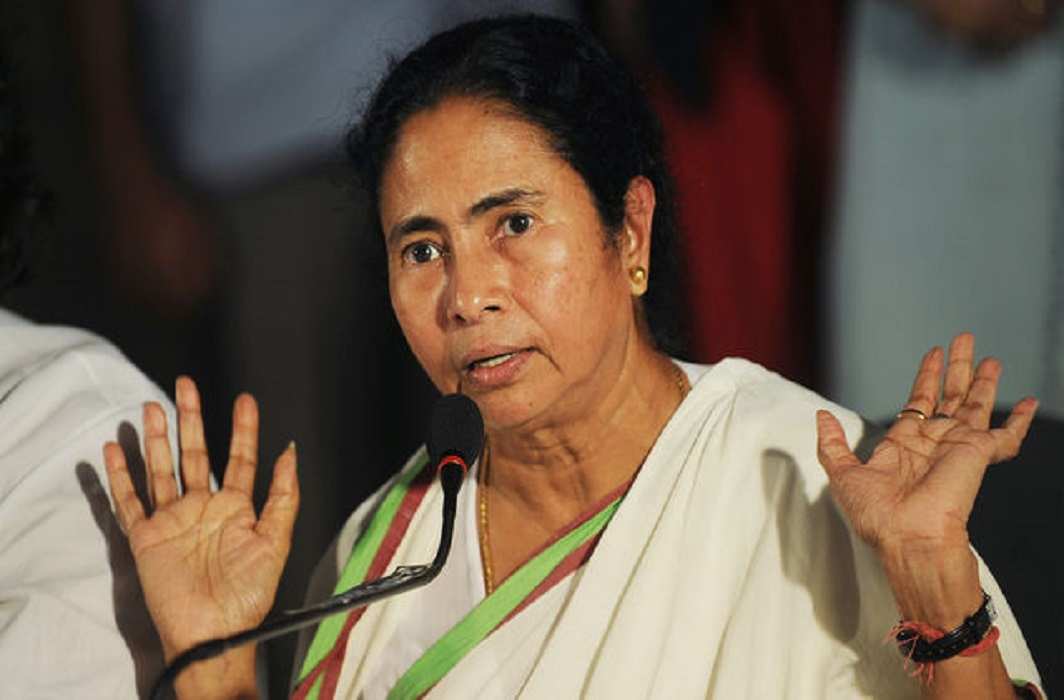
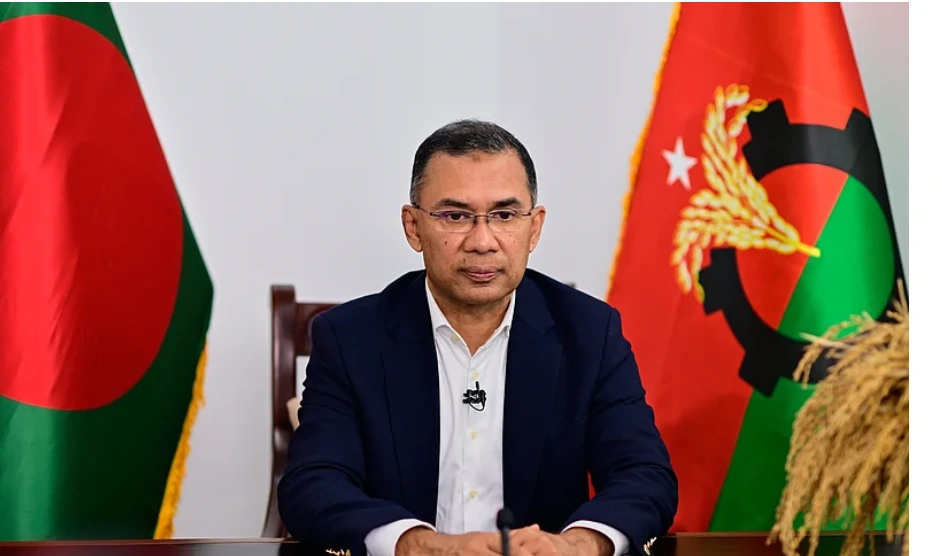
Tarique Rehman

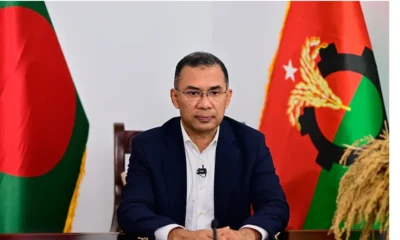
The newly elected government in Bangladesh, led by Tarique Rahman and the Bangladesh Nationalist Party (BNP), has expressed its intent to strengthen ties with India through mutual respect, trade and deeper people-to-people engagement.

Humayun Kabir, who oversees international relations for Rahman and is expected to play a key role in the new administration, said the focus will be on building stronger cooperation between citizens of both countries rather than limiting ties to official exchanges.

He indicated that India would be among the countries the new leadership plans to visit, though no specific timeline was shared. “Obviously there are certain domestic priorities and then international engagements. Of course India will be one of the countries that we will visit among other countries in the region,” Kabir said in an interaction with media.

Expanding engagement beyond official visits

Kabir underlined the importance of expanding the scope of bilateral relations beyond high-level diplomatic visits. While acknowledging that reciprocal visits between senior officials are a normal feature of ties between neighbouring nations, he stressed the need to widen engagement across broader sections of society.

He said the BNP-led government intends to deepen cooperation through trade and investment while strengthening grassroots-level connections.

On regional balance and Pakistan ties

Responding to questions about Bangladesh’s approach towards Pakistan during the interim administration led by Muhammad Yunus, Kabir said Dhaka’s foreign policy would not be guided by choosing sides in regional tensions.

“It’s normal and we need to normalise relations in the region and regardless of the tensions between India and Pakistan, for us it is not to take sides on this issue,” he said, adding that relations would be shaped by mutual respect and national interest.

Kabir also criticised former prime minister Sheikh Hasina, alleging that her foreign policy approach was perceived as one-sided in its engagement with India. He said the new government seeks to avoid what he described as a country-centric or country-dependent model of diplomacy.

New Delhi’s cautious optimism

From India’s perspective, the decisive electoral outcome in Bangladesh, which delivered a landslide to the BNP, marks the end of the interim phase and opens the possibility of a diplomatic reset.

Indian officials are said to be cautiously optimistic about engaging with Rahman’s leadership. While acknowledging past differences with BNP governments, New Delhi believes the new administration may adopt a pragmatic approach shaped by economic priorities and regional stability concerns.

Latest world news

Military conflict alone cannot resolve global crises says PM Modi

PM Narendra Modi says dialogue, diplomacy and rule of law are essential to end global conflicts, referring to wars in Ukraine and West Asia during a joint briefing with Finland’s president.
Published

on

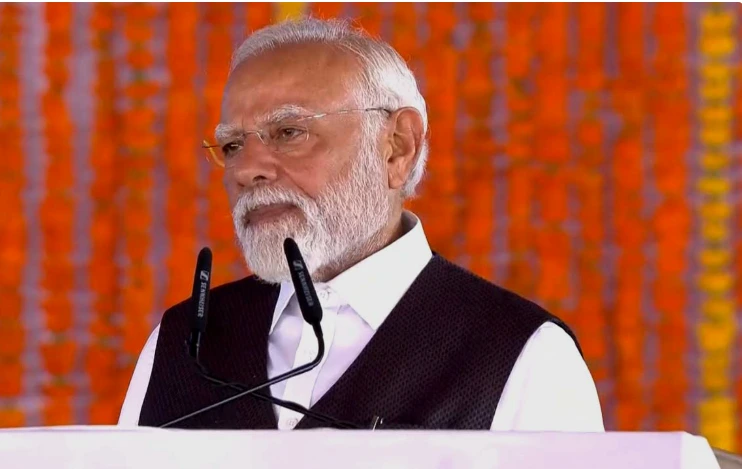
PM Narendra Modi

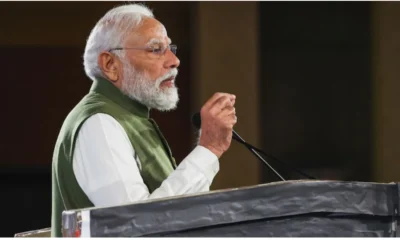
Prime Minister Narendra Modi on Thursday said that military confrontation alone cannot resolve global disputes, stressing that dialogue, diplomacy and respect for the rule of law remain essential to end ongoing conflicts such as the Russia-Ukraine war and the escalating tensions in West Asia.

Speaking at a joint press briefing in New Delhi with Finnish President Alexander Stubb, the Prime Minister said India and Finland share a common view that peaceful engagement is the only sustainable path to resolve international crises.

“India and Finland both believe in the rule of law, dialogue and diplomacy. We agree that no issue can be resolved through military conflict alone. Whether it is Ukraine or West Asia, we will continue to support the swift end of conflicts and every effort towards peace,” PM Modi said.

Call for reform in global institutions

Highlighting the changing global landscape, the Prime Minister also stressed the need to reform international institutions so that they can effectively address emerging global challenges.

“We also agree that reforming global institutions to address growing global challenges is not only necessary but urgent. Eliminating terrorism in all its forms is our shared commitment,” he said.

Middle East tensions intensify

The Prime Minister’s remarks came at a time when tensions in the Middle East have sharply escalated. The conflict began after a joint US-Israel strike reportedly killed Iran’s supreme leader Ayatollah Ali Khamenei earlier this week.

In response, Iran launched retaliatory strikes targeting Israel and locations across the Gulf region. The situation has also drawn in Hezbollah, the Iran-backed group based in Lebanon, widening concerns about a broader regional conflict.

Impact on the wider global situation

The ripple effects of the escalating Middle East tensions are being felt globally, including in Ukraine, where Russia’s invasion has continued for four years.

Referring to the broader geopolitical climate, PM Modi said the world is currently facing instability and uncertainty, with conflicts affecting several regions.

“Today the world is going through a period of instability and uncertainty. Conflict persists in many parts of the world, from Ukraine to West Asia,” he said.

India and Europe entering stronger partnership phase

The Prime Minister also highlighted the strengthening relationship between India and Europe, pointing to the historic trade agreement signed with the European Union earlier this year.

According to him, growing cooperation between India and Europe is helping reinforce global stability, development and shared prosperity.

“In such a global environment, India and Europe, two of the world’s major diplomatic powers, are entering a golden era of their relationship. Our growing cooperation is giving new strength to global stability, development and shared prosperity,” PM Modi said.

Continue Reading

Latest world news

US urges India to look beyond Russian oil, says American supply is best alternative

US Deputy Secretary of State Christopher Landau says there is no better alternative than American energy supplies as India continues large purchases of Russian oil.
Published

on

oil purchase

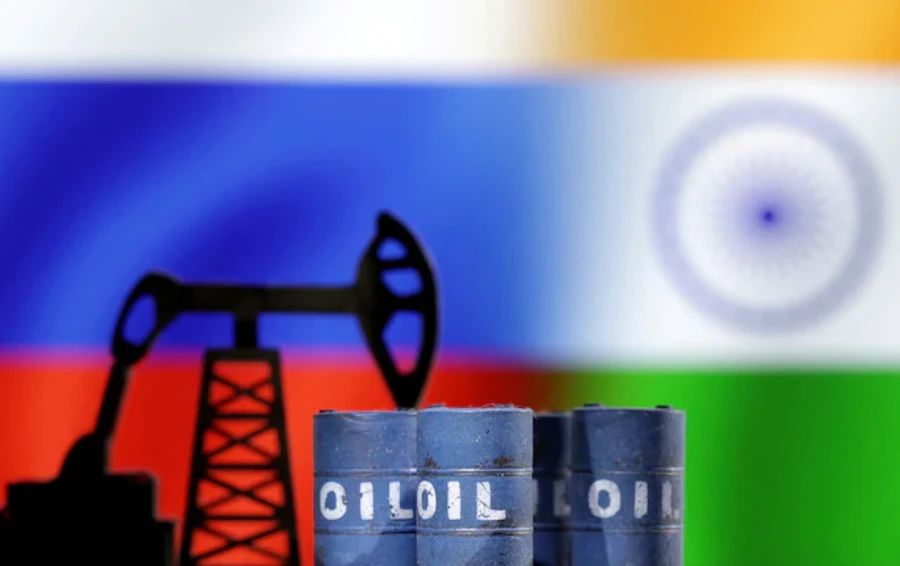
The United States has urged India to consider American energy supplies as an alternative to Russian oil, with US Deputy Secretary of State Christopher Landau saying there is no “better alternative” than the US.

Speaking during the Raisina Dialogue in New Delhi on Thursday, Landau suggested that India should explore other sources of energy while responding to a question about the country’s continued purchases of Russian crude.

“I hope you are looking for alternate sources… You can’t have a better alternative than the USA,” he said during a session titled Power, Purpose, and Partnerships: American Foreign Policy in a New Era.

Energy concerns amid regional tensions

Landau’s remarks come as global energy markets face uncertainty due to the ongoing Iran conflict, which has raised concerns about possible supply disruptions in the Middle East.

Industry sources indicate that Russia is prepared to redirect crude shipments to India to compensate for potential supply interruptions. Nearly 9.5 million barrels of Russian crude are currently on vessels near Indian waters and could reach domestic refineries in the coming weeks.

India significantly increased its purchases of Russian oil after the Russia-Ukraine war began in 2022, taking advantage of discounted crude and becoming one of Moscow’s major buyers. Western governments have frequently criticised the trade, arguing that it helps finance Russia’s military campaign.

India’s energy security also faces logistical challenges. Around 40 percent of the country’s crude imports move through the Strait of Hormuz, a vital maritime route for global oil shipments. Any disruption in the region could affect supplies to Indian refineries.

Because of this risk, refiners in India are reportedly exploring alternative sources if disruptions in the region continue for more than 10 to 15 days.

Trade ties and strategic relations

The comments come shortly after India and the United States announced a trade agreement aimed at expanding economic cooperation.

Following the announcement, the White House indicated that tariffs on Indian goods could be increased if New Delhi resumed large-scale purchases of Russian oil. India, however, has not officially confirmed any decision to halt Russian crude imports.

Russia has also hinted at potential moves in global energy markets. President Vladimir Putin recently said Moscow could consider halting gas supplies to Europe amid rising energy prices linked to the crisis.

‘America First doesn’t mean America alone’

During his address, Landau defended the “America First” foreign policy approach under US President Donald Trump, stating that it should not be interpreted as isolationist.

“America First doesn’t mean America alone,” he said, adding that Washington expects other countries to pursue their own interests as well.

“Our foreign policy is focused on advancing US interests. We are not a charity,” he added.

Referring to the leadership in both countries, Landau said Trump would aim to “make America great again” while expecting Prime Minister Narendra Modi to focus on strengthening India.

He also described the current period as an important phase in the relationship between the two countries.

“This century is going to see the rise of India. It is in our interest to be partners,” he said, noting that Washington closely follows India’s economic growth and views the relationship as strategically important.

Landau also expressed optimism about ongoing trade negotiations between the two countries, saying the agreement is “almost at the finishing line” and that the US is eager to expand economic engagement with India.

At the same time, he cautioned that Washington does not want to repeat past strategic miscalculations.

“We are not going to make the same mistake with India which we made with China 20 years ago,” he said.

US stance on Middle East tensions

Addressing the broader conflict in the Middle East, Landau said Washington’s priority is to ensure that instability in the region does not threaten global security.

He reiterated the US position on Iran’s nuclear ambitions, stating that Washington had repeatedly warned Tehran against developing nuclear weapons.

“We tried hard to explain our red line to Iran, which is no development of a nuclear weapon,” he said, adding that the US believed diplomacy had not been successful.

Landau also said the future of Iran’s leadership ultimately lies with its citizens.

“Ultimately, the Iranian people will have to decide who their leadership is going to be,” he said.

Continue Reading

Latest world news

US submarine sinks Iranian warship IRIS Dena in Indian Ocean, at least 87 feared dead

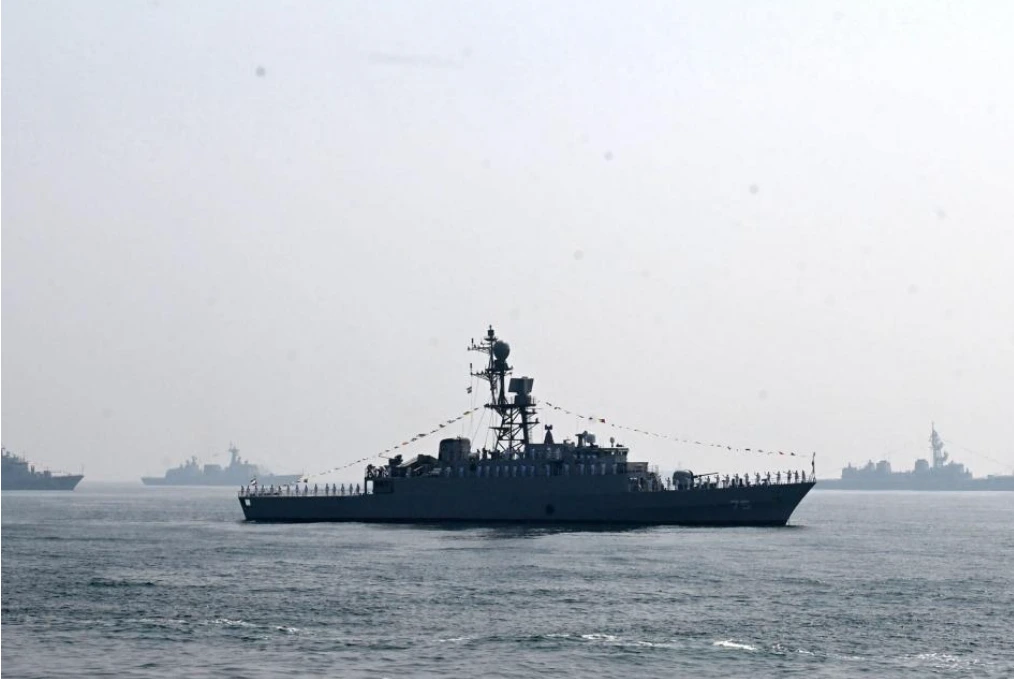
An Iranian warship that had participated in the MILAN naval exercise in India was sunk by a US submarine in the Indian Ocean, leaving at least 87 people dead and dozens missing.
Published

on

ship

At least 87 people have been killed after a United States submarine torpedoed an Iranian warship in the Indian Ocean, according to reports by media. The vessel, identified as IRIS Dena, had recently participated in a multinational naval exercise in India before the incident occurred.

The Iranian frigate, a Moudge-class warship, had taken part in the MILAN naval exercise earlier this year. After completing the exercise and beginning its return journey, the vessel was reportedly attacked by a US submarine while sailing in international waters.

US Defence Secretary Pete Hegseth confirmed that an American submarine carried out the strike. Speaking to reporters, he described the attack as proof of the United States’ ability to project military power across the globe amid its ongoing conflict with Iran.

“An American submarine sunk an Iranian warship that thought it was safe in international waters. Instead, it was sunk by a torpedo,” Hegseth said.

Video of strike released by US

Following the attack, the US Department of War released a black-and-white video showing what appeared to be footage from a submarine periscope followed by a distant explosion. The release of near real-time visuals from a submarine attack is considered unusual and highlights changing practices in wartime information sharing.

Military observers noted that the Iranian vessel likely did not detect the US submarine, even though it was operating at periscope depth. Analysts say this suggests a high level of stealth and tactical capability on the part of the American submarine.

Warship had recently visited India

IRIS Dena had earlier travelled to India to participate in the MILAN 2026 naval exercise, one of the largest multilateral maritime drills in the Indo-Pacific region. The exercise brings together navies from several countries to improve cooperation, maritime awareness and coordinated response to security challenges.

According to a statement issued by the Indian Navy on February 16, the harbour and sea phases of MILAN included complex maritime operations such as anti-submarine warfare, air defence exercises and search-and-rescue missions.

It remains unclear whether the US submarine had been monitoring the Iranian ship during its journey to and from the exercise. Defence experts believe it is possible that the submarine tracked the vessel throughout its voyage for intelligence purposes, a practice that is common among naval forces.

Bodies recovered near Sri Lanka

Officials from the Sri Lankan Navy said that 87 bodies have been recovered so far following the sinking of the frigate near Sri Lanka’s coast. Rescue operations are continuing as search teams attempt to locate missing sailors.

Authorities said 32 survivors have been rescued, while 61 crew members are still reported missing.

First torpedo sinking since World War II

Hegseth described the operation as a “quiet death” and said it marked the first time since World War II that the United States has sunk an enemy vessel using a torpedo.

“Like in that war, we are fighting to win,” he said.

According to the Pentagon, a key objective of the ongoing US-Israeli war against Iran is to neutralise Iran’s naval capabilities.

Continue Reading

Trending

© Copyright 2022 APNLIVE.com