
Latest world news
US-North Korea War Rhetoric Mounting

[vc_row][vc_column][vc_column_text]Pyongyang to finalize plan to attack Guam by mid-August
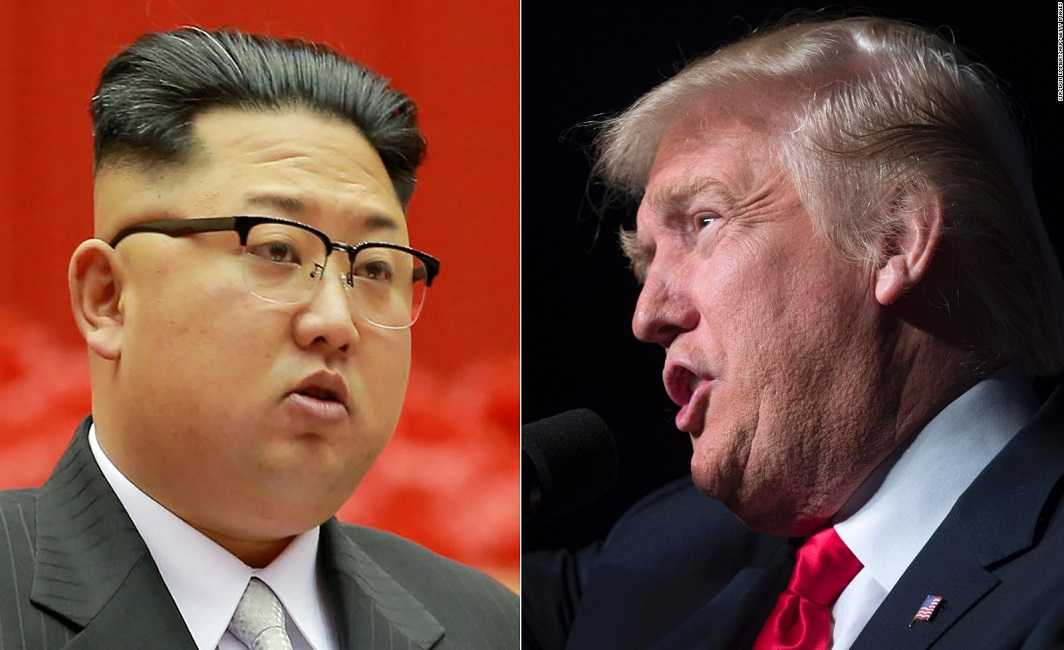
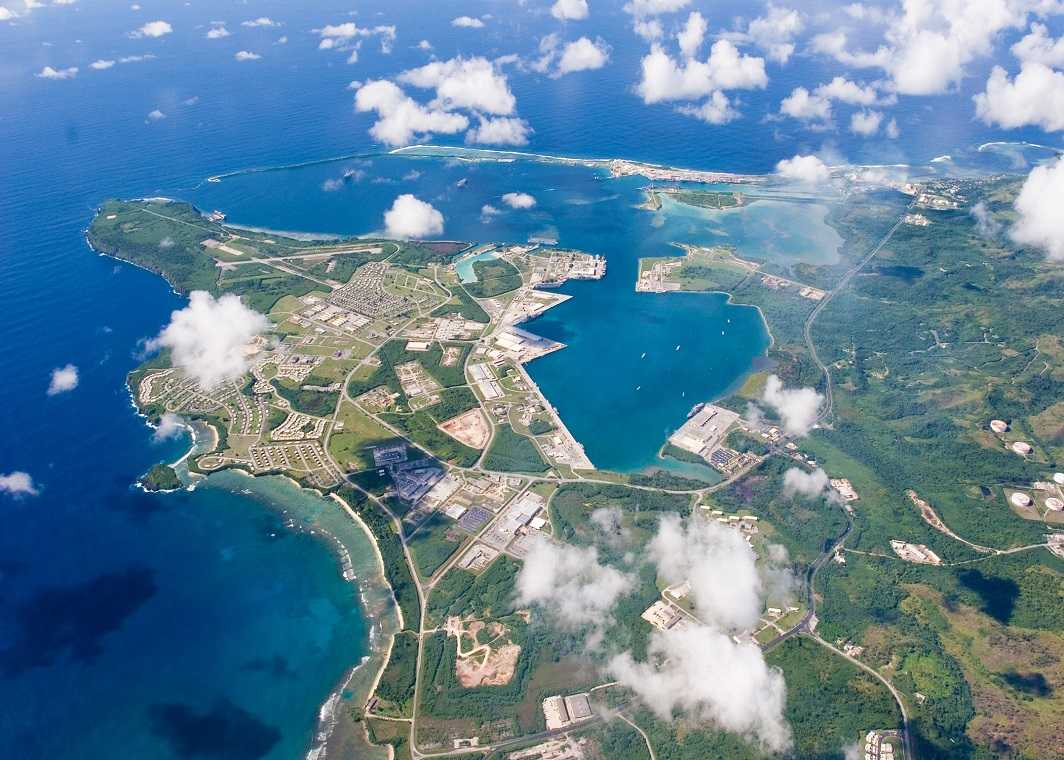
Tension between US and North Korea has been mounting steadily and both capitals seem to be monitoring each other’s moves with utmost care. The Korean People’s Army (KPA) Strategic Force has now decided to finalize plan to launch Hwasong-12 rockets attack to hit the waters 30-40 km away from Guam, an unincorporated US territory in the Western Pacific Ocean by mid-August, just five days from now. US Secretary of State Rex Tillerson has visited Guam on Wednesday to calm the residents’ concerns.
General Kim Rak Gyon, the Commander of KPAs Strategic Force, in a late Wednesday statement said that, “it seems he (Trump) has not yet understood the statement. Sound dialogue is not possible with such a guy ‘bereft of reason’ and only absolute force can work on him.”
KPA’s statement further said, “The Hwasong artillerymen of the KPA Strategic Force are replete with a strong determination to fully demonstrate once again the invincible might of the force, which has developed into a reliable nuclear force of the Workers’ Party of Korea and the world’s strongest strike service, through the planned enveloping strike targeting the U.S. imperialist bases of aggression.”
According to the Korean Central News Agency (KCNA) the planned Hwasong-12 rockets will cross the sky above Shimane, Hiroshima and Kochi Prefectures of Japan, flying 3356.7 km for 1065 seconds (17.75 minutes) and hit the waters 30-40 km away from Guam.
According to KPA, the unprecedented step is aimed to give confidence in certain victory and courage to the Korean people and help them witness the “wretched plight of US imperialists.”
Meanwhile US Secretary of State Rex Tillerson, visited Guam on Wednesday. He said that he doesn’t believe there is “any imminent threat” and said that “Americans should sleep well at night.”
“So I think…what the president is doing is sending a strong message to North Korea in language that Kim Jong-un would understand, because he doesn’t seem to understand diplomatic language,” Tillerson said.
US Defense Secretary Jim Mattis, also came up with a threat on Wednesday saying it “should cease any consideration of actions that would lead to the end of its regime and the destruction of its people.” He further said, “The DPRK regime’s actions will continue to be grossly overmatched by ours and would lose any arms race or conflict it initiates.”
According to the KPA Strategic force statement, it will wait for the order of commander in- chief of the DPRK nuclear force after completing plan to launch the attack on Guam by mid-August.
Meanwhile, New York Times reported on Thursday that senior US officials were giving mixed signals on the North Korea issue. It says that the President’s advisors calibrated his dire warning with statements emphasizing different points. Secretary of State Rex W. Tillerson stressed diplomacy and reassured Americans that they could “sleep well at night,” while Defense Secretary Jim Mattis said North Korea risked “the end of its regime and the destruction of its people” if it did not “stand down.”
The present rhetoric between Washington and Pyongyang dramatically began after North Korea tested two Inter-Continental Ballistic Missiles (ICBM) in July, which was followed by US imposing one billion trade sanctions against Kim Jong Un regime. Pyongyang rejected the White House move and threatened with its capacity to hit US mainland. President Trump responded with “fire and fury” statement forcing Pyongyang to announce its plan to hit Guam, an unincorporated US territory in the Western Pacific Ocean.
Meanwhile, Pyongyang witnessed a mass rally on Wednesday to display full support to the statement of the DPRK government. It was attended by senior most leaders of the Korean Social Democratic Party, Cabinet ministers, public organizations, industrial establishments and national institutions. The participants condemned the recent UN sanctions against the country.
Kim Ki Nam, member of the Political Bureau of the Workers Party of Korea holding several important offices in the ruling party said, “The U.S., the most shameless gangster-like state, framed up the “sanctions resolution” with dastards acting as voting machine without any principle. This is no more than desperate efforts of those frightened at the might of the DPRK which rose to the high strategic position as a nuclear power of Juche and world-level military power.” Juche, usually translated as “self reliance” is the official state ideology formulated by Kim Il-sung, the founder of North Korea in 1955.
On the contrary, CNN, in its latest analysis based on experts’ opinions, said, “Despite bellicose rhetoric coming from US President Donald Trump and North Korean leader Kim Jong-un, there are no signs the US is planning a first strike on North Korea or that Kim will make good on threats to hit the US territory of Guam.”[/vc_column_text][/vc_column][/vc_row]




Latest world news
S Jaishankar says India is a natural option for Russia amid Europe tensions
External Affairs Minister S Jaishankar said India remained a natural option for Russia as Moscow increasingly turned towards Asia amid strained relations with Europe. He highlighted the continuity of India-Russia ties and their significance for the balance of power in Asia.


Latest world news
Putin praises PM Modi, says he has very good ideas on Ukraine war
Russian President Vladimir Putin has praised Prime Minister Narendra Modi for repeatedly raising the need to end the Ukraine war, describing his ideas for a settlement as “very good”.

Latest world news
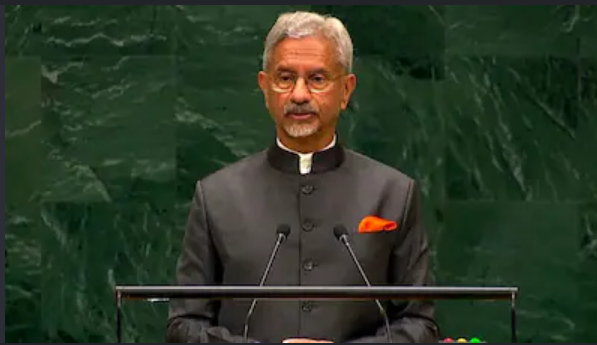
S Jaishankar calls Pakistan a “serial practitioner of terrorism” at UN
S Jaishankar criticised Pakistan at the UN General Assembly, referring to a “serial practitioner of terrorism” and warning against attempts to normalise terrorism.

Rahul Gandhi hosts high tea for INDIA bloc after Gyanesh Kumar protests

L Murugan quits Union ministry to strengthen BJP in Tamil Nadu

Amit Shah attacks Rahul Gandhi over Congress poll losses, questions SIR row

BJP focuses on religion as opposition pushes BDM strategy in UP

CJP leaders Saurav Das, Ashutosh Ranka, Ajinkya Shinde sent to 5-day judicial custody

PM Modi speaks to Mark Carney as India and Canada push to strengthen ties

S Jaishankar says India is a natural option for Russia amid Europe tensions
CJP leaders Saurav Das, Ashutosh Ranka, Ajinkya Shinde sent to 5-day judicial custody
BJP focuses on religion as opposition pushes BDM strategy in UP
L Murugan quits Union ministry to strengthen BJP in Tamil Nadu

Afghan Men Try To Hang With The Jet Engine Of The Aircraft in Kabul- Afghanistan News – Kabul News
Trending Top 10 News: 10000 Crore Fine on Flipkart, Apple to Launch Unique Feature, Hdfc Bank Job Ad

Trending Top 10 News: Nokia 6310, Apple sales, Bachpan ka Pyar Video Kid, Dainik Bhaskar IT Raid

Trending Top 10 News: Canada bans Indian flights, Rain in Delhi NCR, AIMIM Twitter hacked, Raj Kundra case

Trending Top 10 News: Shein India, Apple New Service, Pocket Oxygen, Oppo Launched New Phone
-
 India News17 hours ago
Rahul Gandhi hosts high tea for INDIA bloc after Gyanesh Kumar protests
-
 India News16 hours ago
L Murugan quits Union ministry to strengthen BJP in Tamil Nadu
-
 India News17 hours ago
Amit Shah attacks Rahul Gandhi over Congress poll losses, questions SIR row
-
 India News15 hours ago
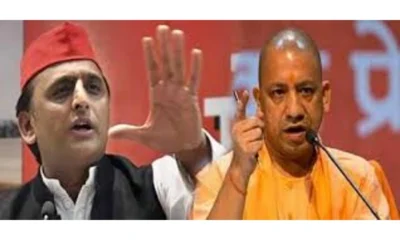
BJP focuses on religion as opposition pushes BDM strategy in UP
-
 India News5 hours ago
CJP leaders Saurav Das, Ashutosh Ranka, Ajinkya Shinde sent to 5-day judicial custody
-
 Latest world news4 hours ago
S Jaishankar says India is a natural option for Russia amid Europe tensions
-
 India News4 hours ago
PM Modi speaks to Mark Carney as India and Canada push to strengthen ties
