
Latest world news
The US-Pakistan crisis ends, US asks to clear terrorists


Pak media claims end of the crisis that triggered after Trump’s tweet
After weeks of threatening and cautioning Pakistan asking to destroy terrorists’ “havens” in its territory, US administration has undertaken its first diplomatic engagement with Islamabad by sending Ambassador Alice Wells, Deputy Assistant Secretary of State.
Dawn report claimed that engagement between Pakistan and the US after mini-crisis created by President Donald Trump’s tweet ended with Washington renewing its demand for Islamabad to clear its territory of “externally focused terrorists”. She was in Islamabad for two days.
The US embassy in Islamabad, in its statement said, “Ambassador [Alice] Wells urged the government of Pakistan to address the continuing presence of the Haqqani network and other terrorist groups within its territory.”
The US embassy confirmed her meetings with the foreign secretary, Miftah Ismail, the adviser on finance, and National Security Adviser retired Lt Gen Nasser Khan Janjua.
The report further said that it was perhaps one of the rare visits during which a US official did not visit the General Headquarters for a meeting with the military leadership — at least there was no publicly known interaction during the trip.
The daily says that her visit followed the US military’s outreach to Army Chief Gen Qamar Bajwa to contain the damage caused by the Trump tweet which accused Pakistan of “lies and deceit”. Alice Wells has served as US Ambassador to Jordan from July 2014 to January 2017.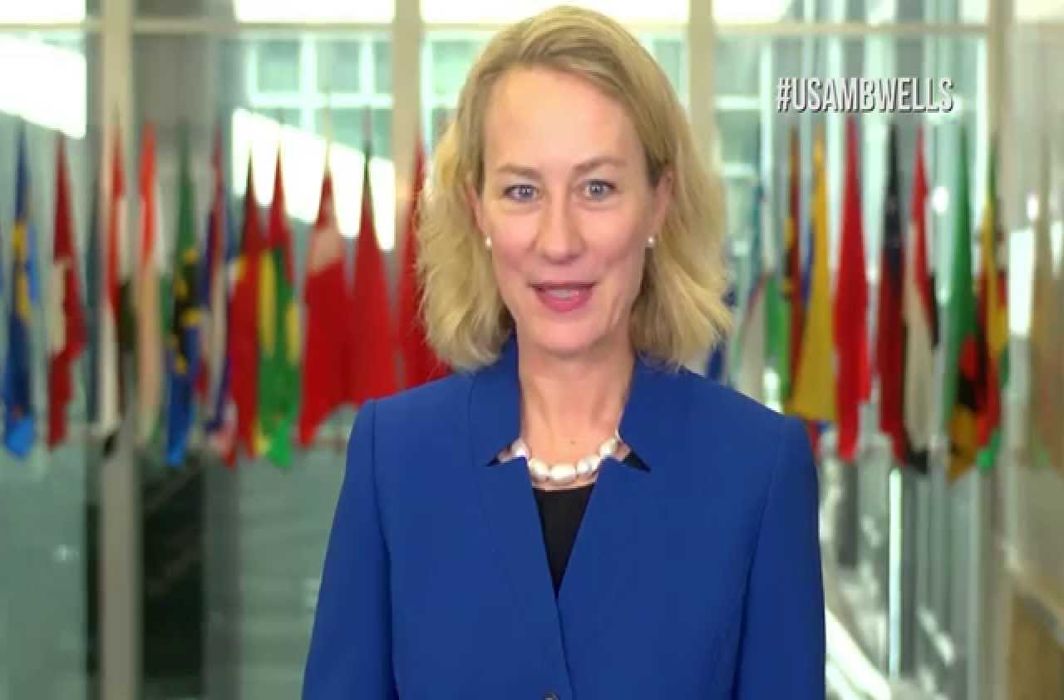
On January 13, Pakistani media reported that US Centcom Commander Gen Joseph Votel had a telephonic conversation with Pakistan’s army chief Gen Qamar Bajwa and assured that no unilateral action is being planned on its territory.
During her meetings with Pakistani officials in her two day Islamabad visit, Ambassador Alice Wells conveyed that the US wanted to shift to a “new relationship with Pakistan” based on “mutual interest”.
She suggested to Pakistani that enhanced intelligence cooperation, especially in counter-terrorism cooperation, could provide the basis for improvement in ties. On their part, Pakistani officials also expressed their desire for a continuation of the ties with mutual trust and respect.
Before leaving for Washington on Tuesday, Ambassador Alice told journalists, “There can be no good or bad terrorists.”
Describing her tone during the meeting with the selected journalists on Tuesday morning, the Dawn reports that she tried to tone down the shrillness prevalent in US-Pakistan relations by speaking in a gentle tone about the long and shared history of the two states.
She also spoke of US funded projects in Pakistan, how the Coalition Support Fund (CSF) was deeply in the US’ interest, of effective partnerships and “professional and constructive meetings” that she held a day earlier.
The report further said that Ambassador Alice calm tone was a world apart from the Twitter diplomacy that has dominated headlines so far this year.
The US diplomat told Pakistan that they oppose any effort to foment separatism inside Pakistan. “We do not support Balochi (sic) separatism,” she added. US would not support the use of Afghan soil as a base for hostile acts against Pakistan, she assured.
She praised Islamabad’s “extraordinary” fight against the Tehreek-i-Taliban Pakistan and Jamaatul Arhar and asserted that US wanted similar efforts against groups trying to destabilise Afghanistan.







Latest world news
S Jaishankar says India is a natural option for Russia amid Europe tensions
External Affairs Minister S Jaishankar said India remained a natural option for Russia as Moscow increasingly turned towards Asia amid strained relations with Europe. He highlighted the continuity of India-Russia ties and their significance for the balance of power in Asia.


Latest world news
Putin praises PM Modi, says he has very good ideas on Ukraine war
Russian President Vladimir Putin has praised Prime Minister Narendra Modi for repeatedly raising the need to end the Ukraine war, describing his ideas for a settlement as “very good”.

Latest world news
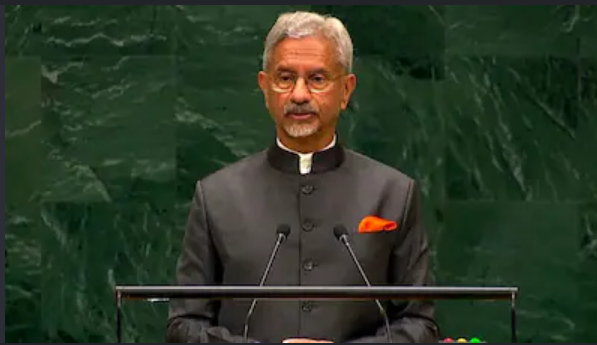
S Jaishankar calls Pakistan a “serial practitioner of terrorism” at UN
S Jaishankar criticised Pakistan at the UN General Assembly, referring to a “serial practitioner of terrorism” and warning against attempts to normalise terrorism.

Supreme Court stays defamation case against Rahul Gandhi over PM Modi remarks

Rahul Gandhi hosts high tea for INDIA bloc after Gyanesh Kumar protests

L Murugan quits Union ministry to strengthen BJP in Tamil Nadu

Amit Shah attacks Rahul Gandhi over Congress poll losses, questions SIR row

BJP focuses on religion as opposition pushes BDM strategy in UP

PM Modi speaks to Mark Carney as India and Canada push to strengthen ties

S Jaishankar says India is a natural option for Russia amid Europe tensions

CJP leaders Saurav Das, Ashutosh Ranka, Ajinkya Shinde sent to 5-day judicial custody
BJP focuses on religion as opposition pushes BDM strategy in UP
L Murugan quits Union ministry to strengthen BJP in Tamil Nadu

Afghan Men Try To Hang With The Jet Engine Of The Aircraft in Kabul- Afghanistan News – Kabul News
Trending Top 10 News: 10000 Crore Fine on Flipkart, Apple to Launch Unique Feature, Hdfc Bank Job Ad

Trending Top 10 News: Nokia 6310, Apple sales, Bachpan ka Pyar Video Kid, Dainik Bhaskar IT Raid

Trending Top 10 News: Canada bans Indian flights, Rain in Delhi NCR, AIMIM Twitter hacked, Raj Kundra case

Trending Top 10 News: Shein India, Apple New Service, Pocket Oxygen, Oppo Launched New Phone
-
 India News22 hours ago
Supreme Court stays defamation case against Rahul Gandhi over PM Modi remarks
-
 India News14 hours ago
Rahul Gandhi hosts high tea for INDIA bloc after Gyanesh Kumar protests
-
 India News13 hours ago
L Murugan quits Union ministry to strengthen BJP in Tamil Nadu
-
 India News14 hours ago
Amit Shah attacks Rahul Gandhi over Congress poll losses, questions SIR row
-
 India News12 hours ago
BJP focuses on religion as opposition pushes BDM strategy in UP
-
 India News2 hours ago
CJP leaders Saurav Das, Ashutosh Ranka, Ajinkya Shinde sent to 5-day judicial custody
-
 Latest world news1 hour ago
S Jaishankar says India is a natural option for Russia amid Europe tensions
-
 India News1 hour ago
PM Modi speaks to Mark Carney as India and Canada push to strengthen ties
