English हिन्दी
Connect with us

Latest world news

US pushing Arab-NATO allies against Iran

Published

on

US pushing arab-nato allies against Iran

James Mattis says reports of US war against Iran is “fiction”

The contradictory statements and reports have been emanating from Washington over US intention for a possible war against Iran. Reuters, quoting US and Arab sources, reports that the Trump administration is quietly pushing ahead with a bid to create a new security and political alliance with six Gulf Arab states, Egypt and Jordan, in part to counter Iran’s expansion in the region.

Australia’s ABC news has also published an article on Thursday saying the US could initiate a missile strike against Iran as early as next month.

However, Washington based The Hill reports that US Defense Secretary James Mattis on Friday disputed a news report that US was preparing military action against Iran, calling it “fiction.”

Read More: US-Iran lock horns on strategic Hormuz waterway

“I have no idea where the Australian news people got that information,” Mattis told reporters. “I’m confident it is not something that’s being considered right now, and I think it’s a complete — frankly, it’s — it’s fiction.”

Meanwhile, Australian Prime Minister Malcolm Turnbull has also denied the report, which cites unnamed Australian officials. “It’s speculation,” Turnbull said, according to The Straits Times. “It is citing anonymous sources.”

US pushing arab-nato allies against IranReuters report says that the White House wants to see deeper cooperation between the countries on missile defence, military training, counter-terrorism and other issues such as strengthening regional economic and diplomatic ties, four sources said.

Describing the details further Reuters report said that the plan to forge what officials in the White House and Middle East have called an “Arab NATO” of Sunni Muslim allies will likely raise tensions between the United States and Shi’ite Iran, two countries increasingly at odds since President Donald Trump took office.

The administration’s hope is that the effort, tentatively known as the Middle East Strategic Alliance (MESA), might be discussed at a summit provisionally scheduled for Washington on Oct. 12-13, several sources said.

Read More: Trump Warns Iran Not To “Threaten” Or Face “Consequences”

The White House confirmed it was working on the concept of the alliance with “our regional partners now and have been for several months.”

Saudi officials raised the idea of a security pact ahead of a Trump visit last year to Saudi Arabia where he announced a massive arms deal, but the alliance proposal did not get off the ground, a U.S. source said.

Sources from some of the Arab countries involved also said they were aware of renewed efforts to activate the plan. Officials from other potential participants did not respond to requests for comment.

White House National Security Council’s spokesperson was quoted saying,  “MESA will serve as a bulwark against Iranian aggression, terrorism, extremism, and will bring stability to the Middle East.”

US, Saudi Arabia and UAE accuse Iran of destabilizing the region, fomenting unrest in some Arab countries through proxy groups and increasingly threatening Israel. Arabs allege that opposition Shia groups in Bahrain and Houthis in Yemen were supported by Tehran.
Latest world news

Dubai hit again within 24 hours as debris strikes building, drone targets US embassy in Baghdad

A building in Dubai’s financial hub was struck by debris from an intercepted attack while a drone targeted the US embassy in Baghdad, officials said.

Published

on

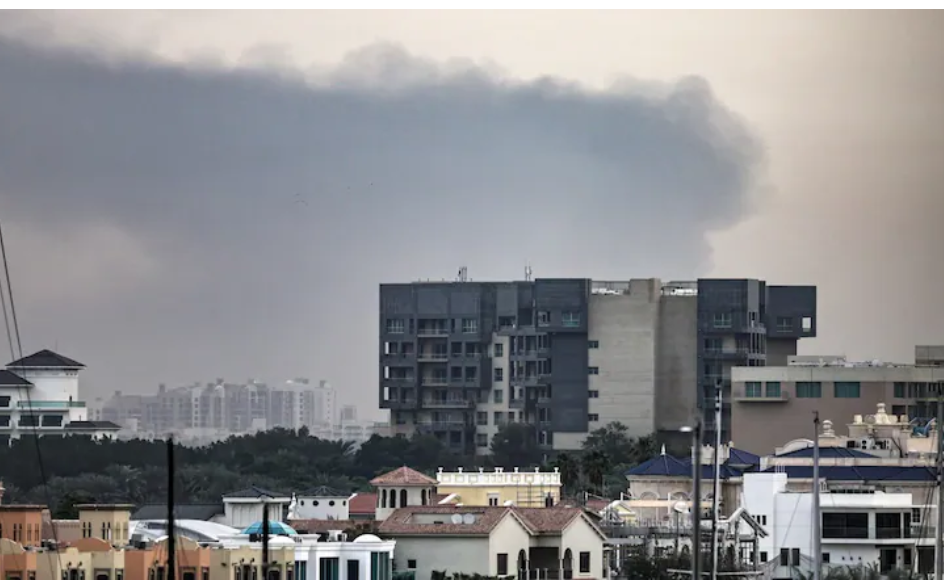
A building in the financial district of Dubai was struck by debris from an intercepted aerial attack on Friday, marking the second such incident reported in less than 24 hours as tensions continue during the ongoing conflict involving the United States, Israel and Iran.

Authorities confirmed that debris from a successful interception hit the façade of a building in central Dubai. According to an official statement shared by the Dubai Media Office on social media platform X, the situation was quickly brought under control. Officials also said there was no fire and no injuries reported in the incident.

Witnesses described hearing a powerful blast in the area around the Dubai International Financial Centre (DIFC), one of the emirate’s busiest financial hubs. A resident living nearby told media that the sound was the loudest they had ever heard and initially feared something catastrophic had happened.

Another correspondent reported hearing a massive double explosion that shook surrounding buildings and left a cloud of black smoke hanging over the district for some time before the situation stabilised.

Drone hits US embassy complex in Baghdad

In a separate development, a drone struck the United States Embassy Baghdad in Baghdad, according to Iraqi security officials. Media present near the area reported seeing smoke rising from inside the diplomatic compound after the strike.

Security sources confirmed that the drone attack directly targeted the embassy complex. Details about damage or casualties were not immediately available.

The attack occurred shortly after two strikes targeted positions linked to the Iran-backed group Kataeb Hezbollah. Security officials said the strikes killed two members of the group, including what was described as a key figure.

According to one security source, a missile hit a house used by the group at around 2:15 am local time. The source added that the strike resulted in the death of a senior member, while two others were wounded.

The incidents in Dubai and Baghdad come as the wider regional conflict involving the United States, Israel and Iran continues to escalate into its 15th day, raising concerns about the spread of hostilities across the Middle East.

Continue Reading

Latest world news

US KC-135 refuelling aircraft crashes in Iraq amid ongoing Iran war

A US KC-135 refuelling aircraft crashed in western Iraq during the ongoing Iran war, marking the fourth American aircraft lost in the conflict, according to the US military.
Published

on

us millitary aircraft crash

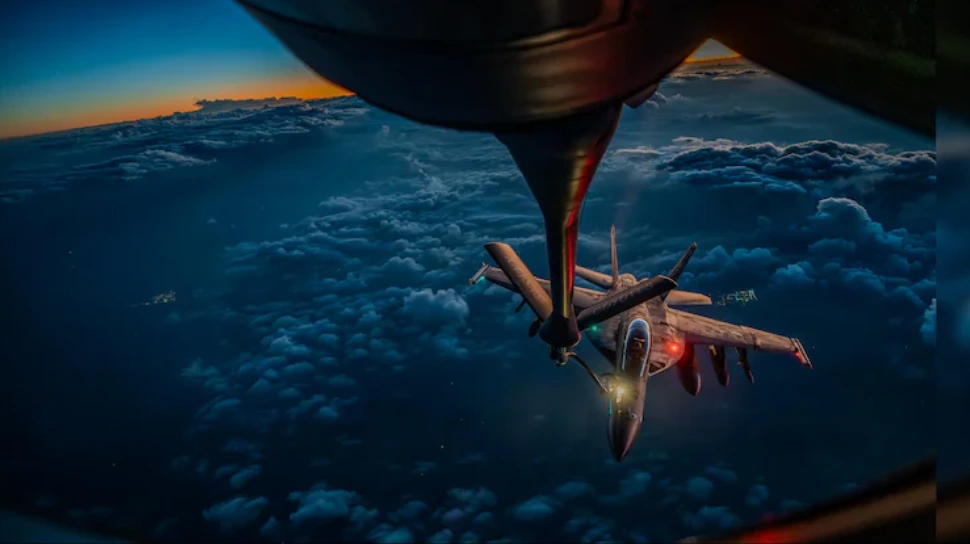
The United States military has confirmed that one of its aerial refuelling aircraft crashed in western Iraq, marking the fourth American aircraft lost since the start of the current conflict involving Iran.

According to a statement issued by United States Central Command (CENTCOM), the incident involved a Boeing KC-135 Stratotanker. The military said one aircraft went down in western Iraq, while another aircraft linked to the situation was able to land safely.

CENTCOM clarified that the crash was not the result of hostile fire or friendly fire, though details about the cause of the incident have not yet been disclosed.

Fourth US aircraft lost in the conflict

The crash makes the KC-135 the fourth American military aircraft lost since the beginning of the war in the Middle East, which started on February 28.

Earlier in the conflict, three McDonnell Douglas F-15E Strike Eagle fighter jets were mistakenly shot down by forces from Kuwait in what the US military described as friendly fire. Despite the loss of the aircraft, all six crew members from those jets managed to eject safely.

CENTCOM had earlier said the incident happened during intense combat operations that included attacks from Iranian aircraft as well as ballistic missiles and drones.

KC-135 aircraft and crew details

The KC-135 aerial refuelling aircraft has been in service for more than six decades and plays a key role in extending the range and endurance of US military aircraft during operations.

Typically, the aircraft operates with a three-member crew, consisting of a pilot, a co-pilot and a boom operator responsible for refuelling other aircraft mid-air. However, certain missions may require a navigator, and the aircraft can carry up to 37 passengers, according to information provided by the US Air Force.

Authorities have not yet released information about the crew involved in the latest crash or whether there were casualties.

Continue Reading

Latest world news

Mojtaba Khamenei named Iran’s new supreme leader after death of Ali Khamenei

Iran’s Assembly of Experts has selected Mojtaba Khamenei as the country’s new supreme leader following the death of Ali Khamenei amid escalating regional conflict.
Published

on

Mojtaba

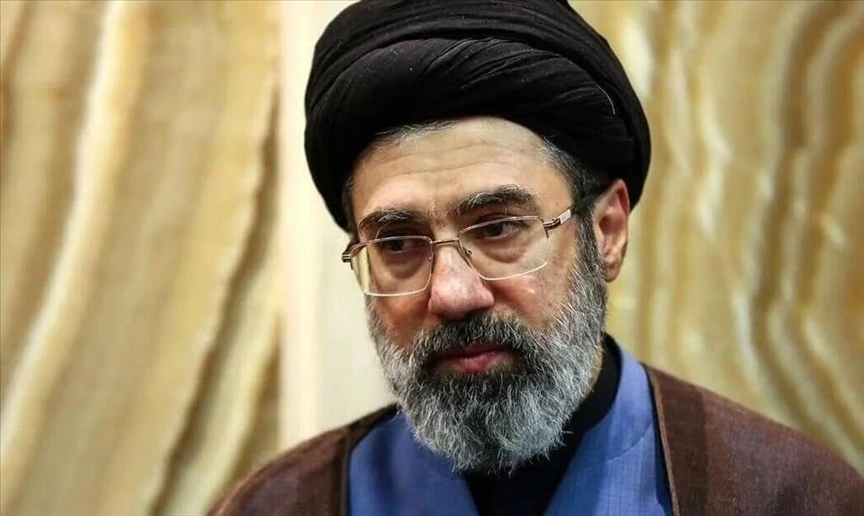
Mojtaba Khamenei has been appointed the new Supreme Leader of Iran, replacing his father Ali Khamenei, according to state media reports.

The decision was taken by the Assembly of Experts, an 88-member council responsible for selecting the country’s supreme leader. The body said it had chosen Mojtaba Khamenei through a decisive vote, naming him the third leader of the Islamic Republic.

Mojtaba Khamenei, a mid-ranking cleric with strong connections within Iran’s security establishment, had long been seen as a potential successor to his father. His influence within the powerful Revolutionary Guards and networks associated with his father’s office had made him a prominent figure in Iran’s political structure.

His appointment comes amid a sharp escalation in tensions in the region. Ali Khamenei was reportedly killed in strikes carried out during the ongoing conflict involving Iran, the United States and Israel. The situation has led to rising hostilities and military exchanges in recent days.

The role of supreme leader in Iran carries ultimate authority over key state institutions, including the military, judiciary and major political decisions.

The development may further strain relations between Tehran and Washington. Donald Trump recently said the United States should have a say in who leads Iran, a remark likely to draw criticism from Iranian authorities.

Meanwhile, fighting linked to the conflict has continued across the region. Strikes targeting infrastructure in Tehran have caused fires at fuel facilities, sending thick smoke into the sky and raising environmental concerns.

Iranian officials have condemned the attacks as dangerous escalation, while Israeli authorities have defended the strikes, saying the targeted facilities were connected to Iran’s military operations.

As the conflict continues, Iran’s new leadership now faces the challenge of navigating both internal political pressures and rising regional tensions.

Continue Reading

Trending

© Copyright 2022 APNLIVE.com