
Latest world news
“Two Muslims Near The Very Top In British Politics”


~By Saeed Naqvi
The three column, six inch deep headline on page 1 of the Daily Telegraph caught my eye:
“Doors open to thousands more skilled migrants.” Given the anti-immigrant rhetoric I had heard in Rome and elsewhere in Europe, the headline was refreshing. Even more noticeable was the name of the Home Secretary, Sajid Javid, the third highest ranked member of Prime Minister Theresa May’s cabinet who had reversed policy with the statement which formed the headline.
The 48 year old son of Pakistani migrants who started business with £ 500 bank loan had already established his clubability with the Conservative Party when he became Managing Director of Deutsche Bank.
Of comparable agility in the political race is the high profile Mayor of London, Sadiq Khan, of the Labour party. He is only 41 but has already graduated through a stint in the cabinet as Transport Minister. “I am the first Muslim in Britain to have attended cabinet meetings” Khan said with pride.
One of the obstacles in the way of Donald Trump making a state visit in 2017, a banquet with the Queen et al, was the Conservative Party’s very bipartisan objection: how can we host a US President who has imposed restrictions on citizens of Muslim countries? “We have a Muslim mayor and therefore a state visit by Trump is out of the question.”
“There are two Muslims in this country who are positioned to make a bid for the Prime Minister’s post” said Lord Meghnad Desai. He was chairing a discussion on “India at 70: Nehru to Modi” in Committee Room 1 of the House of Lords. Instantly a question surfaced: can a Muslim nurse such aspirations back home where he has a history for a 1000 year?

Last year, at a similar seminar at the King’s College, London, someone pointed to the presence of four Muslims in the English cricket team. This time I find that even the ever present Moeen Ali, with a beard longer than W.G. Grace’s, is not in the squad. This waxing and waning is itself proof of a consistent quest for merit. It is not just a blanket upward mobility that Muslims have acquired: a process of distillation is taking place.
The post 9/11 war on terror which distorted most democracies by transferring extraordinary powers to the Deep State, did not leave Britain unscathed. But persistent reliance on the Rule of Law has kept prejudice from taking root at an institutional level. The brief travel I have undertaken from London to Manchester has been something of an eye opener.
A distinguished psychiatrist with the National Health Service married to my sister, has been bed ridden with a stroke he suffered three years ago. The care he has received in hospitals has to be seen to be believed. He is under 24/7 observation. The four very English “carers” who visit him round the clock have virtually become members of the family. It would be malicious to put it down to the aromatic cuisines my sister rustles up every time the carers arrive.
One evening I was invited to a “All Faith”, post Iftar talk on a theme which surprised me because of its incongruity: the “wave of Populism in Europe”. It was all very graceful.
Earlier in London, I had seen Labour leader Jeremy Corbyn, the local Rabbi and Priests of various churches, breaking bread with their hosts at a “street Iftar Party” outside Finsbury Park mosque. The enthusiastic white, English participation in the event was heartwarming.
The war on terror with its random targets did cast the Muslim in an unfortunate image particularly during the Tony Blair years. But excesses of those years also filled the ordinary people with a sense of guilt and compassion.
This somewhat exclusive focus on the Muslim in Britain must not obscure the overall south Asian profile in the country. A recent study produced a very negative image of Pakistanis among the public. 1,668 British adults were asked last month to indicate the extent to which Indians, Bangladeshis and Pakistanis made a positive or negative contribution to life in UK. The image of Indians was by far the most positive. 25 percent of those asked thought that Indians made a positive contribution. When positive and the negative figures were placed side by side for Bangladeshis and Pakistanis their score was -4 (minus four) and -3 (minus three) respectively.
Obviously proportionate to their population in the country, there are fewer Muslims in the high aspirational bracket than there are Indians, mostly Hindus in diverse careers. This imbalance can be traced to India’s social history. The majority community took to western education in late 19thcentury itself while Muslims remained anchored to feudal nostalgia and their rich Urdu culture.
I, in my earlier years, have seen this country rattled by Enoch Powell’s anti-immigrant speech in 1968, exactly 50 years ago: “Like the Roman, I see the Tiber foaming with blood.” The Liberal press reached out for Powell’s jugular and for a while Powellism appeared to be receding. But soon enough the country experienced another bout of street racism. “Paki bashing” became the war cry in the run down parts of the country. But such upheavals never unhinged Britain from its basic anchor: the Rule of Law. It is this anchor which has been the primary enabling factor in Sajid Javid and Sadiq Khan’s rise.
It may be instructive for us in India that Britain is a very resilient Protestant monarchy which overseas secularism tied with hoops of steel to the Rule of Law.
It would be absurd to compare apples and oranges. The bewildering variety of our civilizational tapestry is unique. Even so our trajectory could have borne some resemblance to “genuine equal rights”, a phenomena Britain can boast of. Instead our politicians dissembled at the very outset leading us into a messy path. I shall explain.




Latest world news
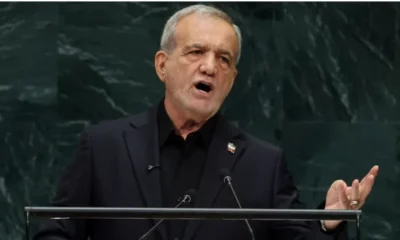
Iranian President Pezeshkian at UN says Iranians have been victims of US terrorism
Iranian President Masoud Pezeshkian said at the UN General Assembly that Iranians had been victims of US terrorism and insisted that Iran had acted in self-defence.

Latest world news
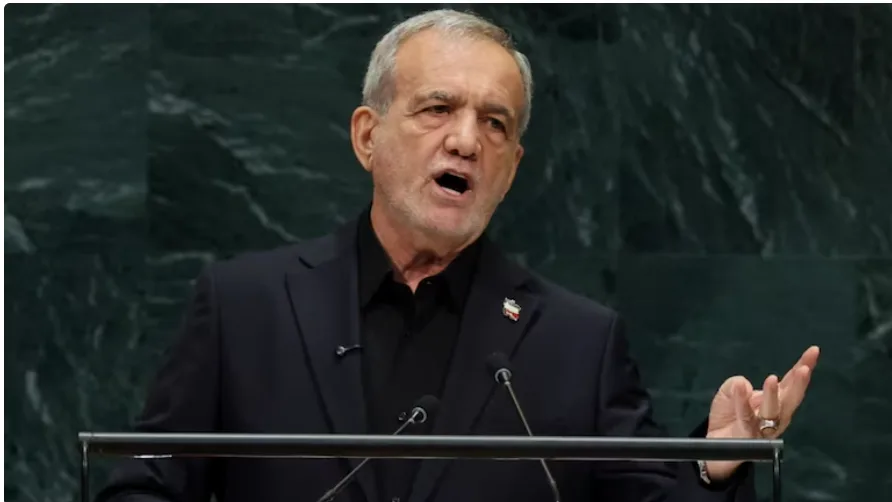
PM Modi’s Canada visit could help wrap trade talks, says Canada PM Mark Carney
Canadian PM Mark Carney said he is looking forward to hosting PM Narendra Modi, with both countries aiming to conclude their ongoing trade negotiations.
Latest world news
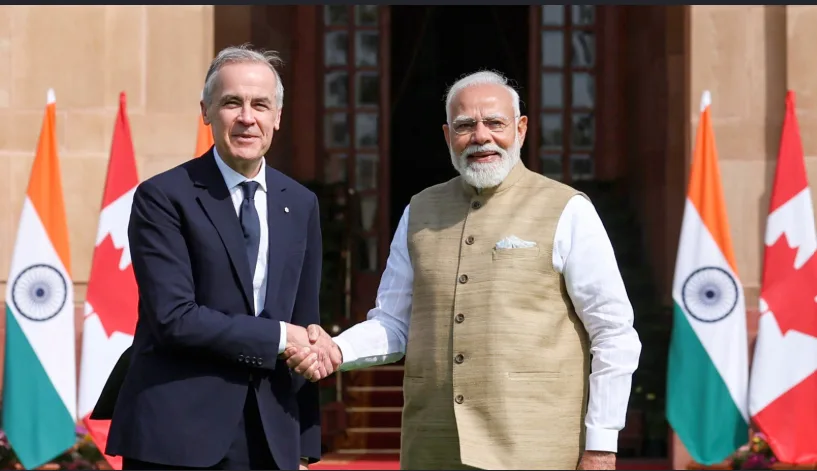
Trump issues fresh Iran warning at UN General Assembly, signals deal after midterms
US President Donald Trump issued a fresh warning to Iran during his UN General Assembly address, saying he faces a choice between a deal and further escalation.

Assam makes Muslim marriage registration compulsory under new rules
Akhilesh Yadav launches SP’s 2027 UP poll campaign from Rahul Gandhi’s seat

Trump-Xi Summit: Trade, Taiwan and AI among key takeaways

Congress protests against Gyanesh Kumar, demands Election chief’s resignation

Women wrestlers challenge Brij Bhushan’s acquittal in sexual harassment case

Veeramani POCSO case: Vijay questions Stalin over earlier probe
Women wrestlers challenge Brij Bhushan’s acquittal in sexual harassment case
Congress protests against Gyanesh Kumar, demands Election chief’s resignation
Assam makes Muslim marriage registration compulsory under new rules
Trump-Xi Summit: Trade, Taiwan and AI among key takeaways

Afghan Men Try To Hang With The Jet Engine Of The Aircraft in Kabul- Afghanistan News – Kabul News
Trending Top 10 News: 10000 Crore Fine on Flipkart, Apple to Launch Unique Feature, Hdfc Bank Job Ad

Trending Top 10 News: Nokia 6310, Apple sales, Bachpan ka Pyar Video Kid, Dainik Bhaskar IT Raid

Trending Top 10 News: Canada bans Indian flights, Rain in Delhi NCR, AIMIM Twitter hacked, Raj Kundra case

Trending Top 10 News: Shein India, Apple New Service, Pocket Oxygen, Oppo Launched New Phone
-
 India News21 hours ago
Assam makes Muslim marriage registration compulsory under new rules
-
India News21 hours ago
Akhilesh Yadav launches SP’s 2027 UP poll campaign from Rahul Gandhi’s seat
-
 India News21 hours ago
Trump-Xi Summit: Trade, Taiwan and AI among key takeaways
-
 India News12 hours ago
Congress protests against Gyanesh Kumar, demands Election chief’s resignation
-
 India News11 hours ago
Women wrestlers challenge Brij Bhushan’s acquittal in sexual harassment case
-
 India News11 hours ago
Veeramani POCSO case: Vijay questions Stalin over earlier probe
