
Latest world news
North Korean Leader Kim meets China’s Xi in Beijing


This might be part of preparation before Kim’s meet with Moon and Trump
In his first visit out of his country since assuming office in 2011, North Korean leader Kim Jong Un has been in China for three days on his unofficial visit and met President Xi Jinping who assured him of upholding friendship with its isolated neighbour.
According to Reuters, China said on Wednesday after the historic meeting that Kim Jong Un, on his part, pledged to denuclearize and meet U.S. officials.
Earlier world media was speculating Kim Jong Un’s presence in Beijing because of arrival of a particular train from Pyongyang. On Wednesday, China and North Korea confirmed that Kim had visited Beijing and met Xi during what China’s Foreign Ministry called an unofficial visit from Sunday to Wednesday.
Analysts believe that the meeting between the two leaders might be part of the preparation for Kim Jong Un’s proposed summits with South Korea and the United States.
Read More: Trump sees North-South Korea talks positive
However, North Korea’s KCNA news agency has not confirmed Kim’s pledge to denuclearize, or his anticipated meeting with U.S. President Donald Trump that is planned for some time in May.
China’s Foreign Ministry cited Kim in a lengthy statement as telling Xi that the situation on the Korean peninsula was starting to improve because North Korea had taken the initiative to ease tensions and put forward proposals for peace talks.
According to Xinhua, Li Keqiang, Chinese premier, Wang Huning, member of the Standing Committee of the Political Bureau of the CPC Central Committee and Chinese Vice President Wang Qishan attended “related activities”.
Read More: North Korean leader Kim meets South Korean high ranking officials
Xi said Kim’s current visit to China fully embodied the great importance that Comrade Chairman and the Workers Party of Korea (WPK) Central Committee have attached to the relations between the two countries and the two parties. “We speak highly of this visit,” Xi told Kim.
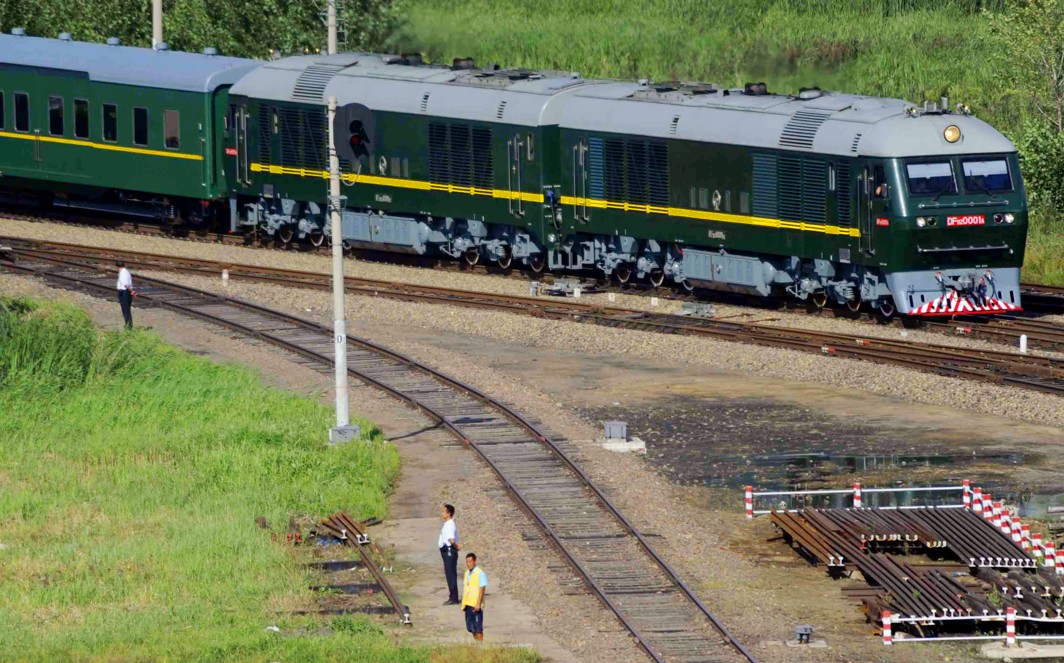 North Korean leader Kim Jong Un said that a series of major and happy events have taken place consecutively in China recently, as the 19th Communist Party of China (CPC) National Congress was held victoriously last year, and the annual sessions of the National People’s Congress and the National Committee of the Chinese People’s Political Consultative Conference were successfully held not long ago.
Read More: North Korea skips secret meeting with Mike Pence
Kim further said that Comrade Xi Jinping enjoyed the support of the CPC and the people of the whole country, became the core of the leadership and was re-elected Chinese president and CMC chairman. He said it is his obligation to come to congratulate Xi in person, in line with the DPRK-China friendly tradition.
North Korean leader said that at present, the Korean Peninsula situation is developing rapidly and many important changes have taken place. He felt he should come in time to inform Comrade General Secretary Xi Jinping in person the situation out of comradeship and moral responsibility.
Xi said the China-DPRK traditional friendship, established and cultivated meticulously by the elder generations of leaders of both parties and both countries, who trusted and supported each other, and wrote a fine story in the history of international relations.
“Both Comrade Chairman and I have personally experienced and witnessed the development of China-DPRK relationship,” said Xi, adding that both sides have stated repeatedly that traditional China-DPRK friendship should be passed on continuously and developed better.
Describing the depth and strength in ties between the two countries Xi Jinping said, “This is a strategic choice and the only right choice both sides have made based on history and reality, the international and regional structure and the general situation of China-DPRK ties. This should not and will not change because of any single event at a particular time.”
CNN reports from Hong Kong that a surprise visit of Kim Jong Un to Beijing may indicate Pyongyang’s need for support from its closest ally ahead of upcoming summit with South Korea and US.
Read More: South Korea President to meet Kim Jong Un sister
It further said that observers had said that it would have been highly unusual for him to meet US President donad Trump without Xi first.
China is North Korea’s number one trading and economic partner, and is Pyongyang’s only major military ally.
Aidan Foster-Carter, an honorary senior research fellow at Leeds university, said it would have been almost unthinkable for Kim to meet with South Korean President Moon Jae-in, due next month, and US President Donald Trump in May next.
Read More: UN Secretary General welcomes North-South Korea talks
Since North and South Korea reopened diplomatic ties in February, Kim Jong Un has been working hard for a Korean solution to the ongoing crisis.
China and Korea have been allies since the Korean War, when Mao Zedong sent troops tp support Kim’s grandfather Kim II Sung and still maintain a mutual defence treaty pledging for :immediate render military and other assistance by all means at its disposal” in the event of war or foreign attack.
Beijing has traditionally been the closest ally of secretive North Korea, but ties have been frayed by Pyongyang’s pursuit of nuclear weapons and China’s backing of tough U.N. sanctions in response.





Latest world news
Magnitude 7 earthquake strikes Tibet after floods
A magnitude 7 earthquake struck northern Tibet on Thursday, October 22. The tremor came weeks after deadly flash floods and landslides hit the mountainous region near the Nepal-China border. Initial reports did not confirm casualties or damage from the earthquake.


Latest world news
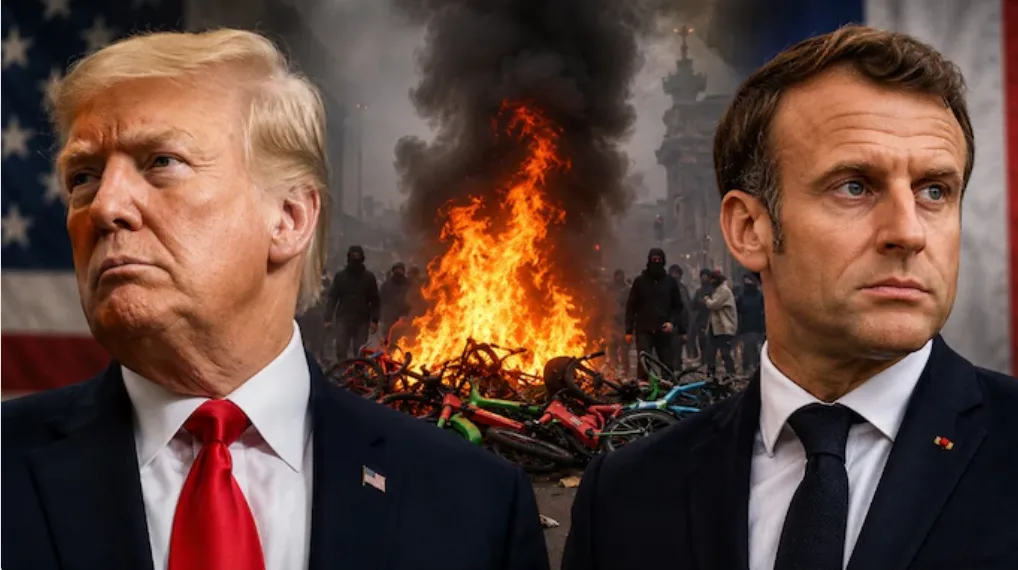
Macron rejects Trump’s immigration claims over France riots
French President Emmanuel Macron criticised Donald Trump and other foreign leaders over their comments on France’s recent unrest. Macron rejected claims that the country was being overrun by migrants and Islamists, calling such assertions false.
Latest world news
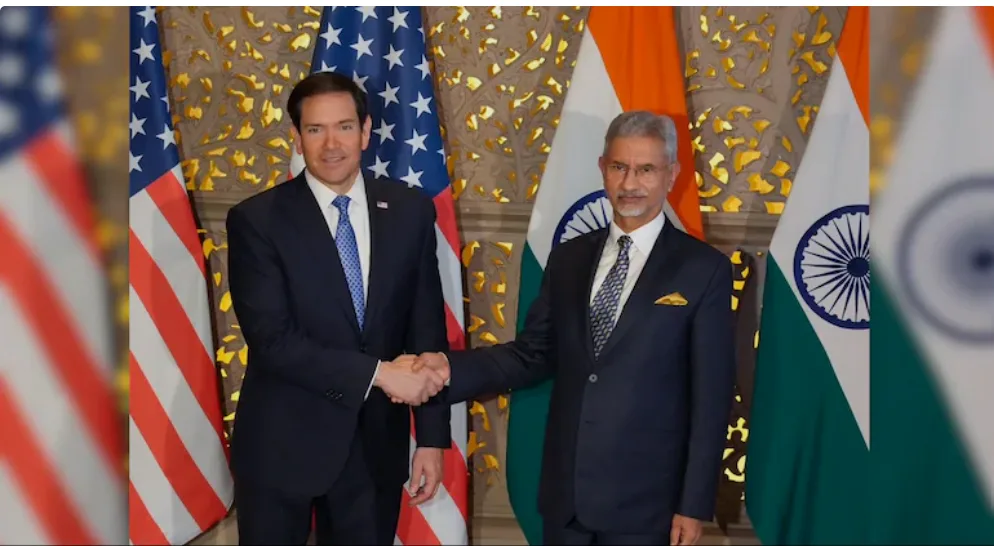
Marco Rubio says India and US share extraordinary alignment on key issues
US Secretary of State Marco Rubio said India and the United States share an extraordinary alignment on core issues, even though disagreements between the two countries may arise.

Punjab strike hits public services as 3 lakh employees and roadways workers protest

Two election commissioners complained against senior poll officer, RTI reveals

Om Prakash Mathur sworn in as Keralam Governor

PM Modi to inaugurate Rs 169-crore RBI data centre in Odisha on October 25

Delhi High Court rejects Neha Bora’s plea against peace bond notice

MEA responds after ITBP chief flags ongoing face-offs with China in Arunachal
Delhi High Court rejects Neha Bora’s plea against peace bond notice
PM Modi to inaugurate Rs 169-crore RBI data centre in Odisha on October 25
Om Prakash Mathur sworn in as Keralam Governor
Two election commissioners complained against senior poll officer, RTI reveals

Afghan Men Try To Hang With The Jet Engine Of The Aircraft in Kabul- Afghanistan News – Kabul News
Trending Top 10 News: 10000 Crore Fine on Flipkart, Apple to Launch Unique Feature, Hdfc Bank Job Ad

Trending Top 10 News: Nokia 6310, Apple sales, Bachpan ka Pyar Video Kid, Dainik Bhaskar IT Raid

Trending Top 10 News: Canada bans Indian flights, Rain in Delhi NCR, AIMIM Twitter hacked, Raj Kundra case

Trending Top 10 News: Shein India, Apple New Service, Pocket Oxygen, Oppo Launched New Phone
-
 India News13 hours ago
Punjab strike hits public services as 3 lakh employees and roadways workers protest
-
 India News13 hours ago
Two election commissioners complained against senior poll officer, RTI reveals
-
 India News2 hours ago
Om Prakash Mathur sworn in as Keralam Governor
-
 India News2 hours ago
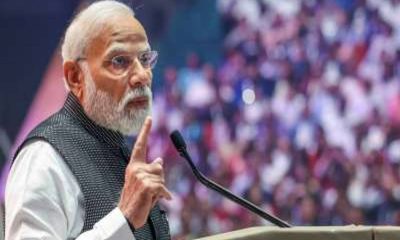
PM Modi to inaugurate Rs 169-crore RBI data centre in Odisha on October 25
-
 India News42 mins ago
Delhi High Court rejects Neha Bora’s plea against peace bond notice
-
 India News14 mins ago
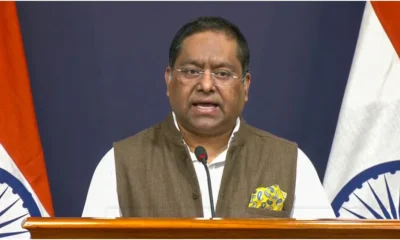
MEA responds after ITBP chief flags ongoing face-offs with China in Arunachal
