
Latest world news
North Korea’s former spy chief Kim Yong-chol travels to US


Preparations for Trump-Kim summit continue
The preparations for US President Donald Trump and North Korean leader Kim Jong-un summit seems to be progressing well. Tuesday witnessed North Korea’s former spy chief Kim Yong-chol at Beijing international airport heading to the United States for talks.
Kim Yong-chol, a senior official with close ties to the North Korean leader, was seen by journalists who reported he was on his way to the US. He is considered to be Kim Jong-un’s right-hand man and serves as the vice central committee chairman of the North’s ruling Workers’ Party.
Read More: Singapore may host Trump-Kim-Moon tripartite Summit?
US President Donald Trump confirmed Kim Yong-chol’s destination though his tweet post.
We have put a great team together for our talks with North Korea. Meetings are currently taking place concerning Summit, and more. Kim Young Chol, the Vice Chairman of North Korea, heading now to New York. Solid response to my letter, thank you!
— Donald J. Trump (@realDonaldTrump) May 29, 2018
South Korea’s Yonhap news agency has also reported Tuesday morning that Kim Yong-chol arrived in Beijing on Tuesday morning and reserved a flight to New York City. The agency said it is “widely expected” that Kim would travel to the US “to reciprocate recent visits” by US Secretary of State Mike Pompeo.
 Chung Sung-yoon, an analyst at the Seoul based Korea Institute for National Unification, said Kim Yong-chol would be the most senior North Korean official to step onto US soil since 2000. Vice Marshall Jo Myong-rok met then-president Bill Clinton in that year.
Kim Yong-chol was also seen sitting just metres away from Ivanka Trump at the Olympic Games in Pyeongchang, South Korea in February this year.
Read More: North Korea: will not beg the US for dialogue
On Thursday last Donald Trump cancelled the first-ever meeting between US and North Korean leaders only to change his mind a day later.
On Tuesday, South Korea’s foreign ministry said it will focus “all efforts” to lay the groundwork for the success of ongoing diplomacy with the North. “We will closely monitor the situation and play every role we can,” ministry spokesman Noh Kyu-duk was quoted as saying.
Read More: Trump-Kim Summit not happening on June 12
On Monday, veteran American diplomat Sung Kim led an American delegation to Panmunjom at the demilitarised zone (DMZ) for talks with North Korean officials. Reports said that talks continued until Tuesday.
Read More: Surprise: North-South Korean leaders held “sudden meeting”
American officials are skeptical that North Korea will ever entirely abandon its nuclear weapons, and South Korean President Moon Jae-in said North Korea isn’t convinced it can trust security guarantees from the US.
Observers believe that recent Trump’s announcement of withdrawing from Iran nuclear deal has caused a huge dent on US image. It has become difficult to trust US administration after Washington’s withdrawal from a multilateral agreement.




Latest world news
S Jaishankar says India is a natural option for Russia amid Europe tensions
External Affairs Minister S Jaishankar said India remained a natural option for Russia as Moscow increasingly turned towards Asia amid strained relations with Europe. He highlighted the continuity of India-Russia ties and their significance for the balance of power in Asia.


Latest world news
Putin praises PM Modi, says he has very good ideas on Ukraine war
Russian President Vladimir Putin has praised Prime Minister Narendra Modi for repeatedly raising the need to end the Ukraine war, describing his ideas for a settlement as “very good”.

Latest world news
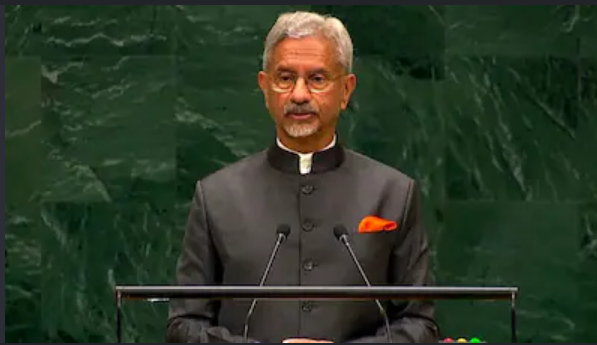
S Jaishankar calls Pakistan a “serial practitioner of terrorism” at UN
S Jaishankar criticised Pakistan at the UN General Assembly, referring to a “serial practitioner of terrorism” and warning against attempts to normalise terrorism.

Dhruv Rathee gets fresh summons in 2018 BJP IT cell video case

Nobody can browbeat judiciary, Chief Justice warns over Rahul Gandhi’s march

India-US trade deal first phase finalised, drafting underway

Election Commission orders voter roll revision in 17 states, UTs

Actor Imran Khan asked to leave India after CJP protest

Delhi Police offers 11-person limit for CJP’s Connaught Place protest
Actor Imran Khan asked to leave India after CJP protest
Election Commission orders voter roll revision in 17 states, UTs
India-US trade deal first phase finalised, drafting underway
Nobody can browbeat judiciary, Chief Justice warns over Rahul Gandhi’s march

Afghan Men Try To Hang With The Jet Engine Of The Aircraft in Kabul- Afghanistan News – Kabul News
Trending Top 10 News: 10000 Crore Fine on Flipkart, Apple to Launch Unique Feature, Hdfc Bank Job Ad

Trending Top 10 News: Nokia 6310, Apple sales, Bachpan ka Pyar Video Kid, Dainik Bhaskar IT Raid

Trending Top 10 News: Canada bans Indian flights, Rain in Delhi NCR, AIMIM Twitter hacked, Raj Kundra case

Trending Top 10 News: Shein India, Apple New Service, Pocket Oxygen, Oppo Launched New Phone
-
 India News13 hours ago
Dhruv Rathee gets fresh summons in 2018 BJP IT cell video case
-
 India News10 hours ago
Nobody can browbeat judiciary, Chief Justice warns over Rahul Gandhi’s march
-
 India News6 hours ago
India-US trade deal first phase finalised, drafting underway
-
 India News3 hours ago
Election Commission orders voter roll revision in 17 states, UTs
-
 India News3 hours ago
Actor Imran Khan asked to leave India after CJP protest
-
 India News2 hours ago
Delhi Police offers 11-person limit for CJP’s Connaught Place protest
