
Latest world news
South Korea divided on future of US forces presence


The conflicting opinions on the future of US forces in South Korea after the probable peace agreement between North and South Korea have emerged in Seoul. President Moon Jae-in, who recently set with Kim Jong Un, the North Korean leader in a historic summit, has clarified that presence of US forces have nothing to do with the peace treaty.
According to Seoul based Korea Times, President Moon Jae-in, has warned his special advisor on security and unification Moon Chung-in over his claims that US would have to withdraw its troops from South Korea if a peace treaty was signed.
Read More: North and South come closer on Korean Peninsula
Moon Chung-in, security and reunification advisor to the President Moon Jae-in, has recently written an op-ed article published in US based Foreign Affairs, on Monday. He said, “What will happen to U.S. forces in South Korea if a peace treaty is signed? It will be difficult to justify their continuing presence in South Korea after its adoption. But there will be a strong conservative opposition to the reduction and withdrawal of U.S. forces, posing a major political dilemma for Moon (Jae-in).”

The article triggered a huge backlash from conservative politicians in Seoul who, in return, urged President Moon Jae-in to sack his advisor immediately.
An official associated with President House known as Blue House or Cheong Wa Dae, said, “We don’t want unnecessary confusion to be created.” He indicated the need for Seoul to take a cautious stance at a critical moment when the outcome of the inter-Korean summit should lead to the successful outcome of the Trump-Kim summit for complete denuclearization of the peninsula.
Read More: US, China welcome N Korea halt on Nuclear, Missile tests
Korea Times reports that after Kim Jong-un expressed his intention to discard his nuclear weapons, conservative politicians in Seoul and some Korean affairs experts abroad voiced the opinion that the North Korean leader may want the withdrawal of the US forces in return.
The South Korean official said that Washington has not made any comment about the US Forces Korea (USFK). He added the leaders of the two Koreas also did not talk about this issue during their summit.
He further said, “We believe the USFK are needed (even after a peace treaty is signed) as a mediator in the military configuration of regional powers including China and Japan.” The official said that President’s office is not considering stripping Moon Chung-in of his special advisor status.
Korea Times reports that his is not the first time the presidential office has given warning to Moon Chung-in, Presidential advisor on security and reunification, for expressing his opinion different from the Moon Jae-in government.
Prior to the summit between US President Donald Trump and South Korean President Moon Jae-in, Moon Chung-in, while speaking in a seminar in Washington said that the joint military drills may be scaled down and the frequency of the dispatch of US strategic assets to the peninsula may be reduced if North Korea stops its nuclear and missile programs.
Moon Chang-in was told to refrain from making such comments, which it viewed would not help improve Seoul-Washington relations.





Latest world news
S Jaishankar says India is a natural option for Russia amid Europe tensions
External Affairs Minister S Jaishankar said India remained a natural option for Russia as Moscow increasingly turned towards Asia amid strained relations with Europe. He highlighted the continuity of India-Russia ties and their significance for the balance of power in Asia.


Latest world news
Putin praises PM Modi, says he has very good ideas on Ukraine war
Russian President Vladimir Putin has praised Prime Minister Narendra Modi for repeatedly raising the need to end the Ukraine war, describing his ideas for a settlement as “very good”.

Latest world news
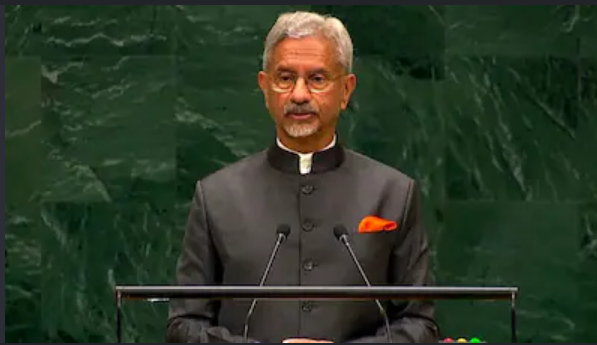
S Jaishankar calls Pakistan a “serial practitioner of terrorism” at UN
S Jaishankar criticised Pakistan at the UN General Assembly, referring to a “serial practitioner of terrorism” and warning against attempts to normalise terrorism.

Dhruv Rathee gets fresh summons in 2018 BJP IT cell video case

Nobody can browbeat judiciary, Chief Justice warns over Rahul Gandhi’s march

India-US trade deal first phase finalised, drafting underway

Election Commission orders voter roll revision in 17 states, UTs

Actor Imran Khan asked to leave India after CJP protest

Delhi Police offers 11-person limit for CJP’s Connaught Place protest
Actor Imran Khan asked to leave India after CJP protest
Election Commission orders voter roll revision in 17 states, UTs
India-US trade deal first phase finalised, drafting underway
Nobody can browbeat judiciary, Chief Justice warns over Rahul Gandhi’s march

Afghan Men Try To Hang With The Jet Engine Of The Aircraft in Kabul- Afghanistan News – Kabul News
Trending Top 10 News: 10000 Crore Fine on Flipkart, Apple to Launch Unique Feature, Hdfc Bank Job Ad

Trending Top 10 News: Nokia 6310, Apple sales, Bachpan ka Pyar Video Kid, Dainik Bhaskar IT Raid

Trending Top 10 News: Canada bans Indian flights, Rain in Delhi NCR, AIMIM Twitter hacked, Raj Kundra case

Trending Top 10 News: Shein India, Apple New Service, Pocket Oxygen, Oppo Launched New Phone
-
 India News18 hours ago
Dhruv Rathee gets fresh summons in 2018 BJP IT cell video case
-
 India News15 hours ago
Nobody can browbeat judiciary, Chief Justice warns over Rahul Gandhi’s march
-
 India News10 hours ago
India-US trade deal first phase finalised, drafting underway
-
 India News8 hours ago
Election Commission orders voter roll revision in 17 states, UTs
-
 India News7 hours ago
Actor Imran Khan asked to leave India after CJP protest
-
 India News6 hours ago
Delhi Police offers 11-person limit for CJP’s Connaught Place protest
