Latest world news
Trump-Kim Summit in jeopardy after US-South Korea drill


Reluctant Kim Jong-un suspends talks with South Korea
Reacting to the US-South Korea largest ever “2018 Max Thunder” joint drill throughout South Korea since May 11, in an alleged bid “to make a preemptive air-strike at North Korea”, Kim Jong-un has suspended high level talks with South scheduled for Wednesday and has also thrown doubt over Trump-Kim Summit scheduled to be held on June 12 in Singapore.
North Korean state media quoted vice foreign minister Kim Kye-gwan saying that If America “corners us and unilaterally demands we give up nuclear weapons we will no longer have an interest in talks and will have to reconsider whether we will accept the upcoming DPRK-US summit”.
North Korea believes that the military exercise threatens warming ties on the divided peninsula.
North Korea’s official Korean Central News Agency (KCNA) said, “The U.S. will have to think twice about the fate of the DPRK-U.S. summit now on high agenda before a provocative military racket against the DPRK in league with the South Korean authorities.” It further said, “We will closely watch the ensuing behaviour of the U.S. and the south Korean authorities”.
Read More: Trump: Time and Place for Summit with Kim Jong-un is fixed
The KCNA describes the US-South Korea exercise saying, “Involved in the drill are over 100 fighters of various missions including B-52 strategic nuclear bombers and F-22 Raptor stealth fighters under the supervision of the U.S. imperialist aggressor forces in South Korea and the South Korean air force. It is to last till May 25.”
A high level meeting was scheduled to be held on Wednesday. Earlier the Unification Ministry, said in a statement, “The South and North will hold a high-level inter-Korea meeting on May 16 in the Peace House in Panmunjom, to discuss the implementation of ‘Panmunjom Declaration for Peace, Prosperity, and Unification of the Korean Peninsula.”
 The meeting was also being considered as a prelude to the historic meeting between the North Korean leader Kim Jong-un and the US President Donald Trump.
Read More: Trump reach airport to welcome US prisoners from North Korea
The official news agency said “Public opinions at home and abroad comment that the manoeuvre is the largest-ever and a reflection of the invariable stand of the U.S. and South Korea to persist in the “maximum pressure and sanctions” against the DPRK (North Korea).”
Earlier, Kim Kye Gwan, North Korea’s first vice minister in the Ministry of Foreign Affairs, was quoted in an article saying the US said “it would offer economic compensation and benefit in case we abandon (nuclear weapons).We have never had any expectation of US support in carrying out our economic construction and will not… make such a deal in future.”
North Korean official further said that if the Trump administration was “genuinely committed to improving ties with Pyongyang, they will receive a deserving response. But if they try to push us into a corner and force only unilateral nuclear abandonment, we will no longer be interested in that kind of talks and will have to reconsider … the upcoming summit.”
Read More: North Korea criticize US for misleading and provocative move
In a related development, South Korean foreign minister Kang Kyung-hwa spoke with US Secretary of State Mike Pompeo early Wednesday morning. During the conversation Pompeo has reportedly said that the preparations would continue for the Trump-Kim summit, “keeping in mid this action of the North.”
A statement issued by South Korea said, “Minister Kang and Secretary Pompeo agreed to continue close cooperation between South Korea and the United States to achieve a complete denuclearization and peace settlement on the Korean Peninsula.”
Over the weekend, Pompeo said that the US is pushing for North Korea to fully and irreversibly dismantle its nuclear program. In return US would aid North Korean economy by lifting sanctions and allowing private capital to flow into the country.
Read More: North and South come closer on Korean Peninsula
US President Donald Trump has recently been isolated on two counts: withdrawal from Iran nuclear deal signed by Iran and P5+1 in 2015 and on relocating its embassy from Tel Aviv to Jerusalem.






Latest world news
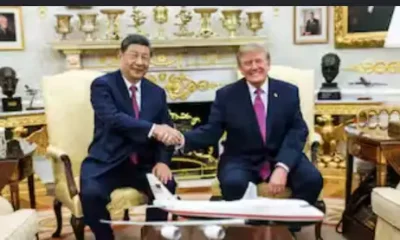
Putin praises PM Modi, says he has very good ideas on Ukraine war
Russian President Vladimir Putin has praised Prime Minister Narendra Modi for repeatedly raising the need to end the Ukraine war, describing his ideas for a settlement as “very good”.


Latest world news
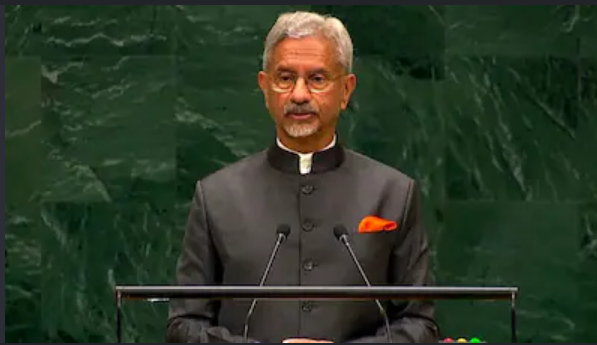
S Jaishankar calls Pakistan a “serial practitioner of terrorism” at UN
S Jaishankar criticised Pakistan at the UN General Assembly, referring to a “serial practitioner of terrorism” and warning against attempts to normalise terrorism.
Latest world news
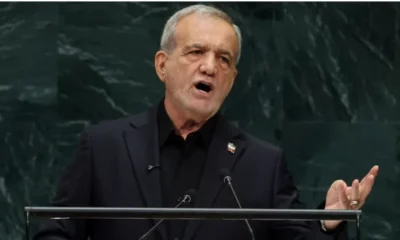
Trump rejects Iran’s 7-day peace plan, says deal can come after US polls
US President Donald Trump rejected Iran’s seven-day proposal to end hostilities and indicated that a deal could come after the US midterm elections in November.

INDIA Bloc protest intensifies, Opposition MPs plan Rajghat march

Delhi Building Collapse: Many trapped as 5-storey structure comes down

Bhagwant Mann hits back at BJP over CBI search in Sangrur

India’s 3-part peace plan to end Russia-Ukraine war explained
PM Modi recalls Bhuj earthquake, Covid lessons from 25-year journey

Afghan Men Try To Hang With The Jet Engine Of The Aircraft in Kabul- Afghanistan News – Kabul News
Trending Top 10 News: 10000 Crore Fine on Flipkart, Apple to Launch Unique Feature, Hdfc Bank Job Ad

Trending Top 10 News: Nokia 6310, Apple sales, Bachpan ka Pyar Video Kid, Dainik Bhaskar IT Raid

Trending Top 10 News: Canada bans Indian flights, Rain in Delhi NCR, AIMIM Twitter hacked, Raj Kundra case