
Latest world news
India with global community in UN denounces US recognition of Jerusalem as Israel’s capital

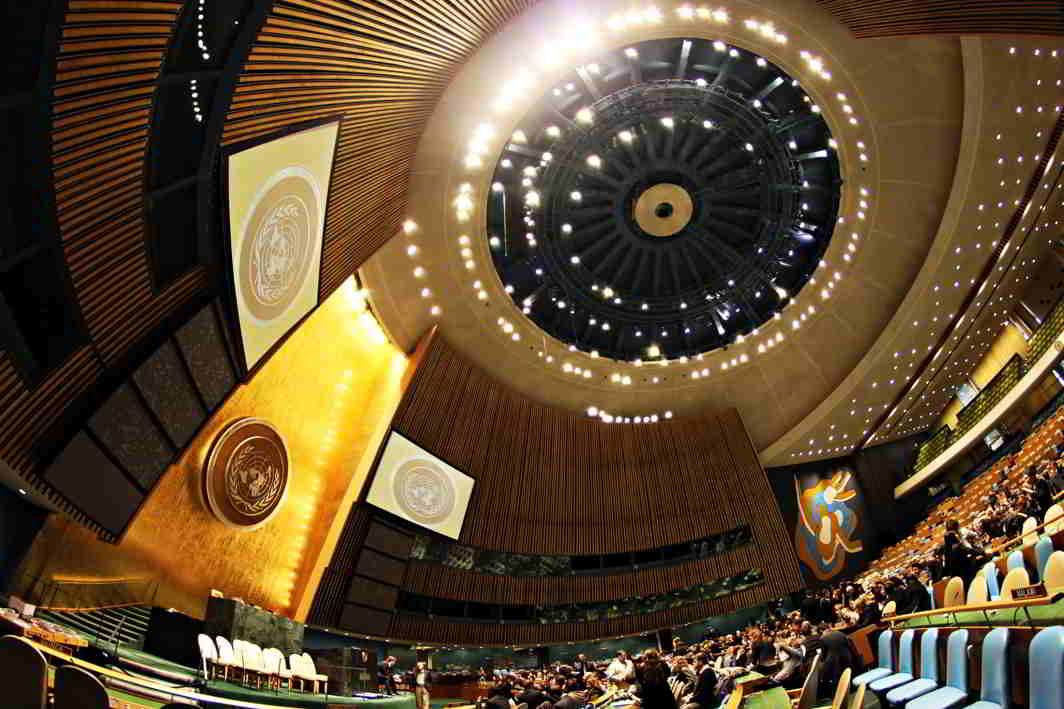
[vc_row][vc_column][vc_column_text]India put aside concerns about its growing closeness to US and Israel to stand with global community in voting against Trump administration’s decision to recognise Jerusalem as Israel’s capital.
There were threats from the US delegation to the United Nations (UN) and from US President Donald Trump himself earlier in the week that he was considering cutting off funding to any country that voted against the US.
Despite the attempt at coercion, the UN General Assembly (UNGA) passed the draft resolution declaring the Jerusalem decision to be ‘null and void’ by an overwhelming margin: 128 states in favour and nine against, with 35 abstentions, while 21 others stayed away – they were absent.
While India refrained from speaking in the UNGA ahead of the vote, it had said that its Palestine position was independent and consistent after Trump recognised the holy city of Jerusalem as the capital of Israel.
In her intervention at the non-aligned movement’s ministerial meeting on Palestine on the sidelines of the UNGA in September, External Affairs Minister Sushma Swaraj had said the path to Israel-Jerusalem peace clearly lay in an early negotiated solution between Israel and Palestine based on mutual recognition and security arrangements.
Jerusalem holds Muslim, Jewish and Christian holy sites. Its status is one of the thorniest obstacles to a peace deal between Israel and the Palestinians, who were furious over Trump’s move. The international community does not recognise Israeli sovereignty over the full city.
Earlier this month, Trump reversed decades of US policy by announcing the United States recognised Jerusalem as the capital of Israel and would move its embassy there.
The vote in UNGA was called at the request of Arab and Muslim countries after the US on Monday vetoed a resolution put to the 15-member Security Council rejecting Washington’s decision to recognize Jerusalem and relocate its embassy there. The remaining 14 Security Council members voted in favour of the Egyptian-drafted resolution, which did not specifically mention the United States or Trump but which expressed “deep regret at recent decisions concerning the status of Jerusalem.”
The resolution adopted by UNGA has language similar to the measure US vetoed in the Security Council. It “affirms that any decisions and actions which purport to have altered the character, status or demographic composition of the holy city of Jerusalem have no legal effect, are null and void and must be rescinded.”
A UNGA resolution cannot be vetoed and is adopted by a majority of votes. A day before the issue came up for vote, Trump suggested that countries voting against the US in the voting could face repercussions. “They take hundreds of millions of dollars and even billions of dollars, and then they vote against us. Well, we’re watching those votes,” Trump had said on Wednesday, Dec 20.
Anticipating the outcome of the UNGA vote, Israeli Prime Minister Benjamin Netanyahu described the United Nations as a ‘house of lies’ ahead of the vote. “The State of Israel totally rejects this vote, even before (the resolution’s) approval,” Netanyahu said in a speech in the port city of Ashdod.
Ahead of the vote at UNGA, the United States said it was ‘singled out for attack’ at the United Nations over Jerusalem. “The United States will remember this day in which it was singled out for attack in the General Assembly for the very act of exercising our right as a sovereign nation,” US Ambassador to the UN, Nikki Haley, told the 193-member General Assembly.
Repeating Trump’s warning, she said, “We will remember it when we are called upon to once again make the world’s largest contribution to the United Nations, and so many countries come calling on us, as they so often do, to pay even more and to use our influence for their benefit.”
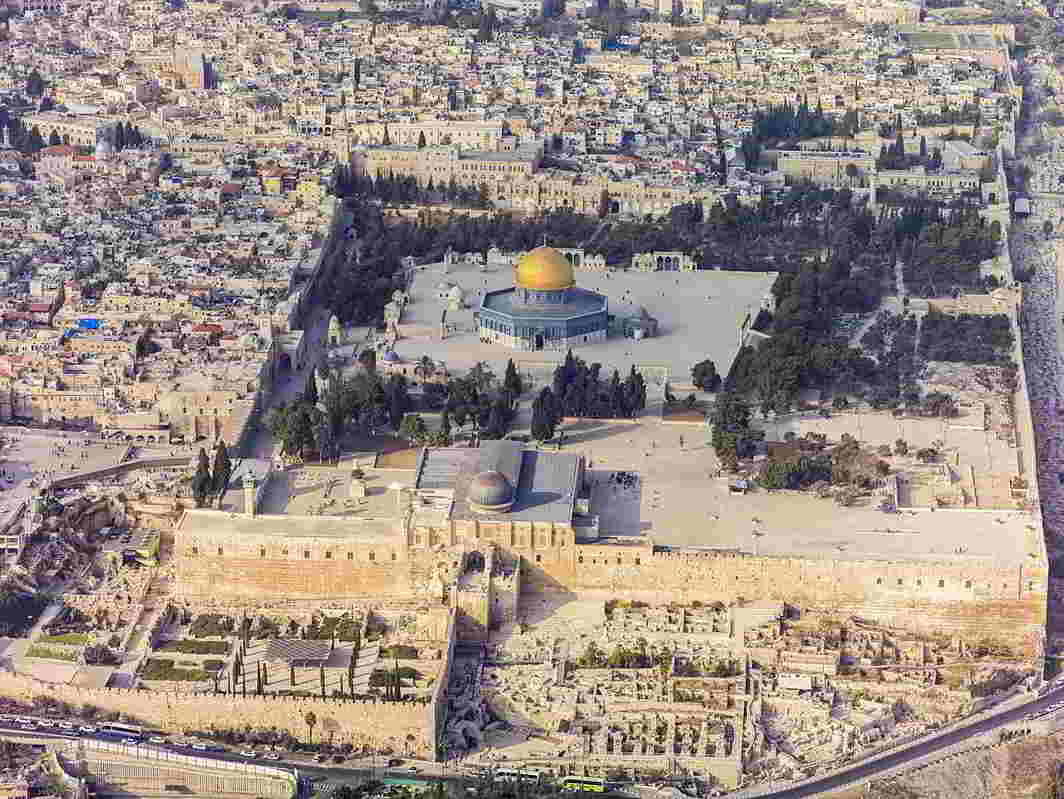
As the largest donor to the international body, the US had ‘a legitimate expectation’ that its goodwill would be ‘recognised and respected’, she said. “When a nation is singled out for attack in this organisation, that nation is disrespected. What’s more, that nation is asked to pay for the privilege of being disrespected. In the case of the US, we are asked to pay more than anyone else for that dubious privilege,” Haley said. “If our investment fails, we have an obligation to spend our resources in more productive ways.”
The US pressure could not alter the outcome of the vote, though it did seem to have had some impact, seen in the high number of abstentions.
Thirty-five countries abstained from the vote, including five EU states, and other US allies including Australia, Canada, Colombia and Mexico, as also Rwanda and Uganda. Another 21 delegations were absent from the vote. However, according to a report, Ambassadors from several abstaining countries, including Mexico, used their time on the podium to criticise Trump’s unilateral move.
Guatemala, Honduras, Marshall Islands, Micronesia, Nauru, Palau and Togo voted against the resolution, alongside the US and Israel.
Going against US and Israel, 22 of the 28 EU countries voted for the resolution, including the UK and France. Germany – which in the past has abstained on measures relating to Israel – also voted in favour.
There were major US aid recipients including Afghanistan, Egypt, Jordan, Pakistan, Nigeria, Ethiopia, Tanzania and South Africa who supported the resolution. Egypt received roughly $1.4 billion in U.S. aid this year, and Jordan about $1.3 billion.
The absent countries included Kenya, which was the fifth-largest recipient of U.S. aid last year, Georgia and Ukraine, all of which have close U.S. ties.
After the vote, US Ambassador to UN Haley tweeted a photo naming the 65 nations that voted no, abstained or were absent, and said- “We appreciate these countries for not falling to the irresponsible ways of the UN.”
She later sent invitations to the 65 ambassadors inviting them to a reception on Jan 3 to thank them for their friendship with the United States, said a report in The Hindu.
It remains to be seen whether Trump carries out his his threat against those who voted for the resolution and against US. The US is scheduled to dispense $25.8 billion in foreign aid for 2018, reported The Hindu.
In an indication that the Trump administration could be backing away from its funding threats, State Department spokesperson Heather Nauert said cuts to countries that opposed the US are not a foregone conclusion.
Media reports quoting news agency AP said a senior Trump administration official said there was no plan as of Thursday for moving ahead with eliminating aid to countries that rebuked the president.
Analysts said it would be unlikely for US to follow through on Trump’s warning. Al Jazeera quoted Juan Cole, history professor at the University of Michigan, as saying, among other things, that it would also harm US companies since a large amount of US aid comes in the forms of American-made military equipment.
Cole wrote in his blog: “The Egyptian government has more military helicopters than it knows what to do with, and they’re just stacked in warehouses. So the money actually went to US arms manufacturers, and Egypt gets a fairly useless shiny military toy. Trump would be hurting US corporations more than Egypt if he cut it off.”
US interests would also suffer if, without US influence in the form of foreign aid, countries like China and Russia might step in, he added.
John Kirby, CNN National Security Analyst also wrote: “…our aid and assistance packages serve our national interests. …Foreign aid and assistance is not charity. It’s vital to our security and to the security of our allies and partners.”[/vc_column_text][/vc_column][/vc_row]






Latest world news
S Jaishankar says India is a natural option for Russia amid Europe tensions
External Affairs Minister S Jaishankar said India remained a natural option for Russia as Moscow increasingly turned towards Asia amid strained relations with Europe. He highlighted the continuity of India-Russia ties and their significance for the balance of power in Asia.


Latest world news
Putin praises PM Modi, says he has very good ideas on Ukraine war
Russian President Vladimir Putin has praised Prime Minister Narendra Modi for repeatedly raising the need to end the Ukraine war, describing his ideas for a settlement as “very good”.

Latest world news
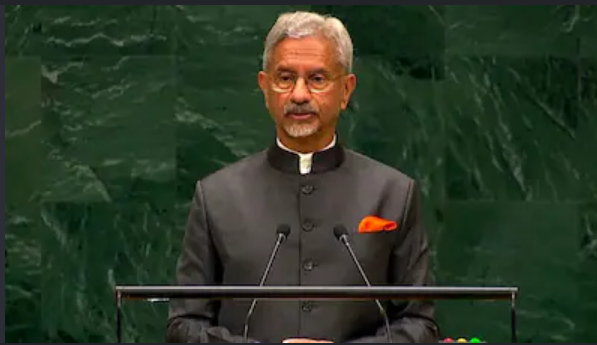
S Jaishankar calls Pakistan a “serial practitioner of terrorism” at UN
S Jaishankar criticised Pakistan at the UN General Assembly, referring to a “serial practitioner of terrorism” and warning against attempts to normalise terrorism.

CJP leaders Saurav Das, Ashutosh Ranka, Ajinkya Shinde sent to 5-day judicial custody

PM Modi speaks to Mark Carney as India and Canada push to strengthen ties

S Jaishankar says India is a natural option for Russia amid Europe tensions

Meerut murder: Muskaan Rastogi and Sahil Shukla get death sentence

Rahul Gandhi joins India Gate protest by Ankita Bhandari’s parents

Supreme Court questions EC over missing records in Sringeri election dispute
Rahul Gandhi joins India Gate protest by Ankita Bhandari’s parents
Meerut murder: Muskaan Rastogi and Sahil Shukla get death sentence
PM Modi speaks to Mark Carney as India and Canada push to strengthen ties
S Jaishankar says India is a natural option for Russia amid Europe tensions

Afghan Men Try To Hang With The Jet Engine Of The Aircraft in Kabul- Afghanistan News – Kabul News
Trending Top 10 News: 10000 Crore Fine on Flipkart, Apple to Launch Unique Feature, Hdfc Bank Job Ad

Trending Top 10 News: Nokia 6310, Apple sales, Bachpan ka Pyar Video Kid, Dainik Bhaskar IT Raid

Trending Top 10 News: Canada bans Indian flights, Rain in Delhi NCR, AIMIM Twitter hacked, Raj Kundra case

Trending Top 10 News: Shein India, Apple New Service, Pocket Oxygen, Oppo Launched New Phone
-
 India News22 hours ago
CJP leaders Saurav Das, Ashutosh Ranka, Ajinkya Shinde sent to 5-day judicial custody
-
 India News22 hours ago
PM Modi speaks to Mark Carney as India and Canada push to strengthen ties
-
 Latest world news22 hours ago
S Jaishankar says India is a natural option for Russia amid Europe tensions
-
 India News11 hours ago
Meerut murder: Muskaan Rastogi and Sahil Shukla get death sentence
-
 India News11 hours ago
Rahul Gandhi joins India Gate protest by Ankita Bhandari’s parents
-
 India News10 hours ago
Supreme Court questions EC over missing records in Sringeri election dispute
